Trends

The History Behind … Cameos

TrendsJan 12, 2017

The History Behind … Cameos

Jewelers’ love affair with cameos has been recurrent since the Roman era, and a handful of contemporary designers continue to innovate the iconic jewelry style.

20170112_Cameo-1HEADER.jpg
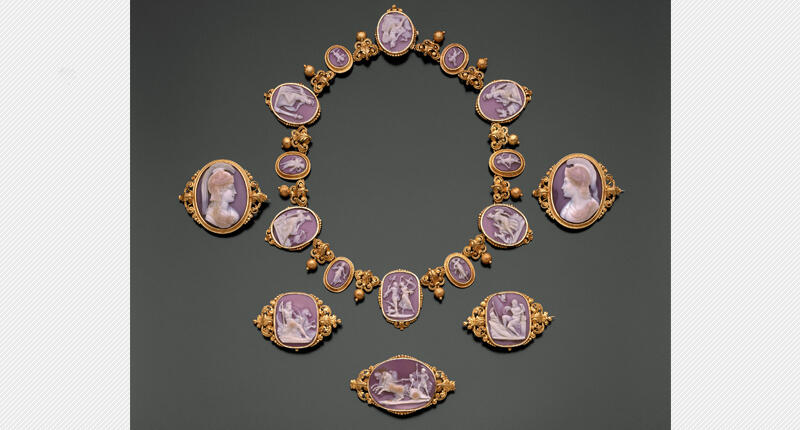
This necklace and set of five brooches are part of the permanent collection of the Museum of Fine Arts, Boston. Made of shell and gold, they date back to about 1840 and were a gift of the Misses Cornelia and Susan Dehon in memory of Mrs. Sidney Brooks. Photograph © Museum of Fine Arts, Boston

New York--Iconic jewelry trends have a way of resurfacing through the centuries, and the cameo is a perfect example.

Experts say that the jewelry style enjoyed the greatest popularity during the Roman era, the Renaissance and the 19th century.

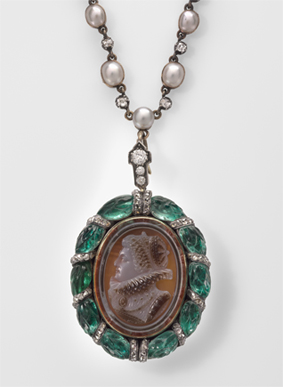
Necklace with a cameo of Elizabeth I made of gold, silver, diamond, emerald, pearl and agate and dating to about 1890, England; Museum purchase with funds donated by Susan B. Kaplan Photograph; © Museum of Fine Arts, Boston

“The cameo, perhaps more than any other form of jewel, has been appreciated as a work of art and an object of virtue since ancient times through to the Renaissance era and the Neo-classical period,” said Michele Rowan, owner of antique store Rowan & Rowan and author of “Nineteenth Century Cameos.”

Today, a handful of designers make the classic style their own, whether as the signature of their brand, like Amedeo Scognamiglio, or as one element of their oeuvre, like Jacquie Aiche, Wilfredo Rosado, Lydia Courteille and Laura Lee.

National Jeweler spoke with Scognamiglio, Rowan, and Emily Stoehrer, the Rita J. Kaplan and Susan B. Kaplan Curator of Jewelry at the Museum of Fine Arts, Boston, on the cameo’s continued reemergence through the ages.

When did cameos first appear in history?

“You really see them in the Roman period,” said Stoehrer. “Then there’s a revival of them in the Renaissance period when there’s this renewed interest in classical art and then you see them go in and out of fashion in the 19th and 20th century.”

According to Stoehrer, cameos passed down through generations were sometimes repurposed, leaving the cameo itself intact but updating the setting for modernity.

This practice is still employed by designers like Aiche, who uses either vintage cameos or carved versions of her own creations, as well as Courteille.

What were they made of?

Cameos are relief carvings, in effect miniature sculptures,” Rowan explained. “The mediums they were carved from were mainly agate or various types of shell. Gem engravers carved each stone or shell by hand to create figures or scenes, which stood proud from their background.”

“The carver exploits the different variations of color that are in the layers of shell or stone and with that they’re able to carve different motifs in low relief,” said Stoehrer.

What subjects do cameos portray?

No matter the period a cameo was created, the subject matter
often referenced the time of the style’s origin, the Roman era.

“The subject matter rarely varied, most cameos--whether ancient or 17th, 18th or 19th century-- tended to depict scenes or personalities from Greek mythology. The universal appeal of tales of love, loss, deception and magic endured,” said Rowan.


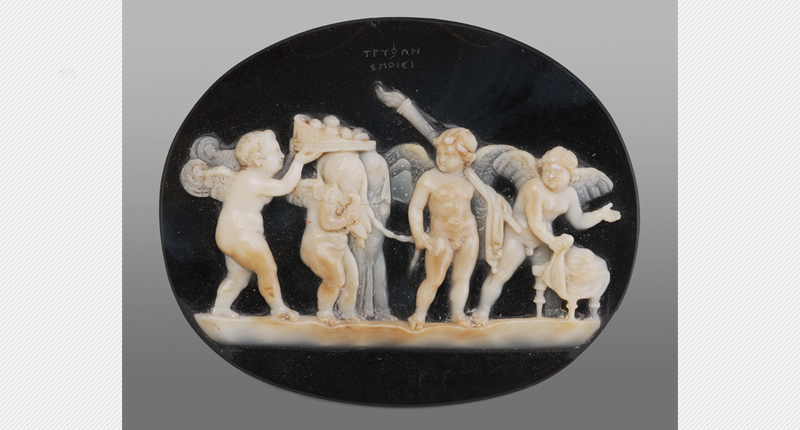
Cameo with the Wedding of Cupid and Psyche or an initiation rite made of layered onyx and dated to mid to late first century BCE, Greece; Henry Lillie Pierce Fund; Photograph © Museum of Fine Arts, Boston

“You’ll typically see allegorical themes, portraits or mythic figures like Medusa for example,” said Stoehrer.

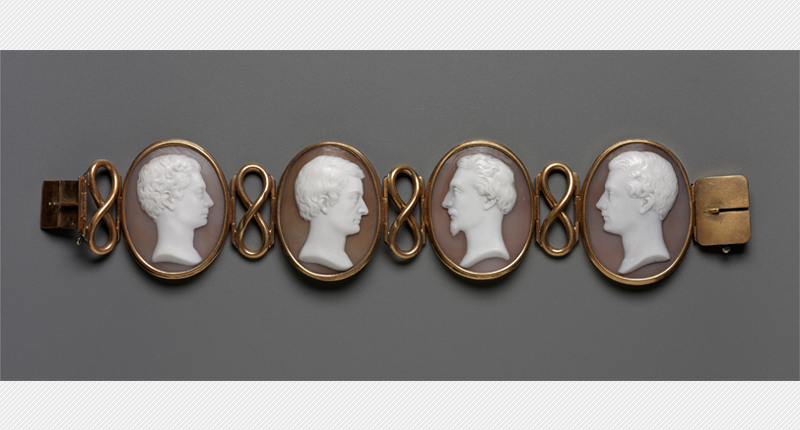
Stoehrer noted that while mythology has been the predominant theme of cameos, some were commissioned to depict real people, a particularly good example of which can be found in bracelet-form in the Museum of Fine Arts, Boston’s permanent collection.

“The bracelet has four cameos representing the Hunt brothers,” she said. “Each one is in the likeness of one of the four brothers and it was donated to the Museum of Fine Arts by their sister.”

Who would typically buy or commission a cameo?

The MFA’s cameo collection features pieces that originated in the collections of the wealthy and influential elite, Stoehrer explained, such as one that belonged to Flemish Baroque artist Peter Paul Rubens.

Cameo Bracelet depicting the Hunt brothers, by William Morris Hunt, made of gold and shell around 1840, America; Bequest of Miss Jane Hunt; Photograph © Museum of Fine Arts, Boston

Rowan explained that, later on, the owning of cameos became more democratic.

“During the 19th century, the cameo moved from the realm of the wealthy cabinet collector to a wider audience,” she said. “Increased wealth among the European middle class and increased travel meant a demand for souvenirs, especially from trips to Italy. The shell cameo industry in Italy increased in size to meet demand.”

What about the cameo’s decline after Victorian times?

In the earliest part of the 20th century, the cameo peaked.

At the time, the image of a woman wearing a choker was an extremely popular figure portrayed in cameos, so popular, said Stoehrer, that it saturated the market and fell out of favor.

As chokers became mass-produced, the quality also suffered.

“The advent of the machine-carved cameo led to a serious decline in quality,” said Rowan.

The Cameo Now

Scognamiglio’s pioneering of the ancient trend has created the cameo’s biggest contemporary success story.

Rare for a modern artist, the Italian-born designer learned to carve cameos in the ancient technique.

“My family has been making cameos since 1857, basically all branches of my paternal family have been either master carvers or cameo manufacturers, throughout two centuries,” said Scognamiglio, who nevertheless, is a self-taught carver, as his family expected his interest in cameos to be a passing fancy.

Scognamiglio started with classic themes found in Greek and Roman mythology, and mastered these before deciding to put his own stamp on the art form.

He created works depicting monkeys, skulls, elephants and crowns, combining ancient craft with rock ‘n’ roll modernity. 


He explained, “I made them cool again, contemporary again. And only someone with my long heritage and family tradition, only someone from the bench like me could have done so. I decided I would revolutionize the idea of cameos.”

Scognamiglio opened a boutique in New York City in 2006, eventually expanding to also sell at other retailers. Ten years later, his business is still booming, and he’s known as “the king of cameos.”

“I thought that there was not much interest in cameos now,” said Stoehrer. “I’ve heard from different dealers that they collect dust in their show room, but I had a group in at the MFA who completely disagreed and thought that cameos were really gaining popularity right now. Maybe this is their moment.”

Scognamiglio’s works are particularly popular for their tongue-in-cheek motifs, but the designer couldn’t have created them without studying what came before.

“Evolution comes from a long way,” he said, “from research, study and classical practice.”
Ashley Davisis the senior editor, fashion at National Jeweler, covering all things related to design, style and trends.

The Latest

trend retail.jpg
PodcastsJan 12, 2026
The latest poscast

test

Screenshot from 2026-01-12 06-22-03.png
PodcastsJan 12, 2026
New podcast without sponsor

test

2019_De_Beers_rough_NEW_1.jpg
PodcastsJan 12, 2026
New sponsored podcast

test

trend ss21@2x.jpg
Brought to you by
new sponsored article

test

MNQ FINAL - NJ web - 1872 x 1052 px.png
PodcastsJan 12, 2026
Introducing My Next Question, the Podcast

A monthly podcast series for jewelry professionals

Weekly QuizOct 03, 2024
This Week’s Quiz
Test your jewelry news knowledge by answering these questions.
Take the Quiz
Screenshot from 2025-12-31 12-03-28.png
PodcastsDec 31, 2025
Test new podcast post

Test new podcast post

MNQ - studio - screen -1920 x 1080.png
PodcastsDec 29, 2025
Molly Test Podcast Episode

This is the abstract for Molly Test Podcast Episode

Jewelers Mutual Group Cybersecurity
Brought to you by
Navigating Cybersecurity: Essential Guidance for Jewelers

From protecting customer data to safeguarding inventory records, it's crucial to learn how to tackle cybersecurity challenges.

image 169 (4 col).png
PodcastsDec 10, 2025
Podcast With Video

Podcast Without Video or Audio or Image

image 169 (4 col).jpg
Recorded WebinarsDec 04, 2025
New Recorded Webinar for tests

New Recorded Webinar for tests

User-Avatar-PNG-Picture.png
PodcastsDec 03, 2025
Test Article Title

test Abstract

20210204_Couture_show_shot.jpg
PodcastsDec 02, 2025
New podcast

test desc

Screenshot from 2025-12-05 13-54-41.png
PodcastsNov 27, 2025
Test Podcast With Video

Test Podcast With Video. New interview with Ada Lovelace.

Image for tests
PodcastsNov 25, 2025
Test New Podcast Post

Abstract for tests. New Podcast interview with John Lennon, Jimi Hendrix and Jim Morison.

National Jeweler columnist Peter Smith
ColumnistsOct 09, 2024
Peter Smith: 7 Things to Know When Selling Luxury

Ahead of the holiday season, Smith delves into the often subconscious reasons people buy luxury products for themselves or their loved ones.

Edgar Mitchell wearing Rolex watch on Apollo 14
AuctionsOct 09, 2024
Rolex Worn on Apollo 14 Mission Up for Sale

The GMT-Master “Pepsi” belonging to astronaut Edgar Mitchell is a standout in RR Auction’s online “Space Auction,” going on now.

Simon meet me at the mall campaign
MajorsOct 09, 2024
New Simon Campaign Invites Gen Z to ‘Meet Me At The Mall’

The ads celebrate the mall culture of the ‘80s and ‘90s.

Platinum Guild International training
MajorsOct 09, 2024
PGI Launches New Virtual Sales Training

Retail sales associates can access the video series on mobile to refresh their selling skills.

Gathering at Bharat Diamond Bourse for COVID vaccinations
Policies & IssuesOct 09, 2024
GJNRF: Reaching Out, Rebuilding Futures

For 25 years, India’s Gem & Jewellery National Relief Foundation has provided aid in the wake of war, natural disasters, and global crises.

Sotheby’s A Tsar’s Treasure: Ferdinand of Bulgaria
AuctionsOct 08, 2024
Sotheby’s Selling Jewelry That Belonged to a Bulgarian Tsar

The November auction will feature a collection of jewels owned by Ferdinand I, the first king of modern Bulgaria, and his family.

Rough diamonds mined at the Diavik Diamond Mine
SourcingOct 08, 2024
Rio Tinto Begins New Phase of Production That Will Extend Diavik’s Life

Commercial production has begun underground at the Canadian diamond mine’s A21 pipe.

Stock image of hand holding phone by keyboard
SurveysOct 08, 2024
What to Know About Online Shopping This Holiday Season

Deloitte and Adobe Analytics shared their insights on the season, from the retail sales forecast to the role of generative AI.

Sylvie and Uncommon Man Campaign
CollectionsOct 08, 2024
Sylvie Adds New Men’s Bands

The Texas-based jeweler collaborated with luxury clothing brand Uncommon Man on men’s bands designed with European influences.

Diamond on polishing wheel Venus Jewel India
SourcingOct 08, 2024
Is Current Diamond Industry Turbulence Shaping a ‘New Normal’?

Industry players have found ways to cope with market conditions while working to reshape themselves in the face of emerging realities.

Rio Tinto 2024 Beyond RareTM Tender Art Series
SourcingOct 07, 2024
Rio Tinto to Offer 76 Diamonds in 2024 Beyond Rare Tender

The sales event, in its second year, features a selection of rare diamonds from the miner’s Argyle and Diavik diamond mines.

Kristi Yamaguchi and Scott Heller
CollectionsOct 07, 2024
Olympian Kristi Yamaguchi Partners With Heller Jewelers on New Collection

A portion of the proceeds from the “Always Dream” collection will go to Yamaguchi's foundation, supporting early childhood literacy.

Hill & Co. logo
SurveysOct 07, 2024
Hill & Co.’s New ‘Business of Jewelry Report’ Is Out

The first in what is slated to be a series of in-depth reports from the consulting company, it focuses on shortening supply chains.


×

This site uses cookies to give you the best online experience. By continuing to use & browse this site, we assume you agree to our Privacy Policy