



PodcastsJan 12, 2026
The latest poscasttest





test


The estate of the late Elizabeth Taylor is suing Christie’s again over the cancelled sale of the heart-shaped diamond necklace.

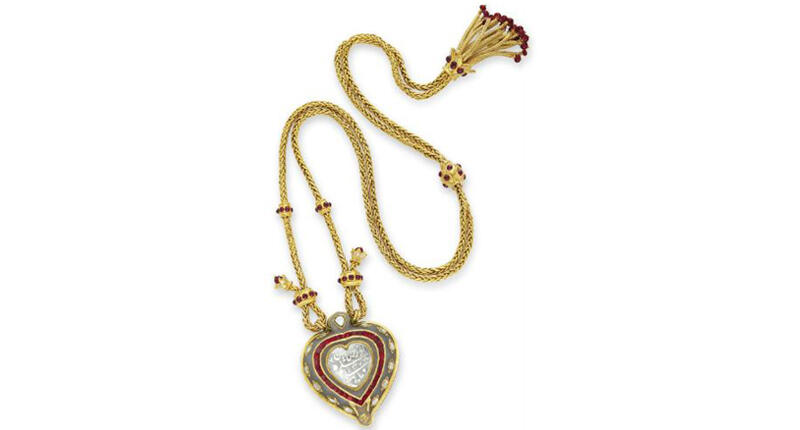
New York--The dispute around the late Elizabeth Taylor’s “Taj Mahal” diamond necklace is back.
Taylor’s estate sued Christie’s in federal court in 2015 in a case that centered on the cancelled sale of the diamond. It was dismissed after both parties agreed to try to settle privately.
But on Thursday, co-trustees for the Sothern Trust, the late actress’s trust, filed another lawsuit in the Supreme Court in Manhattan against the New York-based auction house.
After Taylor’s death in 2011, her estate tasked Christie’s with selling some of her most prized possessions through auctions held in both New York and London.
According to the latest lawsuit, following the sales, Christie’s “failed to abide by its contractual obligations under the consignment agreement and blatantly disregarded its fiduciary duties to the trust.”
The auction house, the lawsuit claims, cancelled the sales of certain auction items without notifying or discussing it with the trust.
The primary dispute on which this new lawsuit is centered again is the sale of the “Taj Mahal,” a heart-shaped, table-cut diamond pendant that was the third highest-grossing lot of the auction.
(The diamond is inscribed with the name Nur Jahan, the wife of Mughal emperor Shah Jahangir. It is believed to eventually have been a gift from the ruler to his son, who became Emperor Shah Jahan and later built the Taj Mahal in memory of his late wife Mumtaz Mahal, hence the stone’s name.)
Taylor’s husband, actor Richard Burton, bought it from Cartier and gave the jewel to Taylor for her 40th birthday. At the record-setting auction of Taylor’s massive jewelry collection in 2011, Christie’s sold it to an anonymous buyer for $8.8 million.
Months after the auction ended, the buyer asked Christie’s to cancel the sale of the stone and give him back his money because he believed that the diamond did not actually belong to Emperor Shah Jahan.
But in its lawsuit, the trust claims that Christie’s never guaranteed the age of the diamond in its pre-auction materials, instead only saying it was an “Indian diamond,” a fact with which the buyer does not dispute.
The trust added in the suit that claims made outside of that vocabulary were done by Christie’s representatives during public appearances, which still does not warrant cancellation of the sale.
“Despite facing no credible threat of legal liability, Christie’s nonetheless rescinded the sale of the diamond. In doing so, Christie’s not only deviated from





A monthly podcast series for jewelry professionals


From protecting customer data to safeguarding inventory records, it's crucial to learn how to tackle cybersecurity challenges.


Test Podcast With Video. New interview with Ada Lovelace.



Abstract for tests. New Podcast interview with John Lennon, Jimi Hendrix and Jim Morison.

Ahead of the holiday season, Smith delves into the often subconscious reasons people buy luxury products for themselves or their loved ones.

The ads celebrate the mall culture of the ‘80s and ‘90s.

Retail sales associates can access the video series on mobile to refresh their selling skills.

For 25 years, India’s Gem & Jewellery National Relief Foundation has provided aid in the wake of war, natural disasters, and global crises.

Commercial production has begun underground at the Canadian diamond mine’s A21 pipe.

Deloitte and Adobe Analytics shared their insights on the season, from the retail sales forecast to the role of generative AI.

The Texas-based jeweler collaborated with luxury clothing brand Uncommon Man on men’s bands designed with European influences.

Industry players have found ways to cope with market conditions while working to reshape themselves in the face of emerging realities.

The sales event, in its second year, features a selection of rare diamonds from the miner’s Argyle and Diavik diamond mines.

A portion of the proceeds from the “Always Dream” collection will go to Yamaguchi's foundation, supporting early childhood literacy.

The first in what is slated to be a series of in-depth reports from the consulting company, it focuses on shortening supply chains.

The company said Benjamin Clymer will return to his role as head of the watch news website, which will maintain editorial independence.





This site uses cookies to give you the best online experience. By continuing to use & browse this site, we assume you agree to our Privacy Policy