



PodcastsJan 12, 2026
The latest poscasttest





test


Though a lab-grown layer is nothing new, the absence of one element suggests different growth methods.

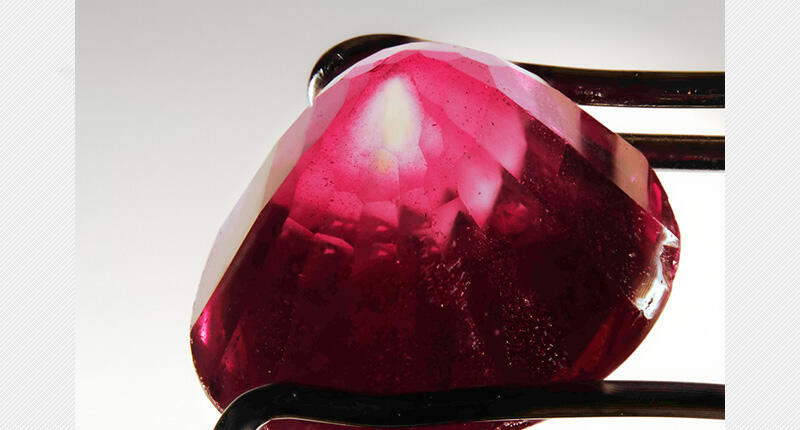
Carlsbad, Calif.--The Gemological Institute of America’s New York lab recently had a gemstone submitted for identification it hasn’t seen before.
According to an article by Tyler Smith and Hollie McBride in the winter 2017 issue of “Gems & Gemology,” the lab received two loose oval mixed-cut red gems for identification. Upon testing, the stones revealed refractive indices slightly higher than normal for corundum.
Higher refractive indices have been reported before for chromium-diffused corundum, in which extra chromium is added during heating to enhance the color. So, the article states, to the naked eye, the stones simply appeared to be chromium diffused and displayed red color concentrations at the intersections of the facets.
But further microscopic examination revealed a thin layer, about 0.3 mm thick, of “synthetic overgrowth”—a layer of lab-grown ruby that gave the stone its color—with a natural, almost-colorless sapphire at the core.
The authors said the two stones looked similar to Lechleitner synthetic overgrowth emeralds, named for Johann Lechleitner, who pioneered the process of giving a near-colorless beryl seed its green color with a synthetic emerald overgrowth in 1960. (The GIA’s lab in Carlsbad, coincidentally, received a Lechleitner emerald for identification around the same time the rubies were submitted.) 
Lechleitner also experimented with ruby overgrowth on both synthetic and natural corundum seeds.
While his specimens contained a number of elements, the two rubies submitted to the GIA were missing one—molybdenum—indicating there were different growth conditions present, according to the G&G article.
It noted that while this isn’t the first report of synthetic ruby overgrowth on natural sapphire seeds, it is the first time material featuring such aspects has been submitted to its New York and Carlsbad laboratories for identification.
“The resurfacing of these vintage overgrowth synthetics shows that once a material is in the trade, it is here to stay,” Smith and McBride said.





A monthly podcast series for jewelry professionals


From protecting customer data to safeguarding inventory records, it's crucial to learn how to tackle cybersecurity challenges.


Test Podcast With Video. New interview with Ada Lovelace.



Abstract for tests. New Podcast interview with John Lennon, Jimi Hendrix and Jim Morison.

Ahead of the holiday season, Smith delves into the often subconscious reasons people buy luxury products for themselves or their loved ones.

The GMT-Master “Pepsi” belonging to astronaut Edgar Mitchell is a standout in RR Auction’s online “Space Auction,” going on now.

The ads celebrate the mall culture of the ‘80s and ‘90s.

Retail sales associates can access the video series on mobile to refresh their selling skills.

For 25 years, India’s Gem & Jewellery National Relief Foundation has provided aid in the wake of war, natural disasters, and global crises.

The November auction will feature a collection of jewels owned by Ferdinand I, the first king of modern Bulgaria, and his family.

Commercial production has begun underground at the Canadian diamond mine’s A21 pipe.

Deloitte and Adobe Analytics shared their insights on the season, from the retail sales forecast to the role of generative AI.

The Texas-based jeweler collaborated with luxury clothing brand Uncommon Man on men’s bands designed with European influences.

Industry players have found ways to cope with market conditions while working to reshape themselves in the face of emerging realities.

The sales event, in its second year, features a selection of rare diamonds from the miner’s Argyle and Diavik diamond mines.

A portion of the proceeds from the “Always Dream” collection will go to Yamaguchi's foundation, supporting early childhood literacy.





This site uses cookies to give you the best online experience. By continuing to use & browse this site, we assume you agree to our Privacy Policy