




PodcastsJan 12, 2026
The latest poscasttest







test


The colored gemstone miner said the decline was due largely to the postponement of December’s higher quality rough emerald auction.

London--The delay of an auction led to both a revenue decrease and a net loss for Gemfields in the first half of its fiscal year ended Dec. 31.
The colored gemstone miner reported that revenue for the first half of the fiscal year was down 46 percent, declining from $94 million last year to $51 million this year.
The company said the decrease was due in large part to its postponement of a higher quality rough emerald auction originally scheduled for December 2016. The sale was pushed to this month to give Gemfields’ Indian customers time to adjust to the country’s demonetization program.
As a result, the company held only two gemstone auctions in the six-month period: one commercial quality rough emerald and beryl auction, and one mixed quality rough ruby and corundum auction.
This compares with three auctions in the prior-year period: one higher quality rough emerald and beryl sale, one commercial quality rough emerald and beryl sale, and one mixed to higher quality rough ruby and corundum auction.
The emerald and beryl auction held during the half-year period took place in September in Jaipur, India, generating revenues of $10.7 million.
The ruby sale took place in December in Singapore and achieved total revenues of $30.5 million.
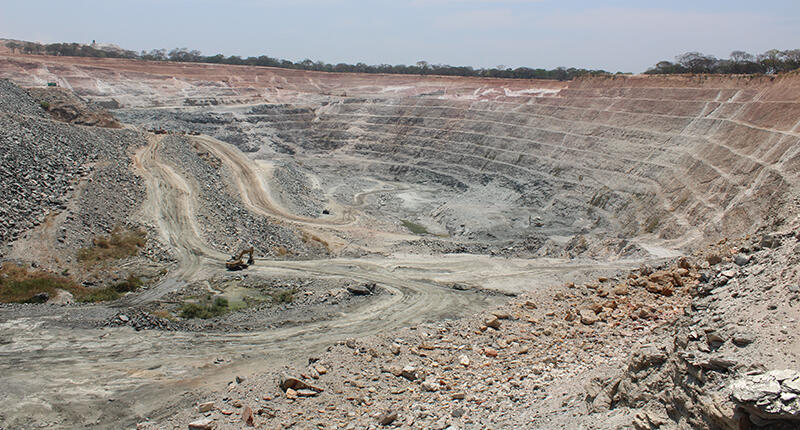
In terms of Gemfields’ two biggest projects--the Kagem emerald mine in Zambia and the Montepuez ruby site in Mozambique--production was varied.
At Kagem, output was down from 15.7 million carats in the prior-year period to 10.7 million carats in 2016, while average grade declined from 254 carats per ton last year to 166 carats per ton this year. Gemfields said the difference in both was attributable to the “varied nature of the mineralization and a lower grade zone mined in the current period.”
Due to the low first-half production, Gemfields said it is dropping its expectations for Kagem’s production from 30-35 million carats to 25-30 million carats.
At Montepuez, meanwhile, output more than doubled, increasing from 2.1 million carats in 2015 to 5.6 million carats in the half-year period, with the grade also nearly doubling from 15 carats per ton to 29 carats per ton this year.
Gemfields said in its results that while the “positive impact” of the efforts to grow and expand the downstream emerald market are visible, it is likely to take a few more years for the ruby market to have access to similar levels of





A monthly podcast series for jewelry professionals


From protecting customer data to safeguarding inventory records, it's crucial to learn how to tackle cybersecurity challenges.


Test Podcast With Video. New interview with Ada Lovelace.



Abstract for tests. New Podcast interview with John Lennon, Jimi Hendrix and Jim Morison.

Ahead of the holiday season, Smith delves into the often subconscious reasons people buy luxury products for themselves or their loved ones.

The GMT-Master “Pepsi” belonging to astronaut Edgar Mitchell is a standout in RR Auction’s online “Space Auction,” going on now.

The ads celebrate the mall culture of the ‘80s and ‘90s.

Retail sales associates can access the video series on mobile to refresh their selling skills.

For 25 years, India’s Gem & Jewellery National Relief Foundation has provided aid in the wake of war, natural disasters, and global crises.

The November auction will feature a collection of jewels owned by Ferdinand I, the first king of modern Bulgaria, and his family.

Deloitte and Adobe Analytics shared their insights on the season, from the retail sales forecast to the role of generative AI.

The Texas-based jeweler collaborated with luxury clothing brand Uncommon Man on men’s bands designed with European influences.

The sales event, in its second year, features a selection of rare diamonds from the miner’s Argyle and Diavik diamond mines.

A portion of the proceeds from the “Always Dream” collection will go to Yamaguchi's foundation, supporting early childhood literacy.

The first in what is slated to be a series of in-depth reports from the consulting company, it focuses on shortening supply chains.

The company said Benjamin Clymer will return to his role as head of the watch news website, which will maintain editorial independence.





This site uses cookies to give you the best online experience. By continuing to use & browse this site, we assume you agree to our Privacy Policy