



PodcastsJan 12, 2026
The latest poscasttest






test


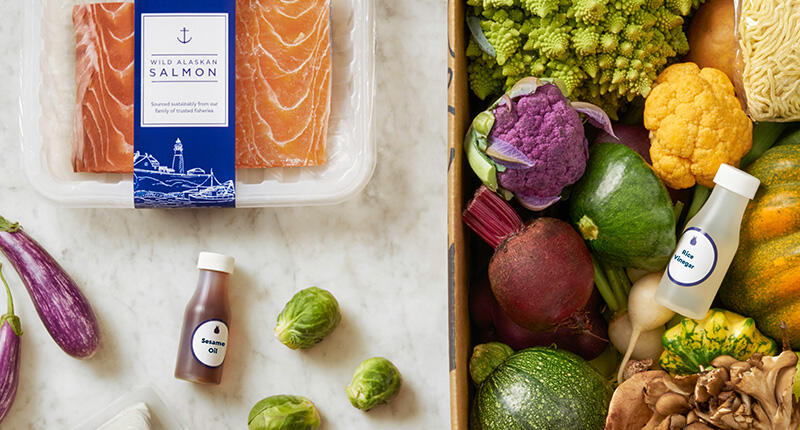
Companies providing unique products and experiences, like meal kit company Blue Apron, dominate Stores magazine’s “Hot 100 Retailers” list.

Washington--These days, it doesn’t matter if a retailer is “clicks” or bricks.”
What matters, according to Stores magazine’s Hot 100 list of fastest-growing retailers, is providing unique offerings and experiences for consumers.
The list, compiled by research firm Kantar Retail, is based on sales growth between 2015 and 2016 and ranks both public and privately held retail companies by U.S. domestic sales, with a $300 million minimum.
So what do many of these fast-growing retailers have in common? They set themselves apart in a way that speaks to today’s consumers.
“The retail industry is getting better at addressing shifts in shopping behaviors and thinking differently,” Stores Media Editor Susan Reda said. “What matters most to consumers is a retailer differentiating itself in the marketplace, being innovative with merchandise and offering the right value to the right person, not whether a retailer is ‘bricks or clicks.’
“The mix of both traditional and digital retailers on this year’s list reflects that. The secret to sustained growth going forward is a symbiotic relationship between digital and physical retailing.”
Topping the list this year is subscription meal kit company Blue Apron, which Stores said has delivered more than 150 million meals since it started just five years ago. The company also saw annual sales grow 133 percent to $795.4 million last year.
At No. 2 is online furniture and home décor retailer Wayfair, where sales were up 54 percent to $2.9 billion as it expanded the products it offered to have better ranges in price and quality.
At No. 3 is Ascena Retail Group, the parent company of Ann Taylor, Catherines, Dress Barn, Lane Bryant and Maurices.
Ascena had 50 percent sales growth at $7 billion last year, Stores said, and has been focusing on mergers and acquisitions in recent years, a strategy that might not be working all that well for it. Ascena reported a net loss in the last fiscal year and also recently announced plans to close about 660 stores after a $1.03 billion loss in the third quarter.
Following at No. 4 is online pet food seller Chewy.com, with 48 percent growth to $900 million, followed by online building supply company Build.com/Wolseley, which grew 38 percent to $911 million.
Rounding out the top 10 are: convenience store operator CST Brands, up 29 percent at $2.1 billion; subscription fashion retailer JustFab, up 29 percent at $572 million; supermarket and department store chain Grupo





A monthly podcast series for jewelry professionals


From protecting customer data to safeguarding inventory records, it's crucial to learn how to tackle cybersecurity challenges.


Test Podcast With Video. New interview with Ada Lovelace.



Abstract for tests. New Podcast interview with John Lennon, Jimi Hendrix and Jim Morison.

Ahead of the holiday season, Smith delves into the often subconscious reasons people buy luxury products for themselves or their loved ones.

The GMT-Master “Pepsi” belonging to astronaut Edgar Mitchell is a standout in RR Auction’s online “Space Auction,” going on now.

The ads celebrate the mall culture of the ‘80s and ‘90s.

Retail sales associates can access the video series on mobile to refresh their selling skills.

For 25 years, India’s Gem & Jewellery National Relief Foundation has provided aid in the wake of war, natural disasters, and global crises.

The November auction will feature a collection of jewels owned by Ferdinand I, the first king of modern Bulgaria, and his family.

Commercial production has begun underground at the Canadian diamond mine’s A21 pipe.

The Texas-based jeweler collaborated with luxury clothing brand Uncommon Man on men’s bands designed with European influences.

Industry players have found ways to cope with market conditions while working to reshape themselves in the face of emerging realities.

The sales event, in its second year, features a selection of rare diamonds from the miner’s Argyle and Diavik diamond mines.

A portion of the proceeds from the “Always Dream” collection will go to Yamaguchi's foundation, supporting early childhood literacy.

The company said Benjamin Clymer will return to his role as head of the watch news website, which will maintain editorial independence.





This site uses cookies to give you the best online experience. By continuing to use & browse this site, we assume you agree to our Privacy Policy