test
Retailer’s Viewpoint: Millennials and the Middle Class
The shift from buying luxury to buying lifestyle--an evening out at a restaurant, a day at a spa, or a vacation--is not driven by taste alone but by economic factors, Jim Alperin writes.
Millennials, lifestyle and luxury--three words we hear a lot today.
When you’re in a luxury business, as we in the jewelry business are, trying to understand how these words relate and finding our place in this changing world is a challenge.

The things they are showing less interest in aren’t limited to jewelry; they also include crystal stemware, china dishes, porcelain figurines, silver flatware and hollowware, and even a house in the suburbs. Young people today are opting to move into the cities that their parents and grandparents worked so hard to afford to move out of. That 1-acre lot of grass that needs to be mowed on the weekend suddenly isn’t the dream. Now, it’s a loft apartment overlooking other buildings, close enough to work that you don’t need to own a car.
What happened? Why is it that this new generation doesn’t want all the luxuries that previous generations worked so hard to attain and care for?
The internet has, as we all know, changed everything. Business as usual isn’t usual anymore.
Decades ago, a generation of young people finishing high school or college who didn’t go into a specific profession had the opportunity to open “mom-and-pop” stores. Jewelry stores, optical stores, shoe stores, drug stores … if you had an interest in a particular field, you had the opportunity to be your own boss and, with time and hard work, make a decent living. With that living, you were able to buy gifts of luxury, things above the essentials, for those whom you loved, including jewelry.
Where are those young people today, the ones who didn’t go into the professions or those who weren’t picked up by Google, Facebook or one of the other internet giants? They’re working behind the counter at Starbucks, the Apple store or even one of the big jewelry store chains. They make a living but don’t see a chance to truly excel within the job that they have taken.
Did you ever speak
The middle class is disappearing in the United States as the younger generation takes over our world. They don't have the means to buy luxury anymore. The $500 to $2,000 sale that kept jewelry stores alive in the past has become a $50 to $200 sale. That’s now an affordable gift for a generation that doesn’t have the disposable income that the previous generations had, but it’s not enough money to keep mom-and-pop shops in business.
The shift from luxury to lifestyle--an evening out at a restaurant, a day at a spa or a vacation--is not driven by taste alone but by economic factors. The millennials are not rejecting luxury goods as an act of rebellion--after all, every generation rebels against the previous one in some fashion--but because the opportunities for them to earn a wage that will allow them to purchase luxury no longer exist.
Our economy has been divided into the “haves” and “have nots” more than ever before. We have more millionaires and billionaires than our country has ever known and, at the same time, there are more people just getting buy or not getting by at all.
To stay in business today, you have to reduce your expenses to be able to accommodate the customer wishing to make an inexpensive purchase or, if you have the means, upscale your business to accommodate the customer who is truly wealthy.
The millennials have moved away from the traditional jewelry of the past and they aren’t coming back.
It’s not that they can’t be understood. It’s that with the high expenses of life today--health insurance, college loans, the cost of going out for an evening--there just isn’t enough money left to buy luxury goods, and as such they have shifted their values, and what disposable income they do have, to lifestyle purchases.
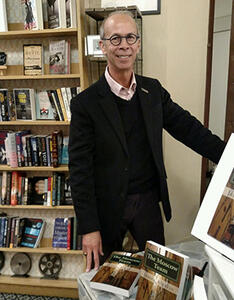
Retailer Jim Alperin owned and operated James Alperin Jewelers in Pepper Pike, Ohio for more than 30 years. He now lives and works in Delray Beach, Florida and is the author of two novels, “The Moscow Team” and “The Emerald Necklace.” He can be reached at alpjewel@aol.com.
The Latest


A monthly podcast series for jewelry professionals

From protecting customer data to safeguarding inventory records, it's crucial to learn how to tackle cybersecurity challenges.

Test Podcast With Video. New interview with Ada Lovelace.

Abstract for tests. New Podcast interview with John Lennon, Jimi Hendrix and Jim Morison.

Ahead of the holiday season, Smith delves into the often subconscious reasons people buy luxury products for themselves or their loved ones.

The GMT-Master “Pepsi” belonging to astronaut Edgar Mitchell is a standout in RR Auction’s online “Space Auction,” going on now.

The ads celebrate the mall culture of the ‘80s and ‘90s.

Retail sales associates can access the video series on mobile to refresh their selling skills.

For 25 years, India’s Gem & Jewellery National Relief Foundation has provided aid in the wake of war, natural disasters, and global crises.

The November auction will feature a collection of jewels owned by Ferdinand I, the first king of modern Bulgaria, and his family.

Commercial production has begun underground at the Canadian diamond mine’s A21 pipe.

Deloitte and Adobe Analytics shared their insights on the season, from the retail sales forecast to the role of generative AI.

The Texas-based jeweler collaborated with luxury clothing brand Uncommon Man on men’s bands designed with European influences.

Industry players have found ways to cope with market conditions while working to reshape themselves in the face of emerging realities.

The sales event, in its second year, features a selection of rare diamonds from the miner’s Argyle and Diavik diamond mines.

A portion of the proceeds from the “Always Dream” collection will go to Yamaguchi's foundation, supporting early childhood literacy.