










AuctionsMar 10, 2023
These Retirees Discovered Auction-Worthy Antique JewelsMajorsMar 14, 2023
Dutch Historian Discovers Medieval Jewels
The 1,000-year-old find is now on display in the Dutch National Museum of Antiquities.


Dutch historian Lorenzo Ruijter was exploring the city of Hoogwoud in northern Holland with a metal detector when he found a collection of medieval jewelry and coins. (Photo © Archeology West-Friesland/Fleur Schinning)
Leiden, Netherlands—In 2021, Dutch historian Lorenzo Ruijter was exploring Hoogwoud, a small city in northern Holland, with a metal detector in hand, when he discovered something extraordinary.
Ruijter found a treasure trove of medieval jewelry and coins dating back more than 1,000 years.
He reported his find to Archeology West Friesland, and his discovery is now on display in the Dutch National Museum of Antiquities.
“Gold jewelry from the high Middle Ages is extremely rare in the Netherlands,” said the museum.
The treasure trove included four gold earrings in a crescent moon shape, two gold leaf pieces that fit together, and 39 small silver coins.
Related stories will be right here …
Ruijter found a treasure trove of medieval jewelry and coins dating back more than 1,000 years.
He reported his find to Archeology West Friesland, and his discovery is now on display in the Dutch National Museum of Antiquities.
“Gold jewelry from the high Middle Ages is extremely rare in the Netherlands,” said the museum.
The treasure trove included four gold earrings in a crescent moon shape, two gold leaf pieces that fit together, and 39 small silver coins.
The coins helped the museum to piece together how old the treasure was and shape the story of why, perhaps, it was found buried in the ground.
The coins, believed to be from 1200 to 1250, were from the Diocese of Utrecht, which included several counties, and from the German empire, with the youngest copies made around 1248 when King William II ruled the Holy Roman Empire. Small pieces of textiles indicate they were wrapped in a cloth or bag.
This would mean the jewelry was already nearly two centuries old when it was likely hidden in the ground, said the museum.
This was an important and troubled time in the country’s history, when there were wars between West Friesland and the county of Holland. Count Willem II died during these wars, not far from where the jewelry was found.
The museum’s theory is that these jewels and coins were likely among someone’s cherished possessions, buried out of sight during the wars.
“This makes the treasure find of great significance for the archaeology and history of North Holland and West Friesland, and even of national and international importance,” said the museum.
SEE: The Medieval Jewelry and Coins Discovered in the Netherlands
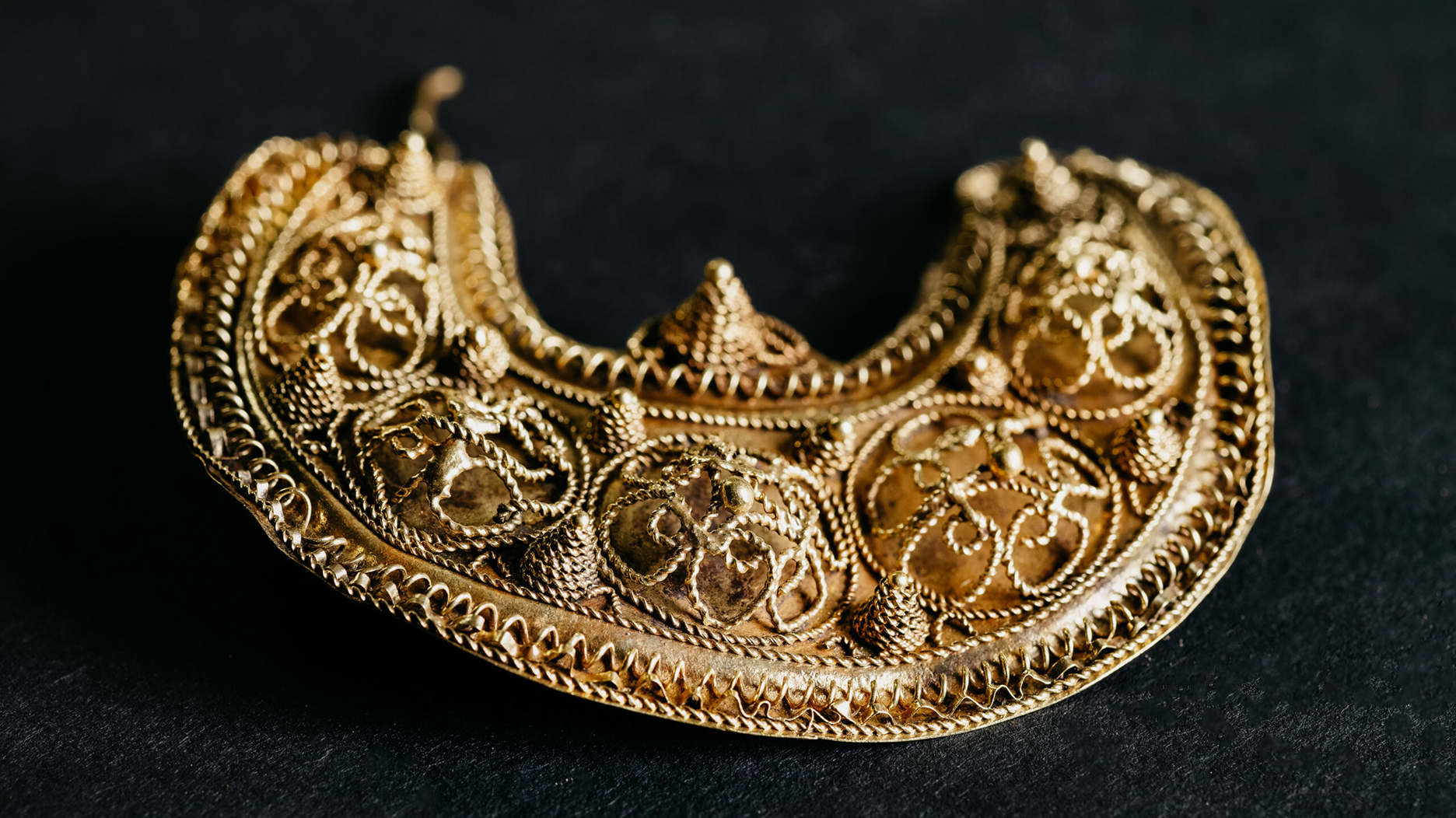
A closer look at one of the gold filigree earrings (Photo © Archeology West-Friesland/Fleur Schinning)
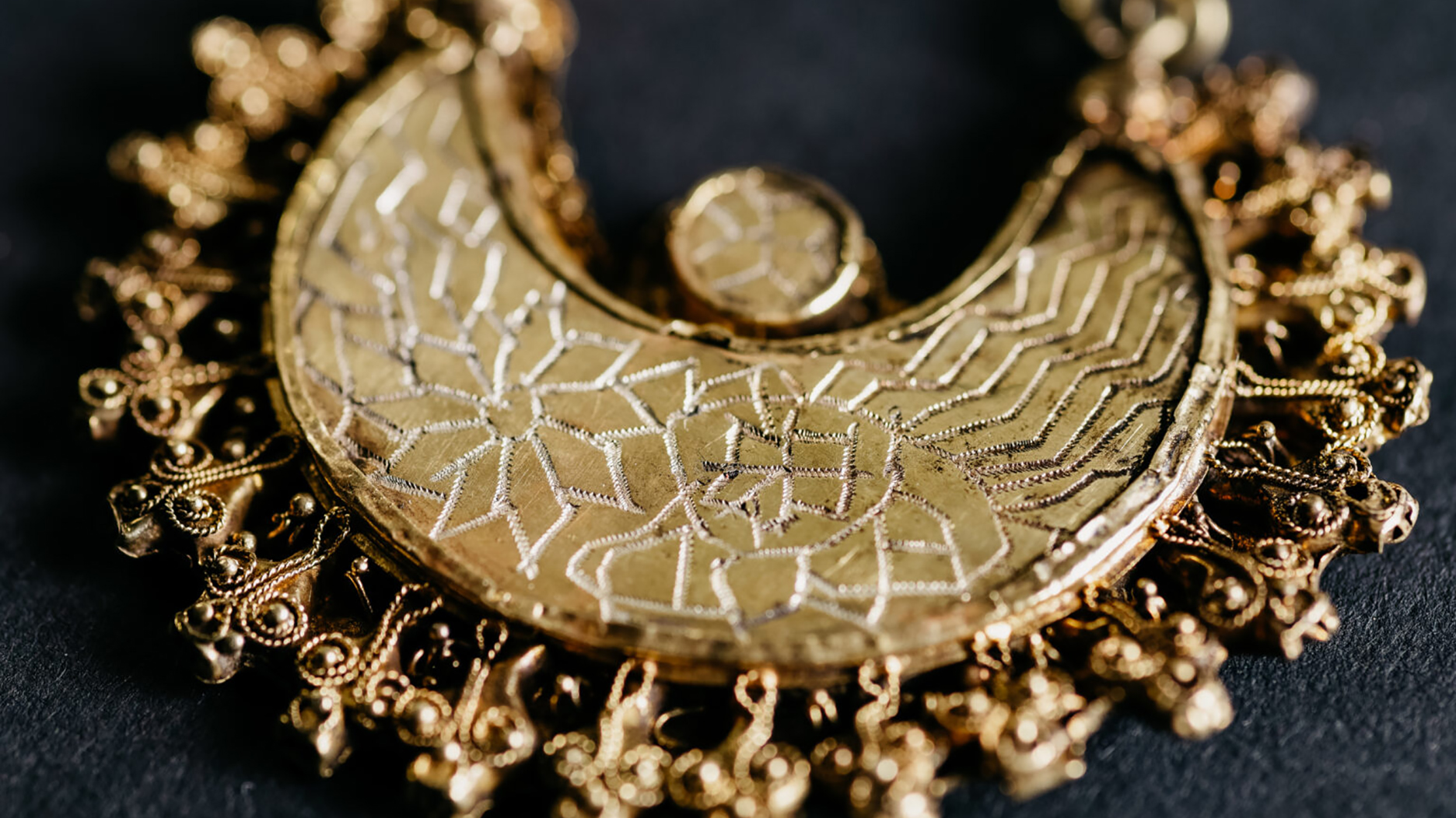
The earrings, like the one seen here, are believed to be from 1000 to 1050 CE. (Photo © Archeology West-Friesland/Fleur Schinning)
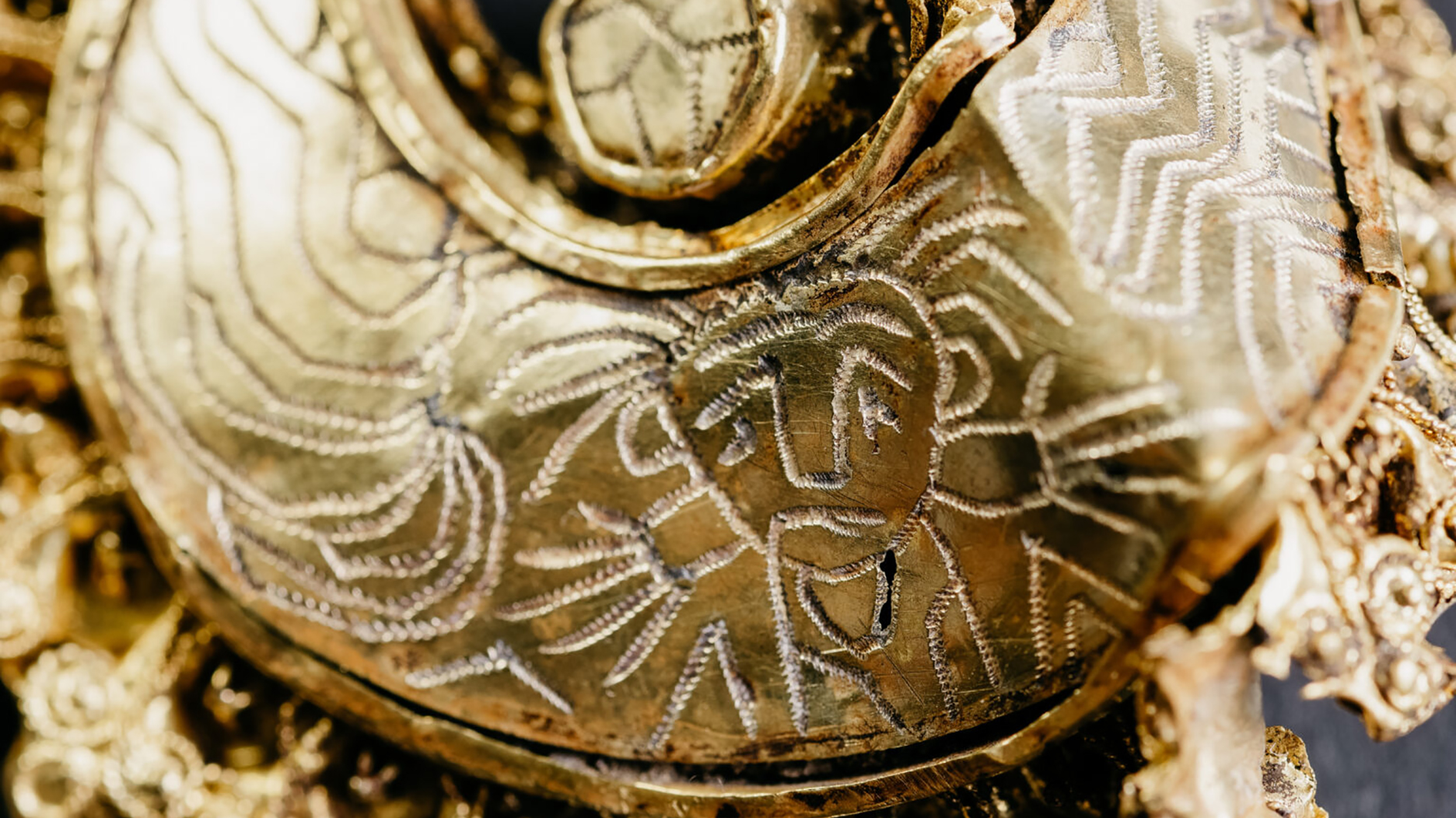
This engraving is likely a portrait of Jesus Christ, said the museum, also known as “Sol Invictus,” or the “unconquered sun.” (Photo © Archeology West-Friesland/Fleur Schinning)
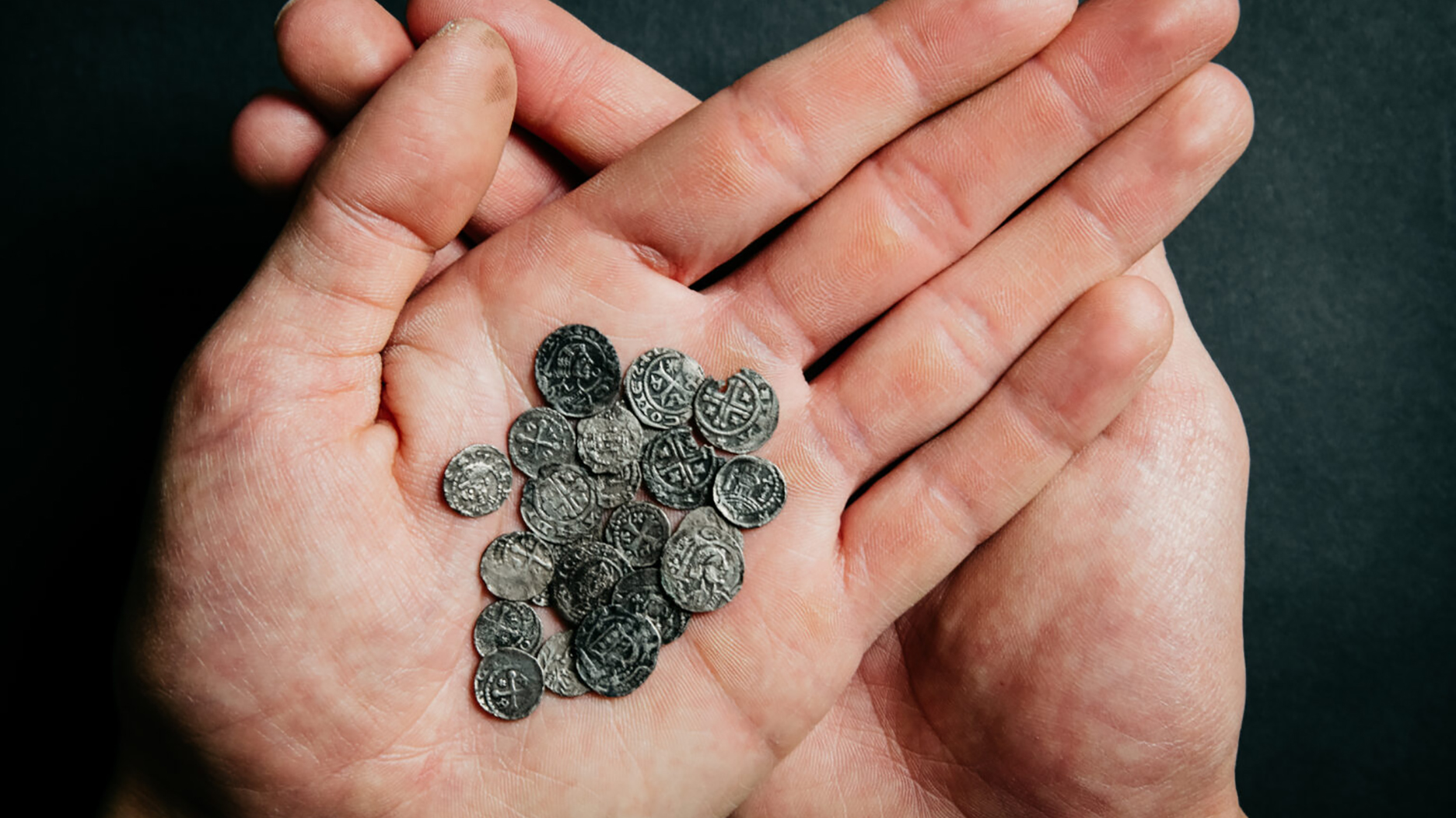
The coins found alongside the jewelry helped to determine how old the treasure was, said the museum. (Photo © Archeology West-Friesland/Fleur Schinning)
The most important objects, according to the museum, are the earrings. The first pair feature engraved scenes, including one depicting a man with rays surrounding his head, believed to be a portrait of Jesus Christ, also known as “Sol Invictus,” or the “unconquered sun.”
The other pair has intricate filigree decorations. One earring is badly damaged, likely due to being hidden under plowed soil for centuries.
“The jewelry is decorated on one side and has fragile suspension brackets. This suggests that they were probably not pierced through ears, but were worn on a hood or a headband,” said the museum, noting German images from the same time period show a similar style.

A recreation of how the earrings may have been worn, attached to a hood or headband (Photo © Archeology West-Friesland/Fleur Schinning)
The two gold leaf-shaped pieces fit together, and are believed to have been worn attached to clothing due to the small textile fibers that were found.
The jewelry and coins belong to the finder, Ruijter, but are temporarily on loan to the museum.
They will be on display in the Temple Hall of the museum until mid-June. Beginning Oct. 13, the find will be part of a new temporary exhibition, titled “The Year 1000.”
Editors' Picks
Sponsored by
More on Majors




The Latest


Weekly QuizOct 03, 2024
This Week’s QuizTest your jewelry news knowledge by answering these questions.


PodcastsJan 12, 2026
Introducing My Next Question, the PodcastA monthly podcast series for jewelry professionals


Brought to you by
Navigating Cybersecurity: Essential Guidance for JewelersFrom protecting customer data to safeguarding inventory records, it's crucial to learn how to tackle cybersecurity challenges.





PodcastsNov 27, 2025
Test Podcast With VideoTest Podcast With Video. New interview with Ada Lovelace.



PodcastsNov 25, 2025
Test New Podcast PostAbstract for tests. New Podcast interview with John Lennon, Jimi Hendrix and Jim Morison.

ColumnistsOct 09, 2024
Peter Smith: 7 Things to Know When Selling LuxuryAhead of the holiday season, Smith delves into the often subconscious reasons people buy luxury products for themselves or their loved ones.


AuctionsOct 09, 2024
Rolex Worn on Apollo 14 Mission Up for SaleThe GMT-Master “Pepsi” belonging to astronaut Edgar Mitchell is a standout in RR Auction’s online “Space Auction,” going on now.


MajorsOct 09, 2024
PGI Launches New Virtual Sales TrainingRetail sales associates can access the video series on mobile to refresh their selling skills.


Policies & IssuesOct 09, 2024
GJNRF: Reaching Out, Rebuilding Futures For 25 years, India’s Gem & Jewellery National Relief Foundation has provided aid in the wake of war, natural disasters, and global crises.


AuctionsOct 08, 2024
Sotheby’s Selling Jewelry That Belonged to a Bulgarian TsarThe November auction will feature a collection of jewels owned by Ferdinand I, the first king of modern Bulgaria, and his family.

SourcingOct 08, 2024
Rio Tinto Begins New Phase of Production That Will Extend Diavik’s LifeCommercial production has begun underground at the Canadian diamond mine’s A21 pipe.


SurveysOct 08, 2024
What to Know About Online Shopping This Holiday SeasonDeloitte and Adobe Analytics shared their insights on the season, from the retail sales forecast to the role of generative AI.

CollectionsOct 08, 2024
Sylvie Adds New Men’s BandsThe Texas-based jeweler collaborated with luxury clothing brand Uncommon Man on men’s bands designed with European influences.

SourcingOct 08, 2024
Is Current Diamond Industry Turbulence Shaping a ‘New Normal’? Industry players have found ways to cope with market conditions while working to reshape themselves in the face of emerging realities.

SourcingOct 07, 2024
Rio Tinto to Offer 76 Diamonds in 2024 Beyond Rare Tender The sales event, in its second year, features a selection of rare diamonds from the miner’s Argyle and Diavik diamond mines.

CollectionsOct 07, 2024
Olympian Kristi Yamaguchi Partners With Heller Jewelers on New CollectionA portion of the proceeds from the “Always Dream” collection will go to Yamaguchi's foundation, supporting early childhood literacy.

SurveysOct 07, 2024
Hill & Co.’s New ‘Business of Jewelry Report’ Is OutThe first in what is slated to be a series of in-depth reports from the consulting company, it focuses on shortening supply chains.