











SourcingMar 15, 2023
Amid Uncertainties, India’s Diamond Industry Continues to Adjust Policies & IssuesMar 15, 2023
When Diamonds Replenish the Earth
Hari Krishna Exports and the Dholakia Foundation’s “Mission 100 Sarovar” aims to create 100 lakes to help revive an area of Gujarat.

An aerial view of the Dholakia Foundation’s “Mission 100 Sarovar” project, which has brought water to areas of Gujarat that have been experiencing droughts in recent years.
Mumbai—Until the first decade of the new millennium, water was a very scarce commodity in and around Dudhala, a village in the Amreli district of Saurashtra region in Gujarat.
Vast tracts of land turned arid every summer. The area was in danger of being rendered permanently barren due to sustained drought-like conditions.
In the hottest months, drinking water too could be hard to come by, even for those who could afford the cost of transporting it by tanker.
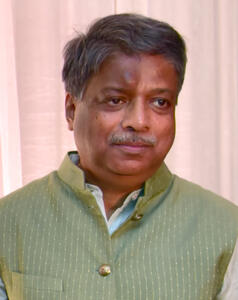
Then, one of India’s largest diamond manufacturers, Savjibhai Dholakia, founder and chairman of Hari Krishna Exports, who originally hails from this region, decided to wave his magic wand.
“Mission 100 Sarovar” (sarovar is the Gujarati word for lakes), a project under the banner of the Dholakia Foundation, quickly took shape.
Gujarat is home to the world’s diamond capital, Surat, the city which manufactures more than 90 percent (by volume) of diamonds annually.
It also suffers from environmental ills. Studies revealed that 52 percent of Gujarat’s land mass was facing desertification and other forms of land degradation in 2018-19.
Replenishing the Earth
The first steps to bring about change were taken in 2008 by Savjibhai. Dholakia and his Dholakia Foundation were determined to bring about change.
The diamonds his company manufactured to adorn the more affluent now began contributing to the welfare of the less privileged.
In essence, the mission of the Dholakia Foundation aimed to achieve what is embodied in Goal 6 of the United Nation’s 17 Sustainable Development Goals (SDGs), i.e., “ensure availability and sustainable management of water and sanitation for all.”
The 111 sarovars established over the last decade and a half or so are designed to harvest rainwater, replenish water tables and over time, ensure perennial access to water.
The centerpiece of this unique mission is the Panch Ganga Tirth Triveni Sangam, launched in 2008.
Initially, it was a mega series of five interconnected freshwater catchment lakes covering 20 villages around Dudhala, Dholakia’s ancestral home. The number of water bodies has risen significantly since then.
Inaugurated in 2017 by the Prime Minister of India Shri Narendra Modi, this massive network of lakes has a total storage capacity of 5.5 billion liters (1.45 billion gallons) of water and benefit as many as 200,000 farmers in the surrounding areas.
As an ecosystem, the Sangam also acts as a water harvesting structure, being replenished annually during monsoon season. It incorporates a series of check dams, farm ponds and percolation tanks designed to regenerate the badly depleted water table and restore the fertility of the soil.
Construction of this water complex was completed in record time, with the first steps being taken when a group of 400 people, personally led by the Dholakia family, worked non-stop for 23 hours deploying appropriate equipment to help.
Even Dholakia’s elderly father was involved in guiding the lake construction, while his mother headed a team of women who cooked food for all those involved.
Given such widespread support, a great quantity of degraded soil could be removed during a short period, thus ensuring that the catchment areas were ready in time for the monsoon that year.
Since these initial first steps, Mission 100 Sarovar has gathered pace and by 2023, 111 lakes had been constructed across Gujarat, with a few in Maharashtra too.
Green Cover
In conjunction with establishing these water bodies, the foundation has also embarked on an extensive tree-planting and social forestry drive.
More than 2.4 million trees have been planted across 25 locations within Gujarat, including fruit trees, decorative varieties and some with medicinal value.
In the process, the foundation estimates that nearly 2,500 acres of desert land has been transformed.
Another unique structure has come up in the vicinity of the Hari Krishna Exports factory in Icchapore in Surat—a garden around a special water body within the company’s premises.
This, along with similar structures at the nearby Dholakia Island and at Simada, are well maintained and utilized by employees for rest and recreation.
The gardens, which have a rich variety of ornamental herbaceous plants, are maintained with the use
of biofertilizers and biopesticides.
Measurable Impact
So, how has such an enormous effort impacted the lives of the local population?
A study conducted in 2022 by the Gujarat Institute of Desert Ecology (GUIDE), an institution run by an autonomous public trust set up by the state government, revealed:
- Enhancement in the watering frequency for various crops and a considerable increase in the area under cropping;
- Increase in recharge of ground water levels, with an average rise of up to 3-3.5 meters in the water table in wells near water resource structures;
- Rise in amount of irrigated land area, with the increase ranging from about 20 percent to 70 percent depending on the season and resulting in a 7 percent to 24 percent enhancement in productivity of various crops;
- Reduction in outward migration of the population during summer as adequate water supply is now available for fodder production;
- Increase in the average yield of milk of 1-1.5 liters (34-50 ounces) per day in cows and 1-3 liters (34-101 ounces) per day in buffaloes, with a corresponding rise in milk fat of 0.5 percent-25 percent;
- High overall survival percentage of new plantations, as nearly 86 percent are in good to excellent condition;
- Improvement in air quality; and
- Rise in inward migration of birds, including some species never before spotted in the region.
It was only fitting that Dholakia, now widely known as the “Waterman of Saurashtra,” was honored with the Padma Shri, the fourth highest civilian award in India, by the Indian government in 2022.
Yet for him the real satisfaction is knowing that the diamonds he manufactures have had a lasting impact on people’s lives and livelihoods.
“I had seen my mother treading long distances to fill a pot and my father praying for good rains every season,” Dholakia said. “Now, they, and thousands of others no longer have to do the same.”
Editors' Picks
Sponsored by


More on Policies & Issues




The Latest




Weekly QuizOct 03, 2024
This Week’s QuizTest your jewelry news knowledge by answering these questions.


PodcastsJan 12, 2026
Introducing My Next Question, the PodcastA monthly podcast series for jewelry professionals


Brought to you by
Navigating Cybersecurity: Essential Guidance for JewelersFrom protecting customer data to safeguarding inventory records, it's crucial to learn how to tackle cybersecurity challenges.





PodcastsNov 27, 2025
Test Podcast With VideoTest Podcast With Video. New interview with Ada Lovelace.



PodcastsNov 25, 2025
Test New Podcast PostAbstract for tests. New Podcast interview with John Lennon, Jimi Hendrix and Jim Morison.

ColumnistsOct 09, 2024
Peter Smith: 7 Things to Know When Selling LuxuryAhead of the holiday season, Smith delves into the often subconscious reasons people buy luxury products for themselves or their loved ones.


AuctionsOct 09, 2024
Rolex Worn on Apollo 14 Mission Up for SaleThe GMT-Master “Pepsi” belonging to astronaut Edgar Mitchell is a standout in RR Auction’s online “Space Auction,” going on now.


MajorsOct 09, 2024
New Simon Campaign Invites Gen Z to ‘Meet Me At The Mall’The ads celebrate the mall culture of the ‘80s and ‘90s.


MajorsOct 09, 2024
PGI Launches New Virtual Sales TrainingRetail sales associates can access the video series on mobile to refresh their selling skills.


AuctionsOct 08, 2024
Sotheby’s Selling Jewelry That Belonged to a Bulgarian TsarThe November auction will feature a collection of jewels owned by Ferdinand I, the first king of modern Bulgaria, and his family.

SourcingOct 08, 2024
Rio Tinto Begins New Phase of Production That Will Extend Diavik’s LifeCommercial production has begun underground at the Canadian diamond mine’s A21 pipe.


SurveysOct 08, 2024
What to Know About Online Shopping This Holiday SeasonDeloitte and Adobe Analytics shared their insights on the season, from the retail sales forecast to the role of generative AI.

CollectionsOct 08, 2024
Sylvie Adds New Men’s BandsThe Texas-based jeweler collaborated with luxury clothing brand Uncommon Man on men’s bands designed with European influences.

SourcingOct 08, 2024
Is Current Diamond Industry Turbulence Shaping a ‘New Normal’? Industry players have found ways to cope with market conditions while working to reshape themselves in the face of emerging realities.

SourcingOct 07, 2024
Rio Tinto to Offer 76 Diamonds in 2024 Beyond Rare Tender The sales event, in its second year, features a selection of rare diamonds from the miner’s Argyle and Diavik diamond mines.

CollectionsOct 07, 2024
Olympian Kristi Yamaguchi Partners With Heller Jewelers on New CollectionA portion of the proceeds from the “Always Dream” collection will go to Yamaguchi's foundation, supporting early childhood literacy.

SurveysOct 07, 2024
Hill & Co.’s New ‘Business of Jewelry Report’ Is OutThe first in what is slated to be a series of in-depth reports from the consulting company, it focuses on shortening supply chains.