
test
Tiffany Is Now Telling Consumers the Origin of Its Diamonds
Next year, the jeweler will start sharing information on where stones were cut and polished.

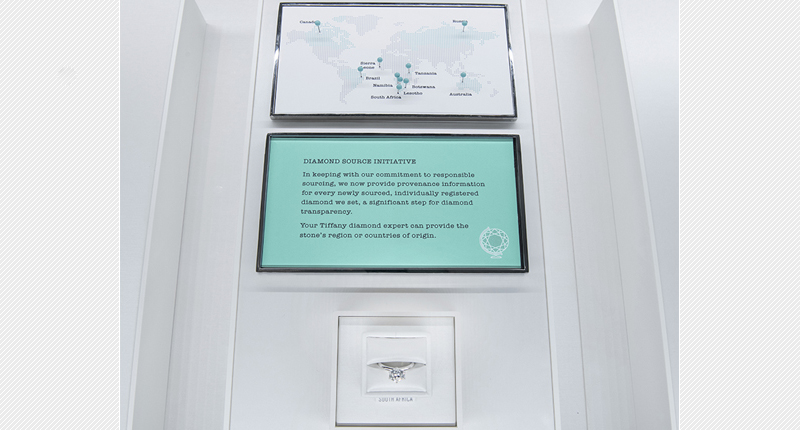
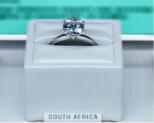
There’s now a map inside with 10 pins dropped on countries from Canada to Australia above a plaque that reads: “In keeping with our commitment to responsible sourcing, we now provide provenance information for every newly sourced, individually registered diamond we set, a significant step for diamond transparency.”
The plaque and the map—both with touches of Tiffany blue, of course—are part of what the jeweler is calling the “Diamond Source Initiative,” which it rolled out worldwide last month.
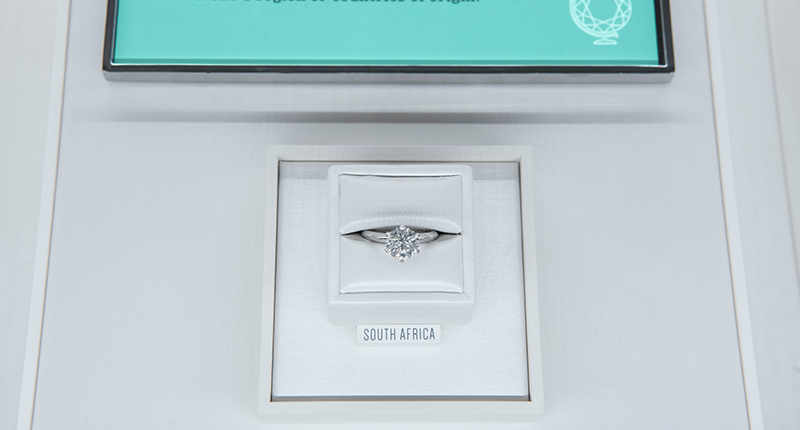
Now when customers come into any of Tiffany’s 300-plus stores, salespeople will be able to tell them the country of origin for most “individually registered” diamonds—diamonds that are 0.18 carats or larger and have been laser-engraved with “T&Co.” and a unique serial number.
There are, of course, a couple exceptions.
Diamonds sourced from De Beers, which does not segregate production from its various mines in southern Africa and Canada, will be labeled “Botswana sort.” Most of the stones, Tiffany said, were mined in Botswana, with some originating from mines in Namibia, South Africa and Canada.
For diamonds that pre-date the program’s rollout, Tiffany said it will provide confirmation to consumers that the diamond was sourced responsibly.
Tiffany started sharing diamond origin in its stores on Jan. 9, though it could have begun doing so years ago.
Andy Hart, Tiffany’s senior vice president of diamond jewelry and supply, said former Chairman and CEO Michael Kowalski started Tiffany down the path of charting diamond origin in the late ‘90s.
In 2002, Tiffany established Laurelton Diamonds, the jeweler’s rough sourcing arm that is a De Beers sightholder, and a client of Alrosa and Canadian miner Dominion Diamond.
In 2003, it began laser-inscribing its diamonds with unique serial numbers that are recorded in a database that contains information about each stone’s journey from mine to market.
So, why wait until now to start sharing source information with consumers?
“For a long time, we felt we were doing it because it was the right thing to do, and it was good for the company and it was good for the industry,” Hart said. “I think our customers deserve to know what is going on behind the scenes.”
“We just felt like now was the right moment in Tiffany’s history to disclose the origin to our customers,” he said. “We really believe in the rarity and the incredible nature of diamonds. Diamonds grown in the lab have important uses in particular contexts and are going to perhaps have a greater use in the in the jewelry industry.”
But, Hart said, Tiffany won’t be using the stones in its jewelry.
“Natural diamonds create opportunity for people in countries where diamonds are a natural resource, such as Botswana. We believe in the opportunity to make, and we are making, a positive impact in those local communities.”
The Latest


A monthly podcast series for jewelry professionals

From protecting customer data to safeguarding inventory records, it's crucial to learn how to tackle cybersecurity challenges.

Test Podcast With Video. New interview with Ada Lovelace.

Abstract for tests. New Podcast interview with John Lennon, Jimi Hendrix and Jim Morison.

Ahead of the holiday season, Smith delves into the often subconscious reasons people buy luxury products for themselves or their loved ones.

The GMT-Master “Pepsi” belonging to astronaut Edgar Mitchell is a standout in RR Auction’s online “Space Auction,” going on now.

Retail sales associates can access the video series on mobile to refresh their selling skills.

For 25 years, India’s Gem & Jewellery National Relief Foundation has provided aid in the wake of war, natural disasters, and global crises.

The November auction will feature a collection of jewels owned by Ferdinand I, the first king of modern Bulgaria, and his family.

Commercial production has begun underground at the Canadian diamond mine’s A21 pipe.

Deloitte and Adobe Analytics shared their insights on the season, from the retail sales forecast to the role of generative AI.

The Texas-based jeweler collaborated with luxury clothing brand Uncommon Man on men’s bands designed with European influences.

Industry players have found ways to cope with market conditions while working to reshape themselves in the face of emerging realities.

The sales event, in its second year, features a selection of rare diamonds from the miner’s Argyle and Diavik diamond mines.

A portion of the proceeds from the “Always Dream” collection will go to Yamaguchi's foundation, supporting early childhood literacy.

The first in what is slated to be a series of in-depth reports from the consulting company, it focuses on shortening supply chains.