
test
Global Diamond Jewelry Demand Up in 2017, Led by US
Early indications are that the increase in consumer marketing aided the U.S., China and India.

London--Early indications are that diamond jewelry demand rose globally in 2017, aided by the consumer marketing campaigns put in place for the fourth quarter, De Beers’ parent company Anglo American said Thursday.
In releasing its annual results, Anglo said that the United States was once again the main contributor to the growth in demand for diamond jewelry, while demand in other markets, like India, the Gulf States and Japan, was flat or fell.
De Beers invested more than $140 million in marketing in 2017, a 19 percent increase from 2016. That money went both to promoting the Forevermark Tribute collection and to the “Real Is Rare” campaign from the Diamond Producers Association.
While global demand for diamond jewelry rose, De Beers saw sales slip 4 percent, with the company noting it was up against difficult comps from the first half of 2016.
Total revenue was $5.84 billion, compared with $6.07 billion in 2016, though underlying EBITA (earnings before interest, taxes and amortization) was up slightly. This was due to improved margins; a strong performance in Canada, where Gahcho Kué came online and Snap Lake was shut down; and Element Six, which manufactures diamonds for industrial purposes and benefited from the recovery in oil and gas markets.
EBITA rose 2 percent from $1.41 billion in 2016 to $1.44 billion in 2017.
De Beers’ production was up 22 percent year-over-year, leading all of Anglo American’s divisions, and sales volume rose from 30 million carats to 32.5 million carats.
The company mined 33.5 million carats of rough diamonds in 2017, compared with 27.3 in 2016.
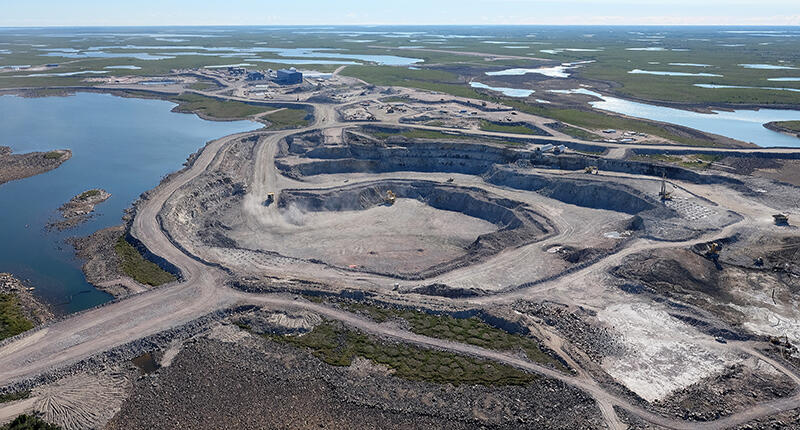
Anglo said the increase in diamond production was the result of stronger trading conditions and the contribution from Gahcho Kué, the mine in Canada that went into commercial production in March 2017.
De Beers’ top-producing mines were those in Botswana (operated in partnership with the government of Botswana as Debswana), followed by South Africa, Canada and Namibia (operated in partnership with the government as Namdeb Holdings).
The average realized price De Beers got for its diamonds dropped 13 percent, from $187 per carat to $162 per carat.
This was due to stronger demand for lower-value goods in the first sight of the year, which came from Indian diamantaires restocking after recovering from the country’s demonetization program, and the ramp-up in production at mines that produce lower-quality diamonds, including Orapa and Gahcho Kué.
In
Diamond production is forecast to increase to 34-36 million carats.
The Latest


A monthly podcast series for jewelry professionals

From protecting customer data to safeguarding inventory records, it's crucial to learn how to tackle cybersecurity challenges.

Test Podcast With Video. New interview with Ada Lovelace.

Abstract for tests. New Podcast interview with John Lennon, Jimi Hendrix and Jim Morison.

Ahead of the holiday season, Smith delves into the often subconscious reasons people buy luxury products for themselves or their loved ones.

The GMT-Master “Pepsi” belonging to astronaut Edgar Mitchell is a standout in RR Auction’s online “Space Auction,” going on now.

Retail sales associates can access the video series on mobile to refresh their selling skills.

For 25 years, India’s Gem & Jewellery National Relief Foundation has provided aid in the wake of war, natural disasters, and global crises.

The November auction will feature a collection of jewels owned by Ferdinand I, the first king of modern Bulgaria, and his family.

Commercial production has begun underground at the Canadian diamond mine’s A21 pipe.

Deloitte and Adobe Analytics shared their insights on the season, from the retail sales forecast to the role of generative AI.

The Texas-based jeweler collaborated with luxury clothing brand Uncommon Man on men’s bands designed with European influences.

Industry players have found ways to cope with market conditions while working to reshape themselves in the face of emerging realities.

The sales event, in its second year, features a selection of rare diamonds from the miner’s Argyle and Diavik diamond mines.

A portion of the proceeds from the “Always Dream” collection will go to Yamaguchi's foundation, supporting early childhood literacy.

The first in what is slated to be a series of in-depth reports from the consulting company, it focuses on shortening supply chains.