



PodcastsJan 12, 2026
The latest poscasttest





test


The system is currently being tested in New York and Carlsbad, with an industry-wide rollout expected next year.

New York—The Gemological Institute of America is boldly going where it has never gone before—into the realm of automated clarity grading for diamonds.
GIA announced last week that it is partnering with IBM to develop an artificial intelligence system for diamond clarity grading.
The lab is currently testing the system internally at its New York and Carlsbad, California facilities on stones that are 4 carats and under, with plans to expand it and start sending out stones that were clarity-graded using AI in 2021.
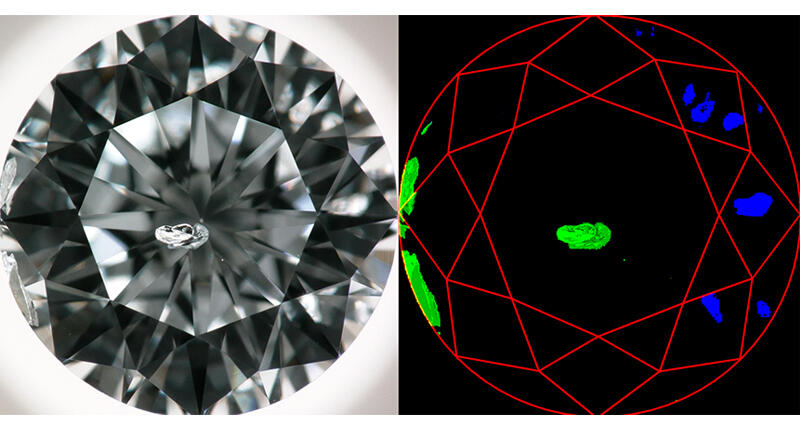
Pritesh Patel, GIA’s senior vice president and chief operating officer, said AI clarity grading works by feeding data sets—GIA has thousands of stones in its reference collection that are used as standards for the 4Cs—into the program, which then is used to train algorithms on how to grade diamonds for clarity.
It, essentially, learns how to look for certain types of inclusions, feathers, crystals, needles, etc., and what clarity grade those inclusions, or combinations of inclusions, equate to in a diamond.
Once the training is complete, the AI program will continue to follow that training, and GIA can feed it more data over a period of time so the system’s intelligence will continue to grow.
GIA Executive Vice President and Chief Laboratory and Research Officer Tom Moses said at this point, the AI clarity grading is still in the development stage, so the lab has its human graders checking its work.
In the future, though, the system will function on its own most of the time, with a goal of making grading faster, accurate and consistent, and expanding the technology to more diamond shapes, sizes and qualities.
“Ultimately, we believe in the vast majority of cases [human involvement] will not be necessary,” Moses said, though he notes there still will be “a set of eyes” on larger, more important diamonds.
Automated grading is not new for GIA.
Moses said it’s been part of GIA since the beginning, as lab founder Robert Shipley Sr.’s son, Robert Jr., helped the lab develop an instrument to support visual color grading in the 1940s.
Clarity grading, in fact, is the final one of the four Cs for which GIA is introducing an automated process; in an interview with JCKonline.com, Moses described it as “the last frontier” of automated diamond grading because of its complexities.
While grading clean stones, like VVS or VS diamonds, is fairly simple, clarity grading gets more complicated





A monthly podcast series for jewelry professionals


From protecting customer data to safeguarding inventory records, it's crucial to learn how to tackle cybersecurity challenges.


Test Podcast With Video. New interview with Ada Lovelace.



Abstract for tests. New Podcast interview with John Lennon, Jimi Hendrix and Jim Morison.

Ahead of the holiday season, Smith delves into the often subconscious reasons people buy luxury products for themselves or their loved ones.

The GMT-Master “Pepsi” belonging to astronaut Edgar Mitchell is a standout in RR Auction’s online “Space Auction,” going on now.

The ads celebrate the mall culture of the ‘80s and ‘90s.

Retail sales associates can access the video series on mobile to refresh their selling skills.

For 25 years, India’s Gem & Jewellery National Relief Foundation has provided aid in the wake of war, natural disasters, and global crises.

The November auction will feature a collection of jewels owned by Ferdinand I, the first king of modern Bulgaria, and his family.

Commercial production has begun underground at the Canadian diamond mine’s A21 pipe.

Deloitte and Adobe Analytics shared their insights on the season, from the retail sales forecast to the role of generative AI.

The Texas-based jeweler collaborated with luxury clothing brand Uncommon Man on men’s bands designed with European influences.

Industry players have found ways to cope with market conditions while working to reshape themselves in the face of emerging realities.

The sales event, in its second year, features a selection of rare diamonds from the miner’s Argyle and Diavik diamond mines.

A portion of the proceeds from the “Always Dream” collection will go to Yamaguchi's foundation, supporting early childhood literacy.





This site uses cookies to give you the best online experience. By continuing to use & browse this site, we assume you agree to our Privacy Policy