



PodcastsJan 12, 2026
The latest poscasttest





test


De Beers is now in the manufacturing stage with its melee screener and will lease it to interested sightholders in the second quarter before placing the device in a grading and research facility it operates in Antwerp, making it open to the trade more generally.

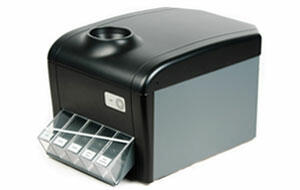
London--De Beers is now in the manufacturing stage with its melee screener and will lease it to interested sightholders in the second quarter before placing the device in a grading and research facility it operates in Antwerp, making it open to the trade more generally.
The machine, officially dubbed the Automated Melee Screening Device, or AMS, screens near-colorless or colorless diamonds as small as one point and up to 0.20 carats to determine if they are natural, De Beers said.
Unlike the screening device for synthetic and high-pressure, high-temperature- (HPHT) treated diamonds introduced this week by the Gemological Institute of America that tests one stone at a time, De Beers’ device can take up to 500 carats of melee at once and automatically feeds the stones, table-down, into a measurement station.
Following testing, the diamonds are automatically dispensed into one of five bins:
-- Pass: The stone is not a synthetic or a simulant. Trials have indicated pass rates of 95 to 99 percent for natural melee;
-- Refer: A rare result, this indicates that more testing is needed;
-- Refer Type II: The stone has a low concentration of nitrogen and further testing is required, as it may be synthetic;
-- Non-diamond: The stone is a simulant or synthetic; and
-- Purge: This bin is for when the user needs to empty out the machine because, for example, they placed the wrong packet of diamonds into the device.
Because the machine feeds and sorts stones automatically it can be left unattended, and one person can operate multiple machines at a time.
However, unlike the GIA, De Beers won’t be leasing its device at no cost in exchange for data, or selling it to the general trade, at least not right now.
De Beers said it will offer three-year leases on the device, which was developed by De Beers Technologies UK, to sightholders through the International Institute of Diamond Grading & Research (IIDGR) in Antwerp for $25,000 a year. De Beers declined to say which sightholders would be leasing the machines.
Founded in 2008, the IIDGR is part of the De Beers Group of Companies and is a grading and research center that offers a range of diamond grading services and specializes in developing verification instruments.
In addition to leasing the machines to sightholders, De Beers will install multiple melee screening devices at the IIDGR later

When asked if De Beers plans to sell the device to the trade, a spokeswoman for the diamond miner and marketer said the “initial plan” is to lease the device to sightholders, which are the “current priority at the moment.”
De Beers tested the device last year in a pilot program at the IIDGR. A number of the devices also were deployed to diamond centers worldwide, to measure the impact of different environmental conditions on the machine’s performance, De Beers said.
After receiving what it describes as “strong expressions of interest from many sightholders,” De Beers opted to begin manufacturing the melee screener.
De Beers’ release of information about its automated melee screener comes on the heels of the GIA’s official announcement on Monday that it had developed the DiamondCheck, a screening device for the detection of lab-grown as well as HPHT-treated diamonds as small as one point in size.
The GIA is leasing the machines to diamond bourses around the world at no cost in exchange for data about the stones that get screened. Through GIA Instruments, it is also selling the DiamondCheck to the wider trade for $23,900.
The bourses currently slated to receive a DiamondCheck are in New York, Mumbai, Dubai, South Africa, Hong Kong, Tokyo, Shanghai and Tel Aviv.
Absent from this initial list is the bourse in Antwerp, one of the world’s main trading hubs, though the GIA said Antwerp, along with other diamond centers, likely will receive a DiamondCheck later in the first quarter.




A monthly podcast series for jewelry professionals


From protecting customer data to safeguarding inventory records, it's crucial to learn how to tackle cybersecurity challenges.


Test Podcast With Video. New interview with Ada Lovelace.



Abstract for tests. New Podcast interview with John Lennon, Jimi Hendrix and Jim Morison.

Ahead of the holiday season, Smith delves into the often subconscious reasons people buy luxury products for themselves or their loved ones.

The GMT-Master “Pepsi” belonging to astronaut Edgar Mitchell is a standout in RR Auction’s online “Space Auction,” going on now.

The ads celebrate the mall culture of the ‘80s and ‘90s.

Retail sales associates can access the video series on mobile to refresh their selling skills.

For 25 years, India’s Gem & Jewellery National Relief Foundation has provided aid in the wake of war, natural disasters, and global crises.

The November auction will feature a collection of jewels owned by Ferdinand I, the first king of modern Bulgaria, and his family.

Commercial production has begun underground at the Canadian diamond mine’s A21 pipe.

Deloitte and Adobe Analytics shared their insights on the season, from the retail sales forecast to the role of generative AI.

The Texas-based jeweler collaborated with luxury clothing brand Uncommon Man on men’s bands designed with European influences.

Industry players have found ways to cope with market conditions while working to reshape themselves in the face of emerging realities.

The sales event, in its second year, features a selection of rare diamonds from the miner’s Argyle and Diavik diamond mines.

A portion of the proceeds from the “Always Dream” collection will go to Yamaguchi's foundation, supporting early childhood literacy.





This site uses cookies to give you the best online experience. By continuing to use & browse this site, we assume you agree to our Privacy Policy