








EditorsMar 25, 2021
5 Things to Know About … RhodochrositeEditorsJul 12, 2021
5 Things to Know About … Coral
What the industry should know about regulations, what kinds of coral are considered precious, and more about the rare material.


Loose Sardinian coral beads from Assael
Coral is one of the oldest materials used by humans to adorn their bodies, offering vibrant pops of color in jewels dating all the way back to antiquity.
But, as is the case with most materials used for adornment, there’s a lot to learn about coral—the proper nomenclature, classification, how it’s protected, and more.
In an effort to offer clarity on the subject and an appreciation for the beauty and complexity of coral, here are five things to know about it.
1. It’s important to distinguish among the types of coral.
Nomenclature is an important conversation in many facets of the industry and coral is no exception, so I want to start here.
Corals are, as we know, tiny marine polyps—spineless organisms with a soft body and external skeleton made of calcium carbonate, according to GIA. The animals belong to the Cnidaria phylum, which includes more than 9,000 species.
But coral is a huge, diverse group, and comparing them would be like comparing all mammals, gemologist, gem education consultant, and coral expert Rui Galopim de Carvalho said in a recent interview.
Per the CIBJO Coral Blue Book, the trade defines “precious” corals as those used in jewelry that belong to one taxonomical group: the Corallidae family. Specifically, they are from the genus Corallium, Pleurocorallium, and Hemicorallium.
Fewer than a dozen coral types are considered precious, according to de Carvalho. (A comprehensive list of them is available on the Gem-A website.)
But, as is the case with most materials used for adornment, there’s a lot to learn about coral—the proper nomenclature, classification, how it’s protected, and more.
In an effort to offer clarity on the subject and an appreciation for the beauty and complexity of coral, here are five things to know about it.
1. It’s important to distinguish among the types of coral.
Nomenclature is an important conversation in many facets of the industry and coral is no exception, so I want to start here.
Corals are, as we know, tiny marine polyps—spineless organisms with a soft body and external skeleton made of calcium carbonate, according to GIA. The animals belong to the Cnidaria phylum, which includes more than 9,000 species.
But coral is a huge, diverse group, and comparing them would be like comparing all mammals, gemologist, gem education consultant, and coral expert Rui Galopim de Carvalho said in a recent interview.
Per the CIBJO Coral Blue Book, the trade defines “precious” corals as those used in jewelry that belong to one taxonomical group: the Corallidae family. Specifically, they are from the genus Corallium, Pleurocorallium, and Hemicorallium.
Fewer than a dozen coral types are considered precious, according to de Carvalho. (A comprehensive list of them is available on the Gem-A website.)
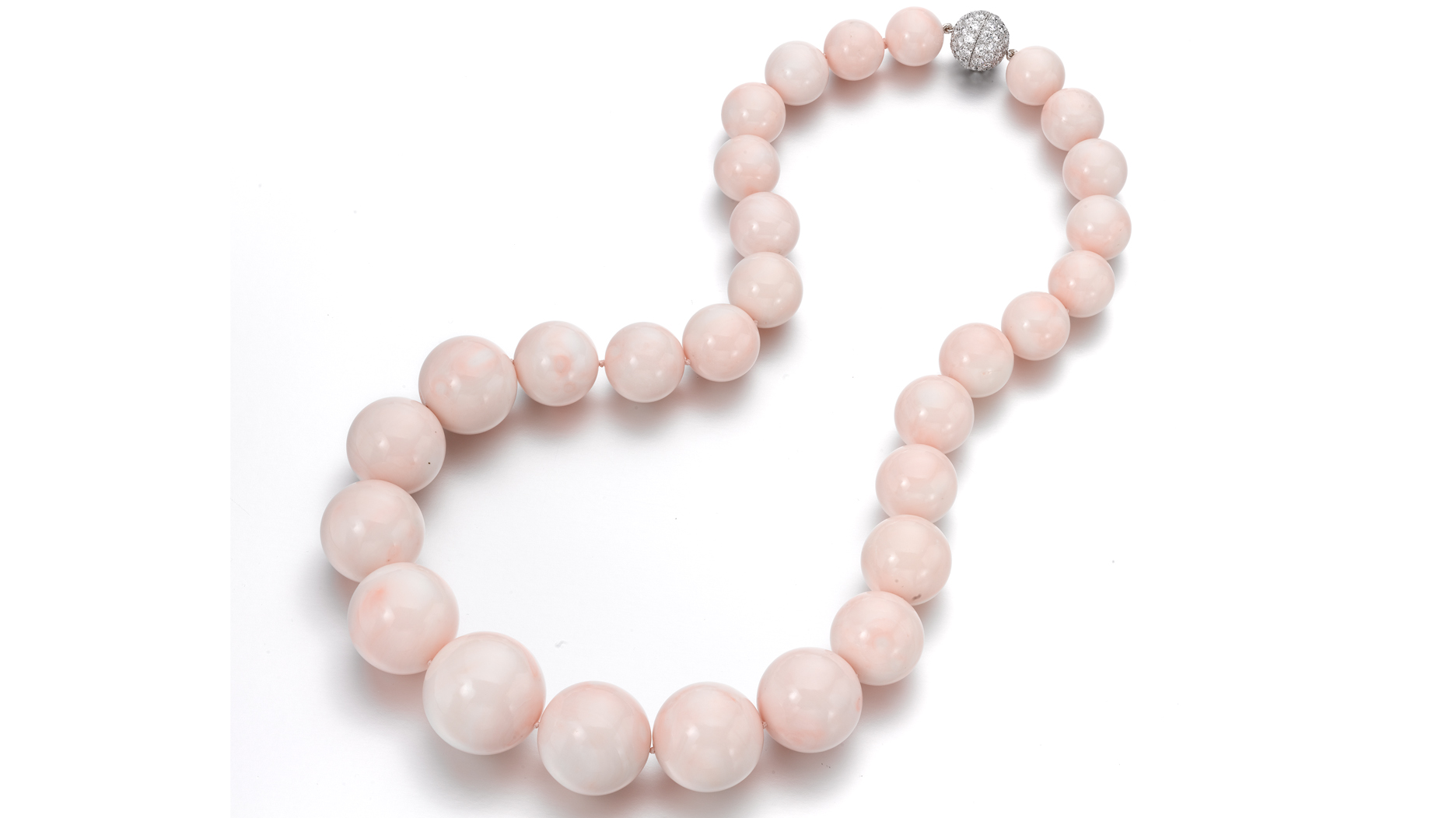
Assael’s Beyond Rare Angel Skin coral necklace featuring beads of approximately 16 mm to 30 mm in size, with a platinum clasp and 6.39 carats of diamonds (price available upon request)
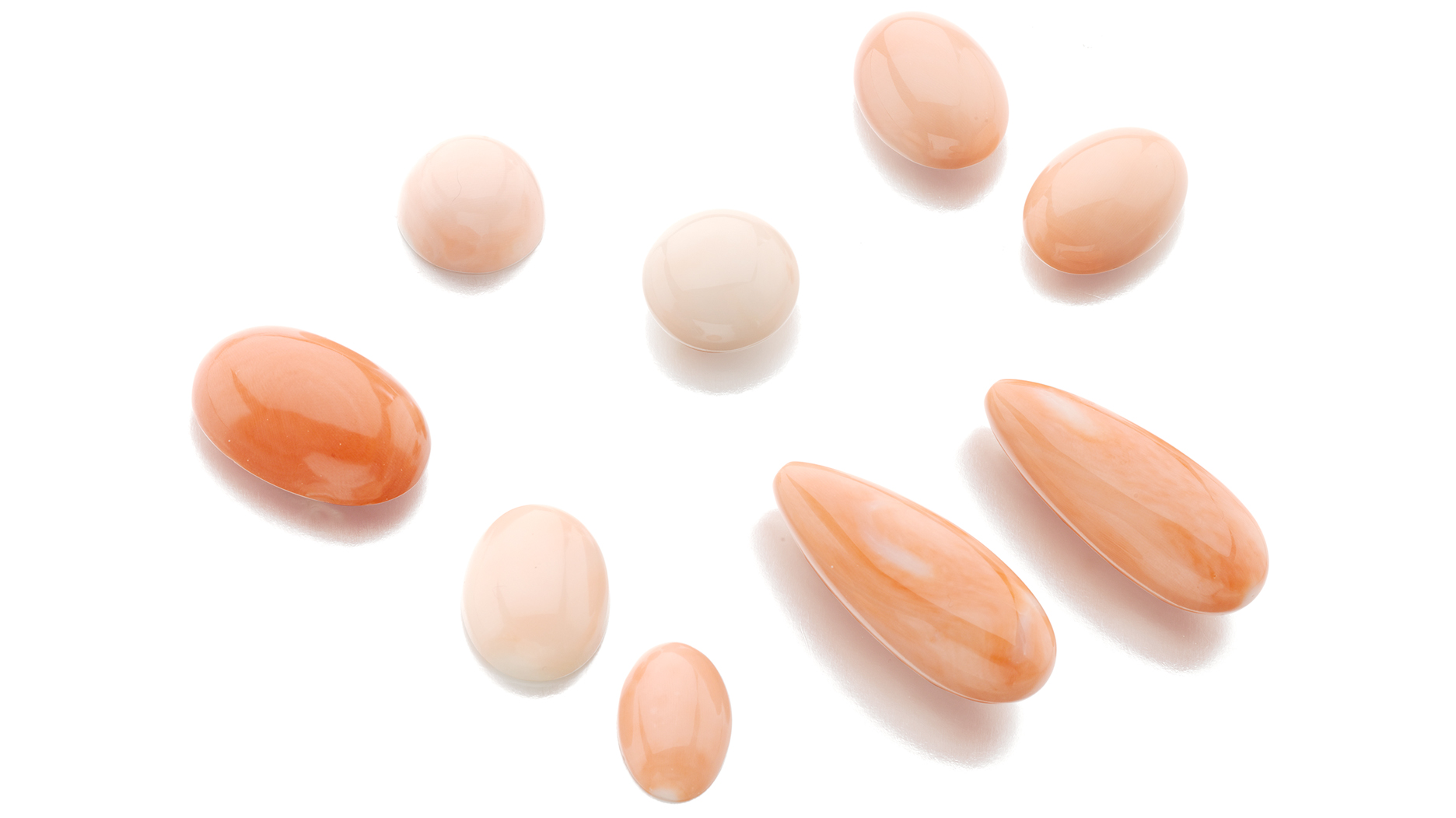
Assael loose Angel Skin coral beads
Outside of the Corallidae family, there are a few other coral types occasionally used for decoration.
Referred to as common corals, they are mostly calcareous types and frequently need treatments like bleaching, dyeing or impregnation to be used as gems, he added.
Within that, there are some are biologically known as reef corals, which is what might first come to mind when talking about coral—the colorful coral reefs in shallow waters that can be admired while snorkeling.
Reef corals, which are most affected by climate change and ocean acidification, grow in warm, clear, shallow water.
Precious corals, meanwhile, are solitary or colonial in habit, Gem-A President Maggie Campbell Pedersen wrote in a 2017 article, adding that they grow at greater depths, making them less vulnerable to changes in water temperature.
Precious coral is generally located and harvested 50 meters or more below the surface (one exception is the harvesting of Mediterranean coral) and belongs to a different ecosystem than reef-building coral.
Precious coral is fished in such a way—when done legally and responsibly—that it doesn't destroy the environment, according to CIBJO.
A group of international experts from two international universities have been tasked with further research on the sustainability of precious coral use/trade.
(It’s worth noting that academics use the term “precious” to refer to coral of any type or species that has been used for adornment, regardless of where and how it grows. This means different sources could be talking about different groups of coral.)
2. Here’s what you should know about how coral is regulated.
Endangered and threatened species are protected by an international treaty called CITES. It aims to ensure international trade doesn’t threaten a wild animal or plant’s survival.
Within CITES, species are listed in three Appendices, according to the degree of protection they need.
Appendix I includes species threatened with extinction; trade in those species is prohibited except for exceptional circumstances.
Appendix II includes species that aren’t necessarily threatened with extinction but may become so unless trade is closely controlled. This requires trade be monitored and meticulously documented with strict regulations.
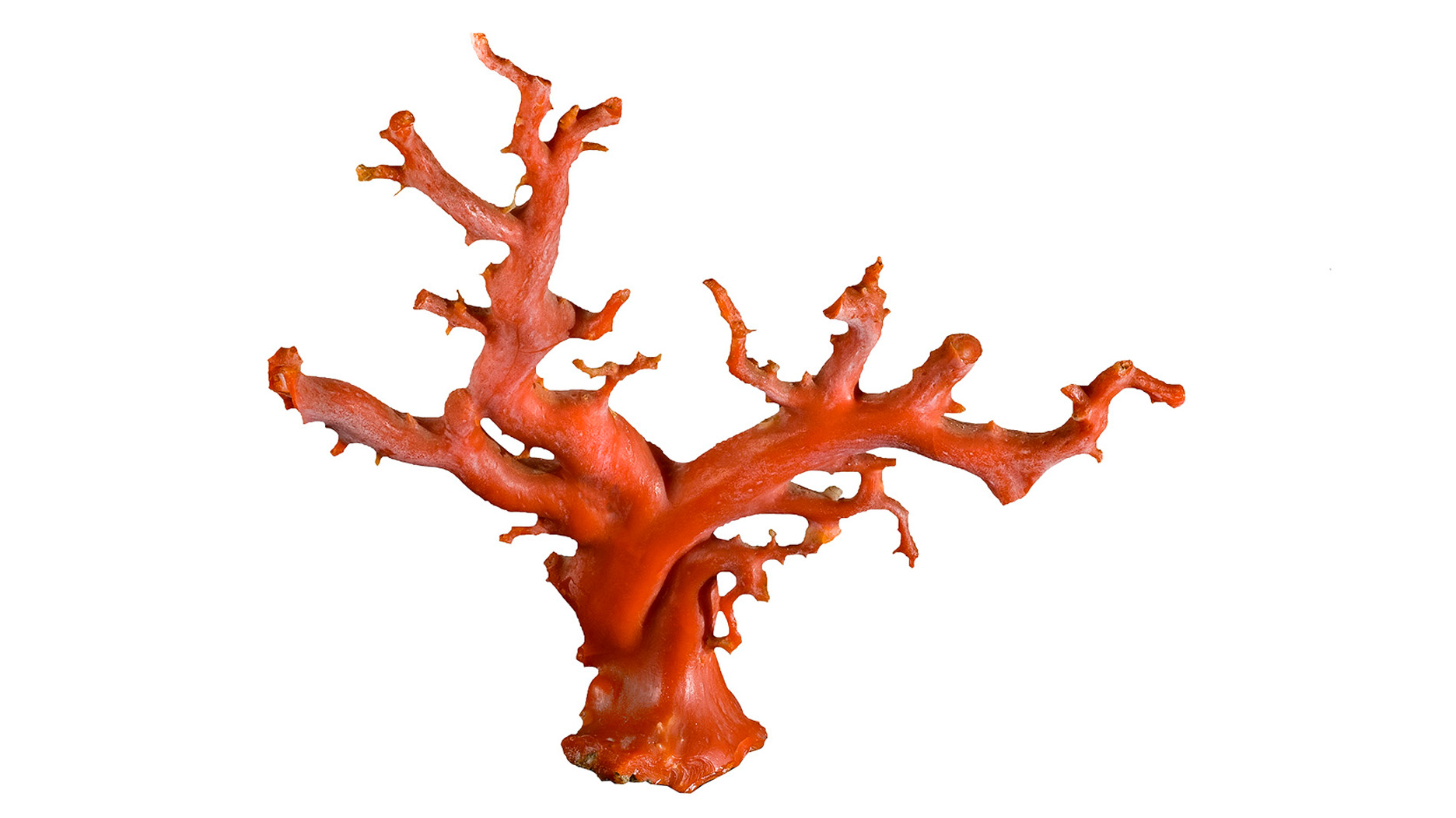
Orange coral trunk weighing 281.30 grams from the South China Sea, gift of Edward R. Swoboda (© GIA)
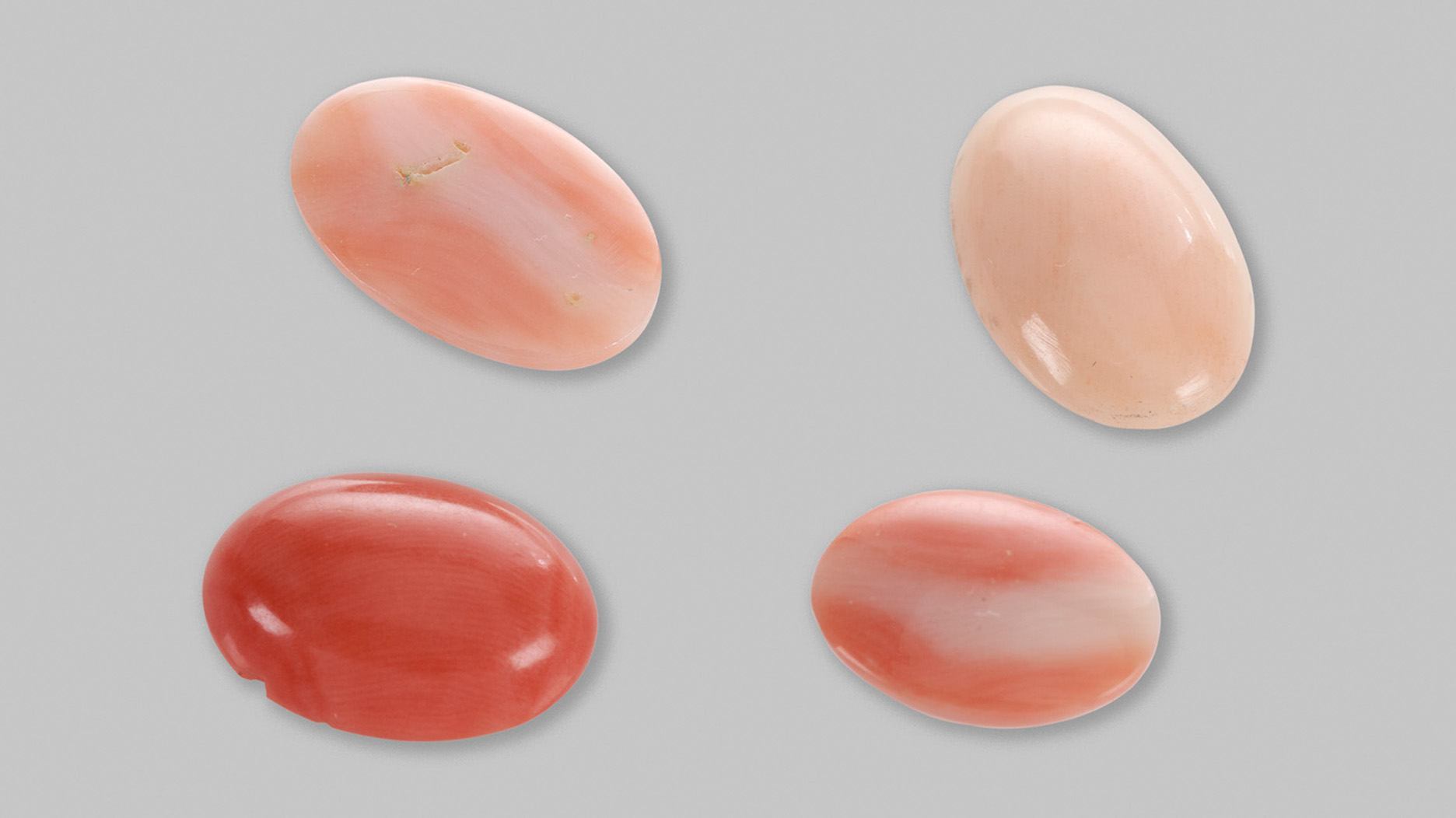
These samples show calcareous coral’s typical color range and wavy fibrous growth structure. (Photo by Eric Welch/GIA, © GIA)
Appendix III lists species which are not considered threatened but for which a country that already regulates its trade is asking for help in controlling it internationally to prevent exploitation. The main objective here is monitoring and resource management.
For Appendices I and II, species can be added, removed, or moved between the two lists only at a conference involving all parties, but they can be added to or removed from Appendix III at any time.
De Carvalho said there is no precious coral currently listed in Appendix I or Appendix II.
He did note that blue coral (Heliopora coerulea)—not classified as precious by the trade but sometimes used in jewelry—is listed in Appendix II.
Additionally, black coral (of the order Antipatharia) has been used in jewelry and also is listed in Appendix II.
Precious corals listed in Appendix III includes the deep-red Corallium japonicum, (also known as aka or “oxblood” coral), Pleurocorallium elatius (Angel Skin is a member of this species), Pleurocorallium konojoi, and Pleurocorallium secundum.
3. Precious coral offers a handful of colors.
The corals considered precious by the trade are rare, beautiful, have a uniform color, and a porcelain-like luster after polishing.
They also have a historical significance, de Carvalho said.
For example, Mediterranean coral has been used for thousands of years and is featured in old scriptures.
According to GIA, coral also has a rich lore—Ancient Romans believed it calmed the ocean waves, while in the Victorian era, coral beads were worn to ward off evil spirits.
Gemologically, precious corals are primarily comprised of calcium carbonate, making them relatively durable (they have a hardness of 3 on the Mohs scale, though, so are still soft compared to most gem materials), and can occasionally have a very strong color, which increases their attractiveness.
But the strong red that can be seen fine Mediterranean coral, for example, is just one of a handful of colors available from precious coral.
There’s also pink/salmon, white, cream, and various shades of orange.
4. Here’s what the market typically looks for.
Among the most valued types of coral in the trade is Angel Skin, the homogenous light pink variety of P. elatius, which gets its color from an albino-like disorder, de Carvalho wrote in a recent blog post on Assael’s website.
Peggy Grosz, senior vice president of Assael, which sources coral responsibly for its jewels, said: “Matching is critical in a strand or a necklace, not only in color but also in quality. And when you consider the rarity of Angel Skin coral, it is truly a treasure to have an entire strand.”
She said that unlike nacreous pearls, a well-matched Angel Skin coral necklace would almost always need to come from the same source material, so if there’s enough of it, it wouldn’t take as long as matching a gem-quality South Sea pearl necklace, for example.
There’s also the traditional species from the Mediterranean and the adjacent Atlantic Ocean, Corallium rubrum, referred to as Sardinian coral or Mediterranean coral and highly valuable in its strong red form.
Fishing for these corals now is heavily regulated by the U.N.’s General Fisheries Commission for the Mediterranean.
Harvesting below 50 meters is limited to minimum trunk sizes and only to very experienced divers, de Carvalho wrote.
Japanese aka coral is also among some of the finest, according to De Carvalho, which the trade often calls “oxblood.”
It’s very valuable, especially in its deep red colors, so much so that Chinese consumers normally buy it up before it can even reach the European or North American markets.
Assael, which carries both Angel Skin and Mediterranean coral, has seen demand for coral grow as desire for rare materials increases.
Grosz said more people are learning the differences between precious and reef coral as they aim to educate themselves, especially given that more of the major luxury houses are using precious coral in their new jewelry collections.
Increased demand has driven up prices for coral, she said.
And, as is usually the case, prices are higher for larger pieces of coral, with Grosz noting branches that are thick and/or wide are “few and far between.”

Alexandra Mor Mediterranean coral and diamond chandelier earrings in 18-karat white gold ($38,130)
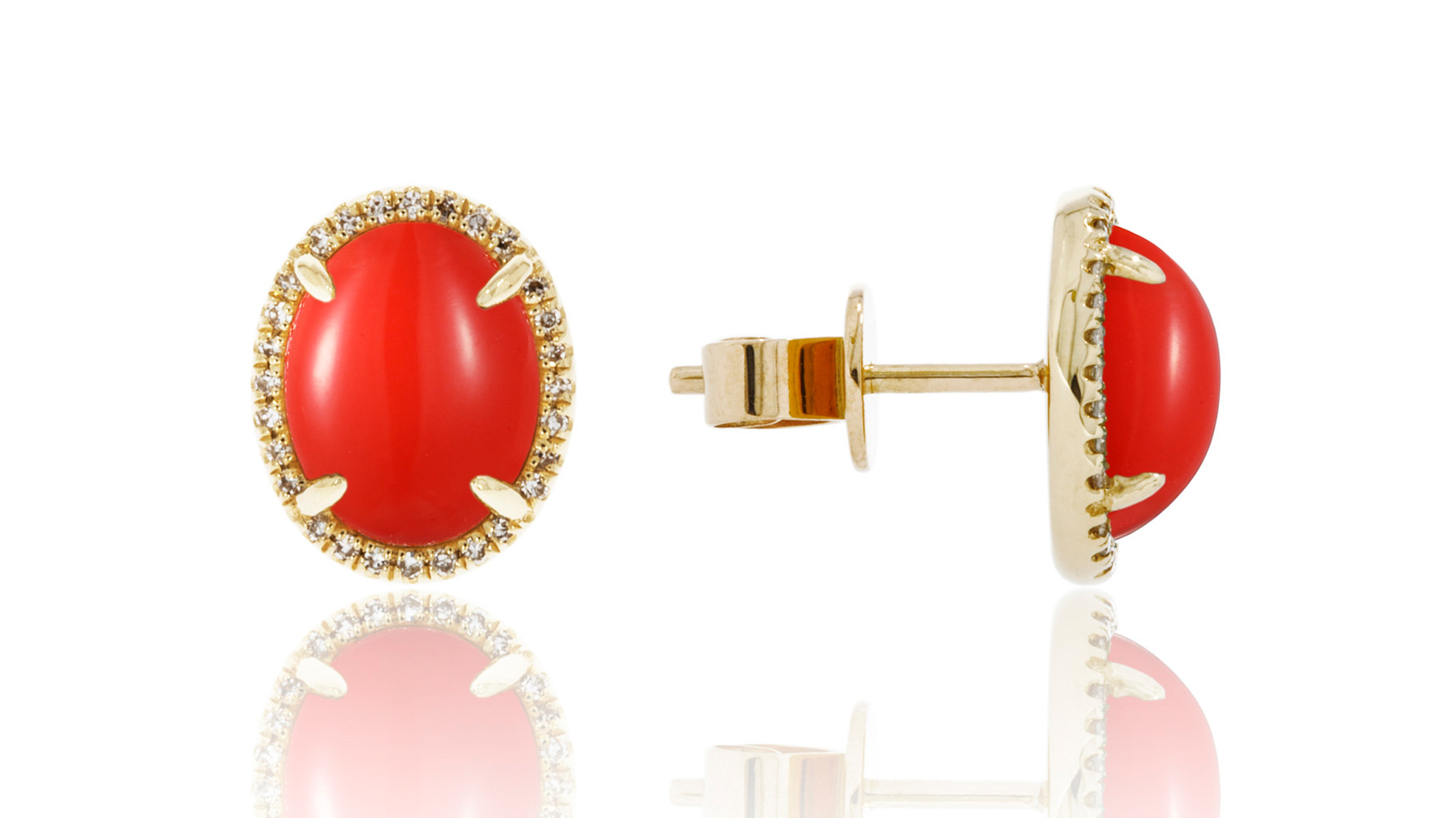
Luvente coral and diamond 14-karat yellow gold earrings ($1,060)
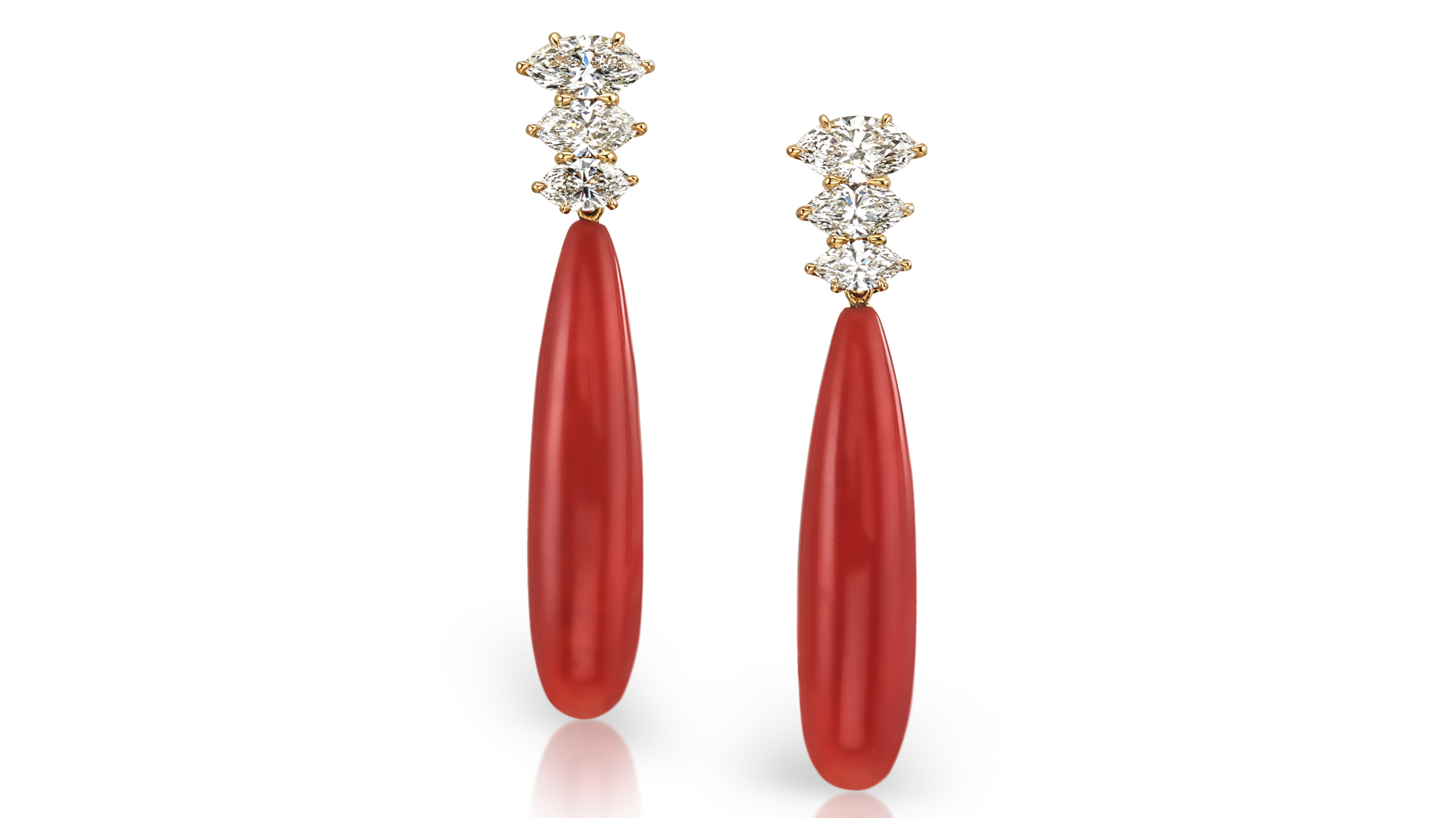
Assael’s Pagoda earrings, featuring responsibly sourced Sardinian coral drops and 3.05 carats of marquise diamonds in 18-karat yellow gold ($40,800)
5. Here are resources to make sure you have the right information and rules.
It’s important for the trade to understand coral so they can help communicate clearly their decision to use, or not use, the material.
“At least with the right information people can decide whether to buy or not to buy coral jewelry,” de Carvalho said.
CIBJO has had a Coral Commission since 2014. Both de Carvalho and Assael President and CEO Christina Lang Assael sit on it.
The commission aims to research and talk about conservation and sustainability, as well as to inform the jewelry industry about coral regulations.
CIBJO created a Coral Blue Book, which gives a comprehensive look at the correct terms to be used, what the trade needs to know about coral types, and the regulations they should keep in mind if they decide to buy or sell coral. It also lists harvesting areas that have adopted sustainable fishery regulations.
Keep in mind import/export rules for where a business is based.
In the U.S., coral is subject to regulations; these requirements include declaration and licensing permits from the United States Fish & Wildlife Service (USFWS) for importation/exportation and additional declarations required by U.S. Customs and Border Protection (CBP) upon import. Visit the USFWS website for more information about what is required and allowed.
Ultimately, sustainability and responsible sourcing should be at the forefront of anyone’s mind who’s working in precious materials of any kind.
After all, even though precious coral might not be as at risk as reef coral, it’s still a living organism that’s sensitive to increased acidity in water, rising sea levels from global warming, pollutants, and physical dangers like fishing nets, divers and overfishing, Gem-A’s Pedersen wrote.
It’s up to the trade to make sure coral is protected.
If you decide to trade in harvested goods rather than just using material that has been on the market already, do your due diligence to obtain your coral from a reliable source that’s following the rules to ensure the continued safety and existence of the living creatures.
A jeweler purchasing coral with the intent to export for sale should verify the seller has the appropriate CITES permit for the coral, and check with USFWS before importing/exporting animal products.
Editor’s note: This story was updated on July 14 to include information about black coral.
Editors' Picks
Sponsored by

EditorsJun 15, 2020
5 Things to Know About … Taaffeite
EditorsMar 16, 2020
5 Things to Know About … ForditeMore on Editors



The Latest




Weekly QuizOct 03, 2024
This Week’s QuizTest your jewelry news knowledge by answering these questions.


PodcastsJan 12, 2026
Introducing My Next Question, the PodcastA monthly podcast series for jewelry professionals


Brought to you by
Navigating Cybersecurity: Essential Guidance for JewelersFrom protecting customer data to safeguarding inventory records, it's crucial to learn how to tackle cybersecurity challenges.





PodcastsNov 27, 2025
Test Podcast With VideoTest Podcast With Video. New interview with Ada Lovelace.



PodcastsNov 25, 2025
Test New Podcast PostAbstract for tests. New Podcast interview with John Lennon, Jimi Hendrix and Jim Morison.

ColumnistsOct 09, 2024
Peter Smith: 7 Things to Know When Selling LuxuryAhead of the holiday season, Smith delves into the often subconscious reasons people buy luxury products for themselves or their loved ones.


AuctionsOct 09, 2024
Rolex Worn on Apollo 14 Mission Up for SaleThe GMT-Master “Pepsi” belonging to astronaut Edgar Mitchell is a standout in RR Auction’s online “Space Auction,” going on now.


MajorsOct 09, 2024
New Simon Campaign Invites Gen Z to ‘Meet Me At The Mall’The ads celebrate the mall culture of the ‘80s and ‘90s.


MajorsOct 09, 2024
PGI Launches New Virtual Sales TrainingRetail sales associates can access the video series on mobile to refresh their selling skills.


Policies & IssuesOct 09, 2024
GJNRF: Reaching Out, Rebuilding Futures For 25 years, India’s Gem & Jewellery National Relief Foundation has provided aid in the wake of war, natural disasters, and global crises.


AuctionsOct 08, 2024
Sotheby’s Selling Jewelry That Belonged to a Bulgarian TsarThe November auction will feature a collection of jewels owned by Ferdinand I, the first king of modern Bulgaria, and his family.

SourcingOct 08, 2024
Rio Tinto Begins New Phase of Production That Will Extend Diavik’s LifeCommercial production has begun underground at the Canadian diamond mine’s A21 pipe.


SurveysOct 08, 2024
What to Know About Online Shopping This Holiday SeasonDeloitte and Adobe Analytics shared their insights on the season, from the retail sales forecast to the role of generative AI.

CollectionsOct 08, 2024
Sylvie Adds New Men’s BandsThe Texas-based jeweler collaborated with luxury clothing brand Uncommon Man on men’s bands designed with European influences.

SourcingOct 08, 2024
Is Current Diamond Industry Turbulence Shaping a ‘New Normal’? Industry players have found ways to cope with market conditions while working to reshape themselves in the face of emerging realities.

SourcingOct 07, 2024
Rio Tinto to Offer 76 Diamonds in 2024 Beyond Rare Tender The sales event, in its second year, features a selection of rare diamonds from the miner’s Argyle and Diavik diamond mines.

CollectionsOct 07, 2024
Olympian Kristi Yamaguchi Partners With Heller Jewelers on New CollectionA portion of the proceeds from the “Always Dream” collection will go to Yamaguchi's foundation, supporting early childhood literacy.