Editors

What It’s Like to Be a Field Gemologist, Part 1

EditorsMar 07, 2018

What It’s Like to Be a Field Gemologist, Part 1

Vincent Pardieu talks broken bones, illness and other realities of being in the field in part one of a two-part Q&A.

20180307_Header.jpg
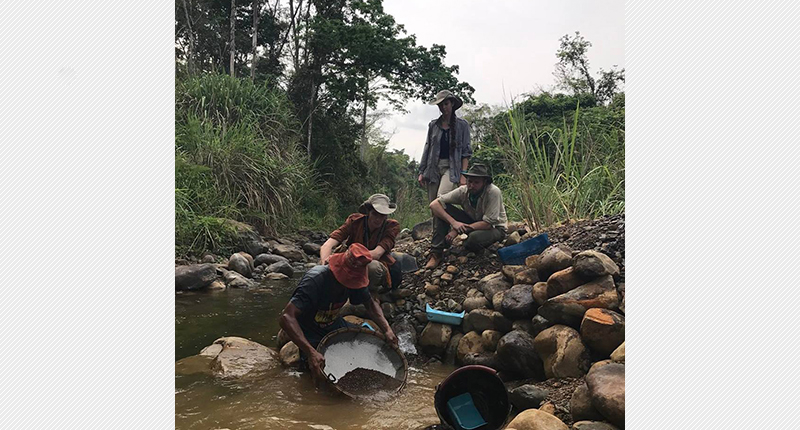
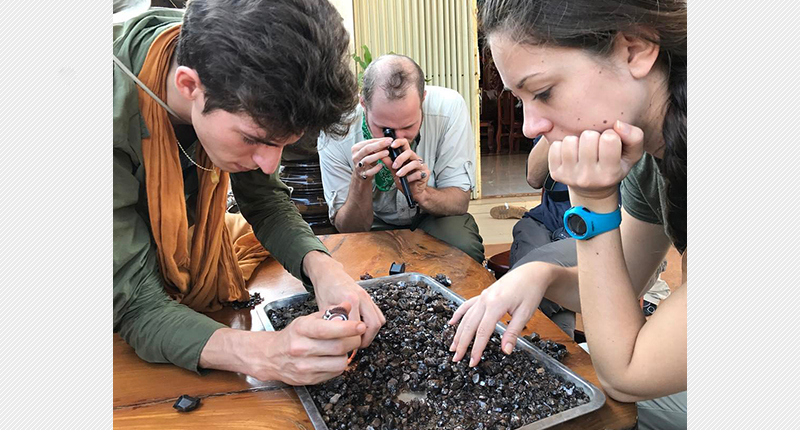
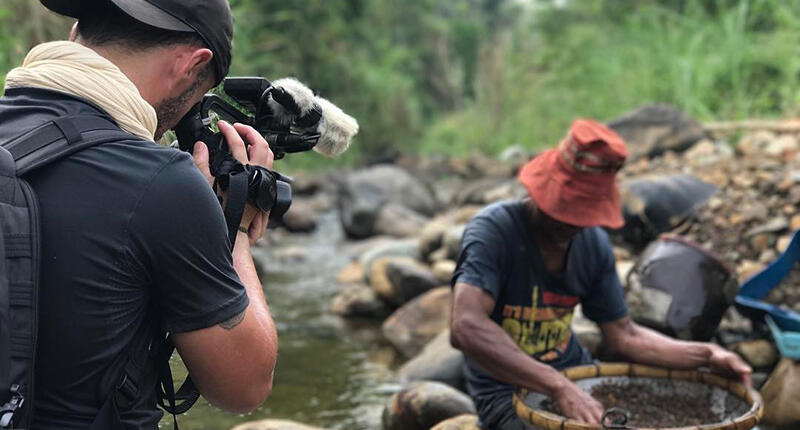
Field gemologist Vincent Pardieu chatted with National Jeweler about what his job entails and the challenges he faces. Seen here is a photo Pardieu took on a 2017 trip to Cambodia.

The supply side of the colored gemstone market is both its biggest challenge, with its ever-changing and broad nature, and, to me, its most fascinating. All it takes is one new source to pop up, or one to run dry, and the whole game changes.

Vincent Pardieu has made a career out of traveling the world to visit gemstone mines and attain material straight from the source.

He was born in France and went to school for business. While he was studying, he served as a tour guide. Eventually, a trip to Myanmar helped him discover that gemstones represented everything he liked—science, traveling, trade, history and geography—and he studied gemology.  

After discovering that the selling side of the business wasn’t for him, Pardieu began working with labs and research, eventually finding a niche visiting the field and obtaining specimens for the Gemological Institute of America and now for the new Danat lab in Bahrain.

Fascinated by the travel and research he does, I reached out to Vincent to see if he would chat with me about what it means to be a field gemologist and share some of his most memorable moments in the field. Luckily, he granted me a (rare) interview and look into his world.

In part one of a two-part Q&A, Vincent and I talk about how he got into field gemology, what exactly a field gemologist does and the challenges he faces on the job.

This interview has been edited for length and clarity.

National Jeweler: Can you tell me about the path that led you to field gemology?

Vincent Pardieu: In October 2004, I became the director of the lab at the Asian Institute of Gemological Sciences (AIGS). During the Asian financial crisis in 1998, the AIGS had the problem of many people thinking it was closed. The lab went through some very difficult times from 1998 to 2004, and my job was to get it back on track, to make sure that people knew that it was active.

My strategy was to do research and then to publish research. We made a 25-page study about lead glass-filled rubies that I put on the AIGS website and sent that to about 2,000 emails around the world. Within one week, everybody knew that the AIGS was not closed.

Customers began asking about origin determination, and I thought that it was the right direction to go. But the reference

collection that the AIGS had was in very bad shape following the crisis.

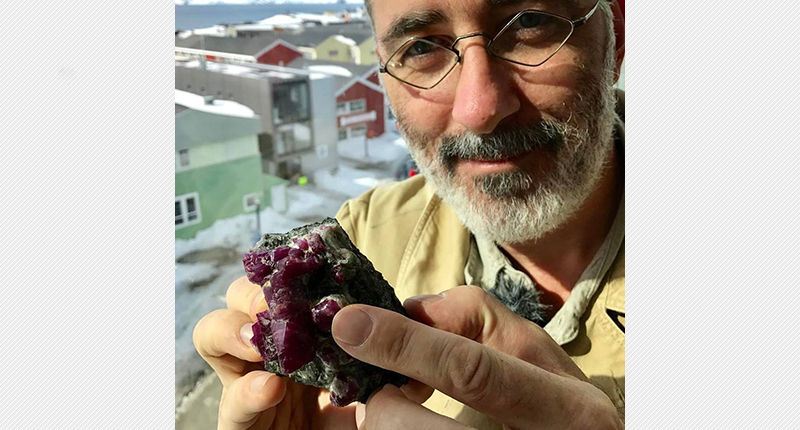
A lot of new deposits had started since 1998, so I decided to build a program to visit all of these new deposits in Asia, Africa and central Asia to put the reference collection to the right level and then be able to start again doing origin determination. I decided to collect myself because I learned that the best way to do research was to do like geologists will do—collecting samples directly in the field at the mine.

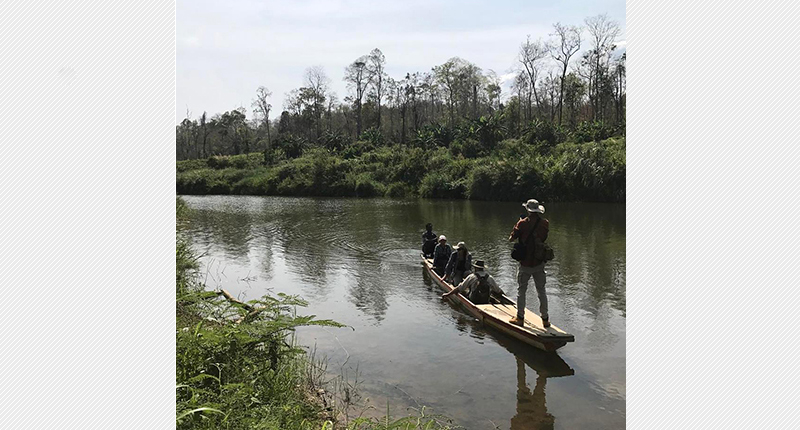
In 2005 and 2006, I started traveling two times for three months. The first year we went to Vietnam, Sri Lanka, Madagascar, Kenya, Tanzania. The second year I went to Pakistan, Afghanistan, Tajikistan and China to visit all the ruby, sapphire, emerald mines in the area, bring them back to the lab and start research.


Then I left AIGS and I found a job at the Gübelin Gem Lab as a gemologist, working on origin determination of gemstones for about two years before moving to the GIA.

Kenneth Scarratt, who was the director of GIA in Thailand, asked me to join the GIA to start a field gemology department and build a reference collection. At this point, I was the only one doing that, and I was doing that as a hobby. I had my website, FieldGemology.org, and I was putting a report of all my trips there, and then they contacted me and asked me to turn my hobby into my main job.

I joined the GIA in December 2008, and from then to January 2017, I was a field gemologist for the GIA laboratory, building a reference collection for them to be able to provide better and more reliable service about origin determination.

After I left the GIA, I built my own consultancy company. I’m now working with a laboratory in Bahrain, where my former boss at GIA is currently the boss, Ken Scarratt, who retired from the GIA about two years ago. He’s now the CEO of Danat, and he asked me to do exactly what he asked me to do for GIA eight years ago—to come here to help him build a reference collection and visit all the ruby, sapphire and emerald deposits in the next three to four years to build it.

Over the next few years, I will be collecting reference samples around the world for this laboratory, Danat, which is a kind of state-owned laboratory.

NJ: What exactly does it mean to be a field gemologist? What does your role entail?

VP: Mainly I am working for gemological laboratories, and the objective is to be able to get some samples that are reliable to build a reference collection. To do that, the best way is to send somebody trustworthy to the field to go to the mine and to collect samples if possible, as close as possible to getting it directly from the mine.

It means that you have to travel to the place where the stones are mined, witness the mining, get the samples and bring them back safely. And document the whole process, because it’s not just about bringing the sample back. You have to provide proof that the actually samples are really from there.

NJ: Which would be, for example, photos from the mining site?

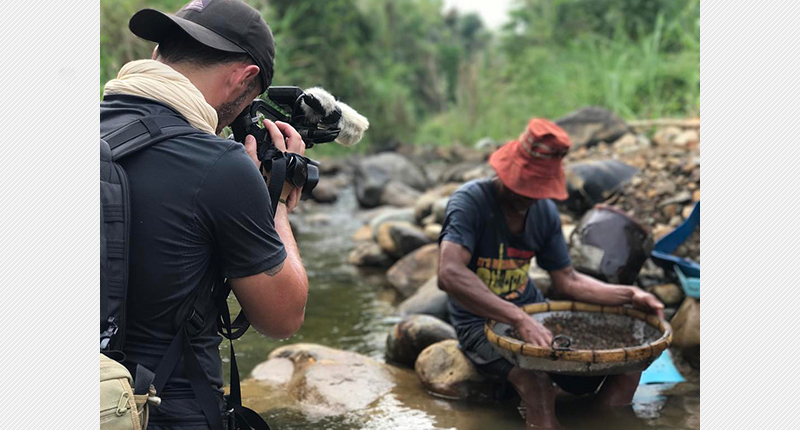
VP: Photos aren’t enough usually. I usually travel with people, and I ask them to document what I’m doing, like somebody holding the camera. But there are two good ways to do it: You can travel with a lawyer, or you can travel with a camera man. And the camera man will make a video of you and the mine. It’s better than a photograph.

I usually travel with a camera man who documents the whole expedition. Then after that, I can provide to the labs that I work with sometimes 70 or 80 hours of images from the trip because they want to see everything that happened. And then we can make some short video, like four or five minutes, from that to market and promote what the lab is doing.

NJ: When you’re out in the field doing your research, what are some of the biggest challenges you face?

VP: The people. If you travel with the wrong people, you are in deep trouble. My advice: When you go to the field, travel with people that you know.

NJ: Are you referring to the team you take along with you or the miners and gemstone dealers on the ground?

VP: Both. If you take in your team somebody who is a troublemaker, then you might get into serious trouble.
“If you travel with the wrong people, you are in deep trouble. My advice: When you go to the field, travel with people that you know.”
The team composition, you are responsible for that, so you have to make sure that everybody on the team is here to help you and not undermine you. If you have a complainer on the team that is starting to play games and starting to say, ‘Well I don’t want to go there,’ it’s a headache because then you won’t be able to focus on the mission. You’ll have to focus on the problem in your team. So you want to have the team to help you, not to distract you from the focus.
Then the issue is, most of the time, when you go to a place, you don’t know the place. It’s for research. I go to places usually that I don’t know. So you have to find a contact, the right contact, to go there. If you connect yourself with the right person, a person that is well-respected and has good contacts there, it won’t be easy, but it will help. But if you go with the wrong person, you are going to have a headache.

NJ: How do you find those people, especially on the ground in a country you’ve never been to before?

VP: Well, I’m a member, for example, of the International Colored Gemstone Association, and ICA has members from many countries. I know some people through my ICA network and usually I’m using my ICA network or they know some guys who can help me in those countries.

Usually I find one person who can tell me about the regulations and the laws in the country, if a foreigner can visit the mines and so on. If I find that a foreigner cannot visit the mines, who is the person I have to ask to get the special authorization to be able to visit the mines? How do I buy samples? How do I export the samples? You have to find the right contact. As long as you don’t have the right contact, don’t go to the country.

NJ: In terms of the team that you’re working with, do you feel like you’ve reached a place where you know enough to have good people around you regularly?

VP: Yes, but sometimes I make mistakes. Sometimes I travel with people that, when we are in trouble, don’t handle it the best.

I broke an arm. I caught malaria twice. I got Lyme disease, and food poisoning many times. Twice I had a gun put on my face in Africa. I was detained twice: one time in Mozambique, one time in Afghanistan. In Afghanistan, they thought I was a spy so they had me for three days traveling from police station to police station because they caught me in the middle of nowhere dressed like an Afghan but my passport was French.


And then in Mozambique, I was trying to go to a new ruby deposit but it was in a protected area. I had no idea, because that was a new place. I was on a motorbike, and we were driving and then we were caught by a group of rangers who were protecting the access to the illegal ruby mining site. They detained us for three days in the field because they were thinking that we were maybe the guys financing the illegal mining. But after three days they found out that we weren’t, so we were freed.

Then I was able to contact the management of the reserve, meet them, and return to this ruby deposit.

It went very well, and they invited me to give a talk at the Congress of the Reserve in Niassa in northern Mozambique in November. I was able to connect to many other people and visit the second ruby deposit in Montepuez that I was trying to visit for the past five months but could not because the people in charge of that area were not trusting anybody.

But this is the irony of that: If I was not detained and arrested, if I did not have a gun put on my face that day in Niassa Reserve, I would not have probably been the foreigner to see the ruby deposit in Montepuez. I was able to visit this deposit, collect the stones, make the study and because of that study, Gemfields came into Mozambique and invested and bought the deposit. And now it’s the world’s biggest ruby mine. And I’m following this deposit since 2009.

That day, when a gun was put on my face, I was with three young guys. I was so happy that I was with these guys because we had the guns put to our face by a Mozambican policeman.

We agreed that I was the guy doing the talking, and they were really calm. No complaints. And we all had the same story. We told them the truth, saying what we were doing exactly, and everything was clear. They were quiet. The policeman, the immigration, they were not able to divide us. So we kept calm and a united front in front of them. And then at the end of three days, we were free and everything went well.

But they didn’t provide us food, no water for the first few hours, we had to sleep on the floor, with a hyena eating a dead buffalo about 250 meters (about 820 feet) away from there.

That’s the reality of the field when you go there. You have to expect the unexpected. You have no idea what will come but you can be sure about one thing: There will be some challenges all the time.
Brecken Branstratoris the senior editor, gemstones at National Jeweler, covering sourcing, pricing and other developments in the colored stone sector.

The Latest

trend retail.jpg
PodcastsJan 12, 2026
The latest poscast

test

Screenshot from 2026-01-12 06-22-03.png
PodcastsJan 12, 2026
New podcast without sponsor

test

20210205_Alexia_Connellan_Gatsby_earrings.jpg
TrendsJan 12, 2026
New test Article

test article

trend ss21@2x.jpg
Brought to you by
new sponsored article

test

2019_De_Beers_rough_NEW_1.jpg
PodcastsJan 12, 2026
New sponsored podcast

test

Weekly QuizOct 03, 2024
This Week’s Quiz
Test your jewelry news knowledge by answering these questions.
Take the Quiz
MNQ FINAL - NJ web - 1872 x 1052 px.png
PodcastsJan 12, 2026
Introducing My Next Question, the Podcast

A monthly podcast series for jewelry professionals

Screenshot from 2025-12-31 12-03-28.png
PodcastsDec 31, 2025
Test new podcast post

Test new podcast post

Jewelers Mutual Group Cybersecurity
Brought to you by
Navigating Cybersecurity: Essential Guidance for Jewelers

From protecting customer data to safeguarding inventory records, it's crucial to learn how to tackle cybersecurity challenges.

MNQ - studio - screen -1920 x 1080.png
PodcastsDec 29, 2025
Molly Test Podcast Episode

This is the abstract for Molly Test Podcast Episode

image 169 (4 col).png
PodcastsDec 10, 2025
Podcast With Video

Podcast Without Video or Audio or Image

image 169 (4 col).jpg
Recorded WebinarsDec 04, 2025
New Recorded Webinar for tests

New Recorded Webinar for tests

User-Avatar-PNG-Picture.png
PodcastsDec 03, 2025
Test Article Title

test Abstract

20210204_Couture_show_shot.jpg
PodcastsDec 02, 2025
New podcast

test desc

Screenshot from 2025-12-05 13-54-41.png
PodcastsNov 27, 2025
Test Podcast With Video

Test Podcast With Video. New interview with Ada Lovelace.

Image for tests
PodcastsNov 25, 2025
Test New Podcast Post

Abstract for tests. New Podcast interview with John Lennon, Jimi Hendrix and Jim Morison.

National Jeweler columnist Peter Smith
ColumnistsOct 09, 2024
Peter Smith: 7 Things to Know When Selling Luxury

Ahead of the holiday season, Smith delves into the often subconscious reasons people buy luxury products for themselves or their loved ones.

Edgar Mitchell wearing Rolex watch on Apollo 14
AuctionsOct 09, 2024
Rolex Worn on Apollo 14 Mission Up for Sale

The GMT-Master “Pepsi” belonging to astronaut Edgar Mitchell is a standout in RR Auction’s online “Space Auction,” going on now.

Simon meet me at the mall campaign
MajorsOct 09, 2024
New Simon Campaign Invites Gen Z to ‘Meet Me At The Mall’

The ads celebrate the mall culture of the ‘80s and ‘90s.

Platinum Guild International training
MajorsOct 09, 2024
PGI Launches New Virtual Sales Training

Retail sales associates can access the video series on mobile to refresh their selling skills.

Gathering at Bharat Diamond Bourse for COVID vaccinations
Policies & IssuesOct 09, 2024
GJNRF: Reaching Out, Rebuilding Futures

For 25 years, India’s Gem & Jewellery National Relief Foundation has provided aid in the wake of war, natural disasters, and global crises.

Sotheby’s A Tsar’s Treasure: Ferdinand of Bulgaria
AuctionsOct 08, 2024
Sotheby’s Selling Jewelry That Belonged to a Bulgarian Tsar

The November auction will feature a collection of jewels owned by Ferdinand I, the first king of modern Bulgaria, and his family.

Rough diamonds mined at the Diavik Diamond Mine
SourcingOct 08, 2024
Rio Tinto Begins New Phase of Production That Will Extend Diavik’s Life

Commercial production has begun underground at the Canadian diamond mine’s A21 pipe.

Stock image of hand holding phone by keyboard
SurveysOct 08, 2024
What to Know About Online Shopping This Holiday Season

Deloitte and Adobe Analytics shared their insights on the season, from the retail sales forecast to the role of generative AI.

Sylvie and Uncommon Man Campaign
CollectionsOct 08, 2024
Sylvie Adds New Men’s Bands

The Texas-based jeweler collaborated with luxury clothing brand Uncommon Man on men’s bands designed with European influences.

Diamond on polishing wheel Venus Jewel India
SourcingOct 08, 2024
Is Current Diamond Industry Turbulence Shaping a ‘New Normal’?

Industry players have found ways to cope with market conditions while working to reshape themselves in the face of emerging realities.

Rio Tinto 2024 Beyond RareTM Tender Art Series
SourcingOct 07, 2024
Rio Tinto to Offer 76 Diamonds in 2024 Beyond Rare Tender

The sales event, in its second year, features a selection of rare diamonds from the miner’s Argyle and Diavik diamond mines.

Kristi Yamaguchi and Scott Heller
CollectionsOct 07, 2024
Olympian Kristi Yamaguchi Partners With Heller Jewelers on New Collection

A portion of the proceeds from the “Always Dream” collection will go to Yamaguchi's foundation, supporting early childhood literacy.


×

This site uses cookies to give you the best online experience. By continuing to use & browse this site, we assume you agree to our Privacy Policy