

PodcastsJan 12, 2026
The latest poscasttest





test


In this edition of Rocks On, National Jeweler looks at how the vibrant blue shades of topaz continue to generate demand for the gemstone, even as price has increased.

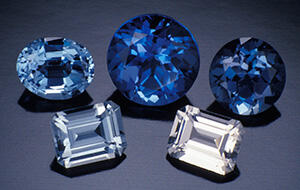
New York--If the Tucson gem shows in February were any indication, blue stones of all shades are having their day.
Blue remains a popular color in jewelry right now, and in fact was one of the colors that was trending in Arizona this year. Topaz, which provides a variety of blue hues at an affordable price point, is getting a lift from this trend.
The treated blue topaz has both high clarity and a consistent, bright hue, making it ideal for custom cutting, the Gemological Institute of America’s Gem Encyclopedia says, and providing gem cutters with unique opportunities for interesting shapes.
Kaiser Gems’ Noelle Abi-Habib said that demand has been highest for the Swiss blue topaz, but also notes that they have seen a dramatic increase for the London blue material in recent years. “Blue is a color that is easy to sell across many markets,” she says. “But ultimately, everything is trend based.”
Designer Amy Bruml of Bruml Design echoed the same thoughts, saying that the vivid hues of the blue topaz continues to sell well for her, especially given the price points.
The supply side
In terms of commercial goods, white (colorless) topaz and sky blue topaz are the most readily available in the market, while their London blue and Swiss blue counterparts are a little harder to obtain at the moment, according to Abi-Habib.
But even with its ready supply, colorless topaz is becoming slightly harder to come by, as many mining operations closed during the recession and never reopened, driving price upward.
The U.S. Nuclear Regulatory Commission, or NRC, also imposed strict regulations on the importation of blue topaz, which has had a small effect on the amount making it into the U.S. market.
Most blue topaz is not that color naturally; rather, many stones had to undergo some treatment process to achieve the blue colors that are so popular today. The irradiation process used to turn many of the topaz stones blue can “make the gems slightly radioactive,” according to the NRC, which is why the group regulates the initial distribution of these stones.
The NRC requires that the stones be set aside, typically for a couple of months, to allow any radioactivity to decay. Then, under the NRC license, a distributor is required to conduct radiological surveys before they are put on the market. The surveys are meant to ensure

“These regulations reduced the ease of importation of blue topaz into the U.S. market,” Abi-Habib said.
Prices on the rise
The price for topaz is mimicking the trend that seems to be affecting all corners of the colored gemstone market--increasing across the board, with all colors becoming more expensive for buyers.
London and Swiss blue topaz are among the most expensive varieties of topaz due to the treatment necessary to change the stones from white to blue.
The treatment of London blue and Swiss blue topaz is a process that takes much longer to complete, which makes them among the most expensive of the species, whereas the treatment of white topaz into sky blue topaz may only take a few weeks.
Depending on the origin of the white topaz, too, the treatment may even take longer and require a longer cooling period to ensure there are not trace amounts of radiation.
The price of sky blue topaz, therefore, falls below its London blue and Swiss blue counterparts, and white topaz is even cheaper, though the aforementioned market factors are driving up even the price of that material.
“In the last three to five years, the price of white topaz rough has increased by more than five times,” Abi-Habib said. “This has obviously resulted in a big increase in the price of cut goods.”
Another contribution to the price increase of blue topaz may be the limited number of treatment facilities--there are only a few companies that have control over the access to nuclear reactors used to turn white topaz blue.
“I don't foresee a decline in the price of Swiss and London blue topaz, which will likely encourage manufacturers to seek less-expensive alternatives,” Ab-Habib said. “It is possible that sky blue topaz will see a rise in popularity due to its relative affordability in comparison to London and Swiss blue topaz.”
Consumer challenges
While various shades of blue topaz are popular right now, another desired hue for the gemstone is red.
Red topaz is one of the most sought-after topaz colors, according to the GIA’s Gem Encyclopedia, and represents less than one-half of 1 percent of gem-quality material produced.
This means that one of the issues with imperial topaz, which includes the stone’s medium reddish- orange to orange-red shades, is that it remains a stone about which the consumer knows little, Abi-Habib said.
Since imperial topaz comes only from one source, Ouro Prêto in Brazil, there isn’t a lot of product, which also means a higher price tag for the gem.
Its rarity, coupled with an increased price, means that it is used less in designer jewelry, so consumers aren’t exposed to it as much as other gemstones, especially its blue counterparts.
Yet Gina Taylor of gem wholesale Taylor Gem Corp. noted that topaz’s warmer colors could benefit from one of the colored gemstone market’s other hot trends--the popularity in peach and pink shades.
She told National Jeweler that their clients increasingly want to pair similarly-shaded stones with rose gold, and she sees that topaz could provide more affordable price points for such a look, meaning that there could be plenty of upside for this gemstone yet.



A monthly podcast series for jewelry professionals


From protecting customer data to safeguarding inventory records, it's crucial to learn how to tackle cybersecurity challenges.


Test Podcast With Video. New interview with Ada Lovelace.



Abstract for tests. New Podcast interview with John Lennon, Jimi Hendrix and Jim Morison.

Ahead of the holiday season, Smith delves into the often subconscious reasons people buy luxury products for themselves or their loved ones.

The GMT-Master “Pepsi” belonging to astronaut Edgar Mitchell is a standout in RR Auction’s online “Space Auction,” going on now.

The ads celebrate the mall culture of the ‘80s and ‘90s.

Retail sales associates can access the video series on mobile to refresh their selling skills.

For 25 years, India’s Gem & Jewellery National Relief Foundation has provided aid in the wake of war, natural disasters, and global crises.

The November auction will feature a collection of jewels owned by Ferdinand I, the first king of modern Bulgaria, and his family.

Commercial production has begun underground at the Canadian diamond mine’s A21 pipe.

Deloitte and Adobe Analytics shared their insights on the season, from the retail sales forecast to the role of generative AI.

The Texas-based jeweler collaborated with luxury clothing brand Uncommon Man on men’s bands designed with European influences.

Industry players have found ways to cope with market conditions while working to reshape themselves in the face of emerging realities.

The sales event, in its second year, features a selection of rare diamonds from the miner’s Argyle and Diavik diamond mines.

A portion of the proceeds from the “Always Dream” collection will go to Yamaguchi's foundation, supporting early childhood literacy.





This site uses cookies to give you the best online experience. By continuing to use & browse this site, we assume you agree to our Privacy Policy