



PodcastsJan 12, 2026
The latest poscasttest







test


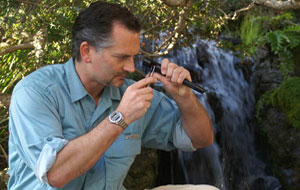
Gemologist Edward Boehm details efforts being made worldwide to improve the lives of small-scale, or artisanal, colored gemstone miners, including a project he helped with in Madagascar.


Gemstone mining can be divided into large-scale, small-scale, and artisanal mining operations. For simplicity most organizations combine small-scale and artisanal into one category. According to The World Bank, “at least 20 million people engage in artisanal and small-scale mining and a further 100 million people depend on it for their livelihood. These numbers are growing in line with higher prices and demand for minerals both in OECD countries and emerging economies such as China and India.”
There are 47 primary colored gemstone producing countries around the world. Approximately 20 percent of all colored gemstones come from large-scale mining operations (LSM) while approximately 80 percent come from artisanal and small-scale mining operations (ASM). It is estimated that 90 percent of these ASM operations are located in developing and emerging countries. In comparison, approximately 10 percent of all diamonds come from ASM operations.
The colored gemstone industry has made numerous proposals for certification schemes but none have taken hold.
In 2001 the World Bank launched an initiative called the Communities, Artisanal and Small-Scale Mining (CASM) declaring that “CASM’s holistic approach to small-scale mining aims to transform this activity from a source of conflict and poverty into a catalyst for economic growth and sustainable development.” The key words here are “sustainable development,” which point to the need for creating working conditions and environmental practices that are sustainable for future generations to enjoy. If the goal is sustainability then most of the social, economic and environmental concerns that these small-scale mining communities face can be addressed and resolved over time. Since a majority of these ASM communities are located in remote areas within developing countries, they struggle with health care, mining safety, water supplies, fair compensation, education, housing, etc.
One such initiative that was supported by the World Bank was a project in Madagascar to help improve and modernize their gemstone mining sector. I personally worked indirectly on this project as a consultant to USAID who was assisting the World Bank in assessing the needs within the gemstone mining sector.
The problem Madagascar faced was that it produced large quantities of colored gemstone rough that were mostly being smuggled out of the country with little benefit to the local mining communities. The goal was to reduce domestic poverty by creating opportunities for added value within mining communities in Madagascar.
The World Bank ultimately supported the Ministry of Mines of Madagascar Mineral Resources Governance Project with a $40 million grant from 2003 to 2010. This initiative modernized mining law and regulations, created a mining institution, established a gemological institute, developed local gemstone cutting, and promoted all aspects of mining and community development. Though internal politics reduced the scope of the project benefits, it is still regarded as an example of what could be accomplished in developing supplier countries.
Beyond World Bank-sized initiatives; there are smaller programs that have been implemented by individual colored gemstone mining concerns, dealers and retailers. The International Colored Gemstone Association (ICA), CIBJO - The World Jewellery Confederation, and the American Gem Trade Association (AGTA) have promoted such programs among its members of miners and colored stone dealers and retailers. These organizations have been actively involved in numerous conferences regarding ASM issues and global initiatives to improve ethical trade and sustainability. Three of ICA’s members, the Tanzanite Foundation, Gemfields and the Belmont Group are examples of relatively large-scale colored gemstone mining ventures that are dedicated to fair trade as well as socio-economic and environmental sustainability.
The Tanzanite Foundation is a nonprofit entity formed in 2003 by Tanzanite One, which operates a large-scale tanzanite mining operation in Merelani, near Arusha, Tanzania. A portion of all its sales go toward funding the foundation. The Tanzanite Foundation website states that it is “dedicated to protecting and promoting tanzanite. It acts on behalf of all ethical and socially responsible operators and partners in the tanzanite industry and implements standardized methods of practice and conduct. The Foundation seeks to deliver a truly ethical route to market in accordance with the Tucson Tanzanite Protocols.”
Gemfields, with deep roots in mineral resources, is a relative newcomer to gemstone mining. It is a publicly traded company with controlling interests in the Kagem emerald mine in Zambia and a ruby mining venture in Mozambique. Their global mine-to-market campaign promotes traceability as well as fair and ethical trade and environmental sustainability. Their website states that their “dedication to preserving the environment, nurturing relationships with local communities and upholding human rights remains paramount to our success.” They also support the World Land Trust in providing support for conservation projects in Africa. Gemfields only sells rough material to its network of cutters around the globe.
Belmont is a family-owned large-scale emerald mine that strives to not only meet but exceed strict new Brazilian environmental laws. Though their operation is considered large scale for colored gemstone mining, it is still relatively small when compared to large-scale diamond mining.
High-pressure water, used for separating gem material from the ore, is recycled through an extensive natural filtration system. Soil and trees removed during the mining process are replaced as the land is prepared to be fully reclaimed to its original state. Miners are equipped with modern equipment and follow strict safety procedures. They also receive fair pay, health care and even a hearty daily lunch, which I had the pleasure to share with one of the shifts.
So far there are still only a few wholesalers who actively are pursuing fair and ethical trade initiatives but many are discussing how they should move forward. The lack of a large-scale leader has made it difficult for the wholesalers to organize a coordinated effort. There are a few larger companies like the Tanzanite Foundation, Gemfields and Belmont that have set a positive example that others will hopefully follow.
The Responsible Jewellery Council (RJC) has a certification program that sets standards for what it deems are responsible business practices for companies in the jewelry supply chain, ranging from mining to retail. Their initial focus has been on the precious metals supply chain but they will certainly branch out into other sectors as they become more relevant. Their chain-of-custody standards require that the materials be conflict-free as a minimum, and responsibly produced.
Momentum seems to be developing for a viable mine-to-market system of sustainable trade for colored gemstones as more attention is directed at this sector. However, the vast complexities associated with artisanal small-scale mining will continue to hinder progress. An efficient and fair system will require that all sectors of the industry be included in a transparent and inclusive manner.
The development of such a system, that all levels of the supply chain will support, will be essential for its long-term success. In the meantime, miners, dealers and retailers should focus on providing any help to these communities in any way they can -- simple projects to help find water supplies, build schools, supply books, basic gemological training, first aid provisions, mining equipment and safety instruction, mosquito netting, support land reclamation projects, etc. Implementing these small projects will be difficult but our future depends on sustainability as well as ethical trade so future generations can also enjoy these rare and precious creations of nature.
Edward Boehm is the founder and president of RareSource in Chattanooga, Tenn., a company specializing in fine and collectable gemstones, collection sales and acquisitions and museum consulting. He began his gemological studies in Switzerland under the tutelage of his grandfather, Edward J. Gübelin, graduated in geology and German from the University of North Carolina, Chapel Hill, and later obtained a graduate gemologist diploma from the Gemological Institute of America and a certified gemologist title from the American Gem Society. He has worked for the Gübelin Gem Lab in Lucerne, Switzerland, was a museum and laboratory consultant to the GIA, and consulted for USAID as part of a World Bank-sponsored initiative to improve the gemstone sector in Madagascar. His current work takes him to mining localities around the globe as a consultant and buyer.




A monthly podcast series for jewelry professionals


From protecting customer data to safeguarding inventory records, it's crucial to learn how to tackle cybersecurity challenges.


Test Podcast With Video. New interview with Ada Lovelace.



Abstract for tests. New Podcast interview with John Lennon, Jimi Hendrix and Jim Morison.

Ahead of the holiday season, Smith delves into the often subconscious reasons people buy luxury products for themselves or their loved ones.

The GMT-Master “Pepsi” belonging to astronaut Edgar Mitchell is a standout in RR Auction’s online “Space Auction,” going on now.

The ads celebrate the mall culture of the ‘80s and ‘90s.

Retail sales associates can access the video series on mobile to refresh their selling skills.

For 25 years, India’s Gem & Jewellery National Relief Foundation has provided aid in the wake of war, natural disasters, and global crises.

The November auction will feature a collection of jewels owned by Ferdinand I, the first king of modern Bulgaria, and his family.

Commercial production has begun underground at the Canadian diamond mine’s A21 pipe.

Deloitte and Adobe Analytics shared their insights on the season, from the retail sales forecast to the role of generative AI.

The Texas-based jeweler collaborated with luxury clothing brand Uncommon Man on men’s bands designed with European influences.

Industry players have found ways to cope with market conditions while working to reshape themselves in the face of emerging realities.

The sales event, in its second year, features a selection of rare diamonds from the miner’s Argyle and Diavik diamond mines.

A portion of the proceeds from the “Always Dream” collection will go to Yamaguchi's foundation, supporting early childhood literacy.





This site uses cookies to give you the best online experience. By continuing to use & browse this site, we assume you agree to our Privacy Policy