


PodcastsJan 12, 2026
The latest poscasttest





test


Associate Editor Ashley Davis takes us into the studio of one of jewelry design’s most creative talents.

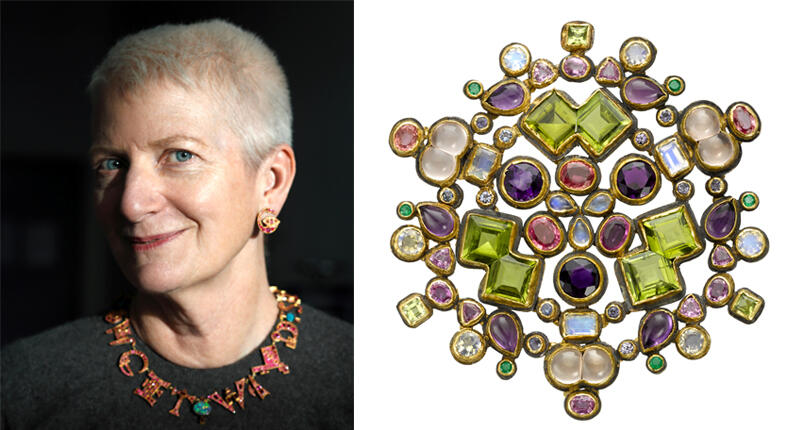
During a chat with Paul Schneider, owner of leading fine jewelry boutique Twist in Portland, Oregon, we chanced upon the subject of designer Judy Geib.
In detailing his love for Geib’s work, Paul explained to me that her oeuvre couldn’t be summed up with her imaginative, handmade jewelry; her art was also her joy for her craft, the way she lived, even the way she rode her bike to work.
When I visited Geib’s Brooklyn studio late last year, I understood exactly what Paul meant.
Geib’s workspace is in a magnificent converted factory along the border of Williamsburg and Bushwick; the kind of space that is becoming harder to find as the surrounding area is annihilated piece-by-piece to make way for pricey condos.
Every surface of Geib’s studio is covered in a medley of metals and gemstones. Sheets of gold are strewn haphazardly over bags of loose stones that monopolize the work tables. Tools of the trade mingle with emeralds, aquamarines, sapphires and random mementos like a broken kaleidoscope (more on that later).
A massive amethyst necklace begins to take shape atop slabs of marble next to a jotted-down recipe for Geib’s mother’s apple crisp. A fine gold dust seems to coat even the floor.
The studio is the ultimate work in progress, a perfect physical distillation of something rarely, if ever, captured--a designer’s mental processes and constructions.
The more I spoke with Geib about her work, the more I developed a sense that when she needed something specific cloaked in the apparent chaos of her studio, she knew exactly where to find it.
As I ask all subjects for this column to do, Geib chose three defining pieces of work that she has created since her start as a designer in 1996.
Below are her thoughts on what makes each one significant.
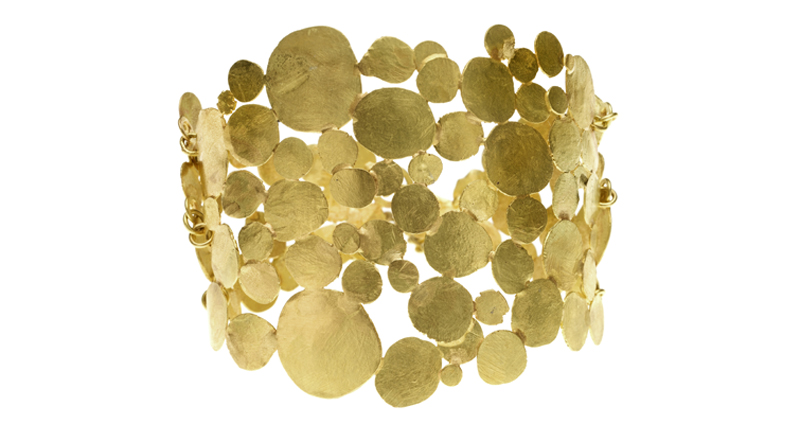

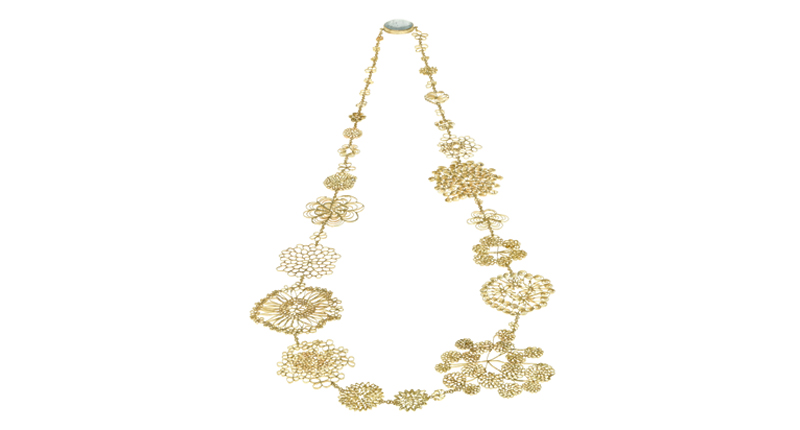
“Whenever I don’t know what to do, I make flowers.”It’s part of, I don’t know if I can say “philosophy of working,” but I try to use things for their own integrity and this is using the quality of the metal in a way that makes sense.
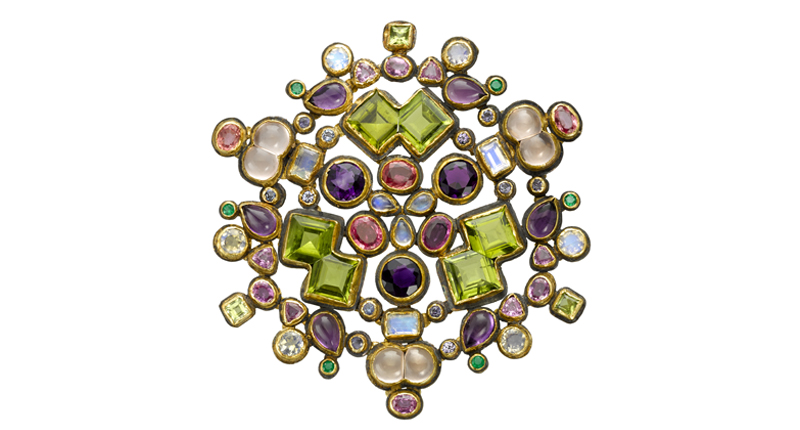
“It’s a comfort to know I can turn the scraps into something else.”



A monthly podcast series for jewelry professionals


From protecting customer data to safeguarding inventory records, it's crucial to learn how to tackle cybersecurity challenges.


Test Podcast With Video. New interview with Ada Lovelace.



Abstract for tests. New Podcast interview with John Lennon, Jimi Hendrix and Jim Morison.

Ahead of the holiday season, Smith delves into the often subconscious reasons people buy luxury products for themselves or their loved ones.

The GMT-Master “Pepsi” belonging to astronaut Edgar Mitchell is a standout in RR Auction’s online “Space Auction,” going on now.

The ads celebrate the mall culture of the ‘80s and ‘90s.

Retail sales associates can access the video series on mobile to refresh their selling skills.

For 25 years, India’s Gem & Jewellery National Relief Foundation has provided aid in the wake of war, natural disasters, and global crises.

The November auction will feature a collection of jewels owned by Ferdinand I, the first king of modern Bulgaria, and his family.

Commercial production has begun underground at the Canadian diamond mine’s A21 pipe.

Deloitte and Adobe Analytics shared their insights on the season, from the retail sales forecast to the role of generative AI.

The Texas-based jeweler collaborated with luxury clothing brand Uncommon Man on men’s bands designed with European influences.

Industry players have found ways to cope with market conditions while working to reshape themselves in the face of emerging realities.

The sales event, in its second year, features a selection of rare diamonds from the miner’s Argyle and Diavik diamond mines.

A portion of the proceeds from the “Always Dream” collection will go to Yamaguchi's foundation, supporting early childhood literacy.





This site uses cookies to give you the best online experience. By continuing to use & browse this site, we assume you agree to our Privacy Policy