


PodcastsJan 12, 2026
The latest poscasttest





test


Michigan retailer Randy Cole attended a trade show earlier this year where he found two products that, he says, changed his entire business model. One is a patented princess-cut diamond and the other is a machine that leaves its mark.

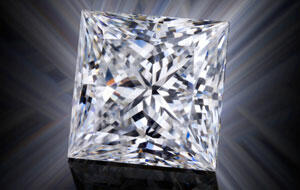
Troy, Mich.--Michigan retailer Randy Cole attended a trade show earlier this year where he found two products that, he says, changed his entire business model.
One was the FireMark, the patented princess-cut diamond from New York-based diamond company Hasenfeld-Stein Inc.
The other was Gemprint, a service offered by the Gem Certification and Assurance Lab, or GCAL, the New York laboratory run by Don Palmieri.
In a recent interview with National Jeweler, Cole, CEO of the Diamond Vault of Troy, broke down why these two tools, which he discovered at the Centurion Jewelry Show held in Scottsdale, Ariz. in February, are working for him, a jeweler whose business is heavily reliant on bridal.
Retailer Talk is a new feature for National Jeweler that allows jewelers to share the practices that are working in their stores or vent about the ones that aren’t.
1. Sales on Fire. Cole, admittedly, has never been a fan of princess-cut stones, even though they are the second most popular shape for engagement rings, trailing only the traditional round.
Cut for weight, princesses are, generally speaking, too deep, have a wide-open table and a low crown, resulting in poor light return and no prismatic color.
But this is not the case with the FireMark, he says. The diamond has a 98 percent average light return, compared with 80 percent for traditional princess, thanks to its higher double crown, smaller table and shallower depth.
“For me, selling a FireMark is the easiest thing I’ve ever done,” said the retailer.
Cole said after Centurion, Hasenfeld-Stein sent him two stones on memo. He sold both the same day, “And we haven’t stopped since,” he says, noting that they’ll sell as many as three in a single day.
The way he sells the diamond is this: he keeps a normal 0.70-carat princess-cut diamond on hand and compares it with a 0.60-carat FireMark princess cut. The FireMark is more brilliant and actually looks bigger, he says, making for an easy sale.
Another feature he likes about the FireMark may sound counter-intuitive to many retailers: Hasenfeld-Stein doesn’t offer jewelers any co-op.
While co-op is nice, Cole says the advertising gets built into the price of the goods, resulting in a higher cost for him and, ultimately, his customers. He’d rather market the diamonds himself and be able to keep his prices down.
Cole adds that he is not necessarily

But Cole said using trusted sources is adequate reassurance for him. “We do the Kimberley Process. That’s enough,” he says.
2. Leaving fingerprints. Gemprint shoots a non-damaging laser into a diamond, which creates a constellation-type reflection that’s unique to that stone. The registration of this reflection pattern allows the diamond to be positively identified if it’s lost or stolen, the same way that people can be identified by their fingerprints.
Cole shelled out $14,000 for the Gemprint machine at Centurion but he said it has been worth it, for the exclusivity alone.
“I am the only one in Michigan who has a machine,” he said, noting that another retailer actually pays him to Gemprint his stones for him.
He said the machine sits out in the open where customers can see the scanning process while their online registration is created.
“A customer’s biggest fear is that their stone may be switched at some point. Gemprint allows a positive identification even if it does not have a grading report,” he says.
As an added selling point, Cole says more than 20 insurance companies offer discounts to consumers on their annual personal jewelry insurance premium if their stone is registered with Gemprint.
Want to share a practice or product that is, or isn’t, working for your store? Email Editor-in-Chief Michelle Graff at michelle.graff@emeraldexpo.com.




A monthly podcast series for jewelry professionals


From protecting customer data to safeguarding inventory records, it's crucial to learn how to tackle cybersecurity challenges.


Test Podcast With Video. New interview with Ada Lovelace.



Abstract for tests. New Podcast interview with John Lennon, Jimi Hendrix and Jim Morison.

Ahead of the holiday season, Smith delves into the often subconscious reasons people buy luxury products for themselves or their loved ones.

The GMT-Master “Pepsi” belonging to astronaut Edgar Mitchell is a standout in RR Auction’s online “Space Auction,” going on now.

The ads celebrate the mall culture of the ‘80s and ‘90s.

Retail sales associates can access the video series on mobile to refresh their selling skills.

For 25 years, India’s Gem & Jewellery National Relief Foundation has provided aid in the wake of war, natural disasters, and global crises.

The November auction will feature a collection of jewels owned by Ferdinand I, the first king of modern Bulgaria, and his family.

Commercial production has begun underground at the Canadian diamond mine’s A21 pipe.

Deloitte and Adobe Analytics shared their insights on the season, from the retail sales forecast to the role of generative AI.

The Texas-based jeweler collaborated with luxury clothing brand Uncommon Man on men’s bands designed with European influences.

Industry players have found ways to cope with market conditions while working to reshape themselves in the face of emerging realities.

The sales event, in its second year, features a selection of rare diamonds from the miner’s Argyle and Diavik diamond mines.

A portion of the proceeds from the “Always Dream” collection will go to Yamaguchi's foundation, supporting early childhood literacy.





This site uses cookies to give you the best online experience. By continuing to use & browse this site, we assume you agree to our Privacy Policy