Editors

What Tiffany’s Acquisition Means for the Jewelry Industry

EditorsDec 09, 2019

What Tiffany’s Acquisition Means for the Jewelry Industry

Looking at what makes Tiffany & Co. worth $16 billion says a lot about what consumers value, Associate Editor Lenore Fedow writes in her analysis of the deal.

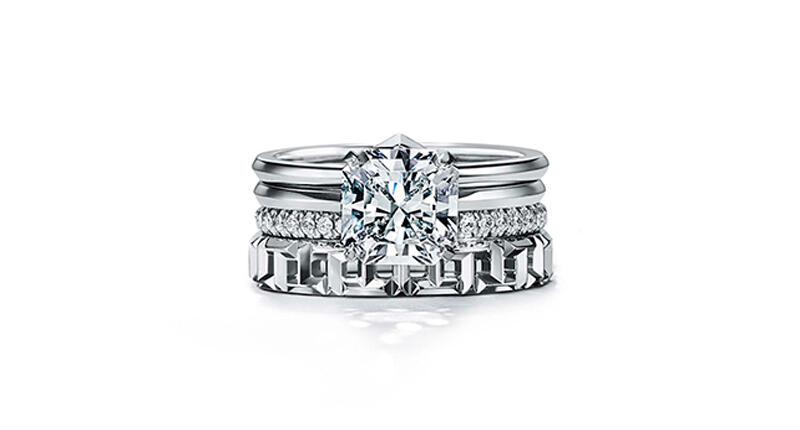
20191209_Tiffany_rings.jpg
A “Tiffany Setting V” band ring , a “Tiffany True” engagement ring, a “Tiffany Soleste” band ring, and a “Tiffany T True” narrow ring. Luxury conglomerate LVMH is set to acquire the well-known jeweler in a deal valued at $16.5 billion. (Photo credit: Tiffany & Co.)

Life as the resident retail reporter at National Jeweler can be a bit of a bummer.

It’s an unofficial and self-bestowed title, but if stores are closing or companies are going bankrupt, I tend to cover it.

Truly, I like my beat. I do my best work when I’m elbow-deep in quarterly reports and court documents.

But when the rumors of LVMH’s acquisition of Tiffany & Co. began to fly, I felt a bit uneasy.

As a lifelong New Yorker, I have a soft spot for Tiffany. My everyday jewelry, the pieces I consider a part of me, all came in a little blue box.

I see the company as an American icon and quintessentially New York, and I wasn’t sure how to feel about a French luxury conglomerate buying it.

As a reporter covering retail, I mulled over what the deal would mean for Tiffany and, more broadly, for the jewelry industry at large.

So I picked the brains of experts and analysts, and I’ve come to you with my findings.

Here’s what makes Tiffany so valuable and why those factors matter to the overall industry.

Tiffany brings a strong brand to the table.

Amid reports of a potential acquisition, Tiffany confirmed in October it had received an unsolicited bid from LVMH for $120 per share, valuing the company at $14.5 billion.

After talks with LVMH, Tiffany reportedly asked the company to up the bid to $130, believing the company was worth more.

And Tiffany was right. The final deal was for $135 per share, or $16.2 billion, one of the largest transactions in LVMH’s history.

Tiffany was able to command big bucks, in part, because of the strength of its brand.

Flavio Cereda, an equity analyst at Jeffries, stated in a note written prior to the deal that Tiffany’s “brand equity and the strength of the image of its iconic 1837 Blue Box are more valuable than the current financials suggest.”

“LVMH, with all its brands, does not have a strong, solid diamond jewelry brand like Tiffany or that caters to Tiffany’s clientele,” industry analyst Edahn Golan wrote in an email to National Jeweler.

LVMH’s watch and jewelry portfolio consists of Chaumet, Bulgari, Fred, Hublot, TAG Heuer, and Zenith.

“Of the six companies in LVMH’s watch & jewelry group, only Chaumet is a diamond jewelry company, which means that the group has a lot of room to grow,” he said.

From its trademark Tiffany Blue color to the white ribbon around its

boxes, Tiffany’s strong brand presence is a valuable asset.

The rise of brands was a major takeaway from De Beers’ 2019 Diamond Insight Report, which noted the popularity of branded jewelry, particularly in the diamond engagement ring space.

Branded jewelry represents two-fifths of sales of commitment jewelry in the United States, said De Beers.

The report also highlighted the resonance of brands with same-sex couples and millennials.

Tiffany’s vertical integration is valuable.

“Tiffany checked all the boxes,” industry analyst Paul Zimnisky said in an interview with National Jeweler Friday, noting that while the standalone brand was the most important aspect of the deal, its vertical integration is certainly the second.

Luca Soltani, senior research analyst for luxury goods at research firm Bernstein, echoed Zimnisky’s sentiment on vertical integration.

“It is clearly an advantage—especially when we look at the bridal products,” Soltani said in an email to National Jeweler.

Zimnisky wasn’t surprised by the acquisition, as rumors had been swirling in the space for a while, but said he was surprised LVMH didn’t make a bid last year during the stock market sell-off.

Then again, “not a lot of acquisitions could move the needle for them,” he said, noting the size and wealth of the luxury conglomerate.

LVMH has the money to spend, but what it lacks are the sourcing and manufacturing connections that Tiffany maintains.

LVMH Chief Financial Officer Jean-Jacques Guiony said as much in a conference call with analysts following the deal, highlighting Tiffany’s “very high level of vertical integration, compared with our brands.”

“[Tiffany] realized early on that vertical integration will give it better access to the goods it needs, and at better prices too,” said analyst Golan.

The company’s vertical integration efforts began 20 years ago, Tiffany CEO Alessandro Bogliolo said in an interview with Bloomberg.

Tiffany established Laurelton Diamonds, a wholly owned manufacturing subsidiary, in 2002.

It’s a De Beers sightholder and has inked long-term rough supply agreements with Alrosa and Dominion Diamond.

Bogliolo noted that 80 to 90 percent of its polished diamonds above 0.18 carats come from its workshops.

Tiffany also holds a stake in a diamond mine in South Africa owned by Canadian mining company Diamcor, a company spokesperson confirmed.

At a time when provenance and supply chain transparency are becoming increasingly important to consumers, Tiffany is ahead of the curve.

The jeweler began telling consumers the origin of its diamonds in January through its “Diamond Source Initiative.”

In that same Bloomberg interview, Bogliolo estimated the move toward sustainability cost Tiffany tens of millions of dollars over the years but added that it differentiates Tiffany from other jewelry companies.

“The reason why we are so selective with our sourcing is to avoid either mines that are not compliant with safety requirements, environmental protection, [and] human rights respect,” he said.

Tiffany, for example, does not source from Zimbabwe or the Congo due to internal issues in the countries, even if the diamonds meet Kimberley Process standards, he said.

“Tiffany is a very big player in all sorts of diamonds, and it’s something where the sourcing is not easy to do, and we expect to benefit from that,” LVMH’s Guiroy said on the call.

Tiffany boarded the sustainability train early.

With Tiffany’s vertical integration comes its ability to have a greater say in the means of production, a valuable asset at a time when climate change and environmental issues are weighing heavy on the minds of many consumers.

The younger, affluent generation are socially and environmentally conscious and hold luxury brands to high standards, particularly sustainable and ethical production processes, said Deloitte in its Global Powers of Luxury Goods 2019 survey.

“This implies an important lesson for luxury brands that want to retain these customers: they need to evolve towards new models of ethical and sustainable luxury.”

In addition to its diamond sourcing standards, the jeweler has been mindful of metals.

A decade ago, Tiffany was the first jewelry company to speak out against the development of the never-built Pebble Mine in Alaska’s Bristol Bay, holding a screening of a documentary about the importance of the watershed, “Red Gold,” in New York.

It was one of the first jewelers to use gold sourced from the “Salmon Gold” initiative, which aims to mine gold in a way that’s mindful of the habits of salmon and other fish.

The Deloitte study highlights Tiffany’s responsible sourcing as well as its social and environmental work, particularly its philanthropic foundations focusing on reef conservation and awareness for responsible mining.

Tiffany created its “Save the Wild” collection in 2017, donating all profits, totaling more than $5 million, to the Wildlife Conservation Network.

And the company’s over-the-top holiday catalog offers an 11-day safari in Kenya and a set of animal-shaped diamond brooches, with a portion of the proceeds going to the animal conservation charity.

Tiffany is doing well in a key market—China.

Luxury brands across the board are grappling with U.S.-China trade tensions. Simultaneously, political unrest in Hong Kong is weighing heavy on balance sheets.

Tiffany, however, is still seeing double-digit growth in mainland China and highlighted higher spending by locals in its third-quarter results.

The jeweler currently has 35 stores in mainland China and 10 in Hong Kong.

LVMH’s third-quarter results also reported strong growth in Asia, and it has a strong enough foothold in the country to propel Tiffany even further in the growing market.

Jefferies analyst Cereda said LVMH may leverage the strength of Tiffany’s brand to target the Asian millennial market.

“I could definitely see that happening,” said Reginald Brack, executive director at NPD and an industry analyst on watches and luxury, in an interview with National Jeweler Friday.

“I think that Asian millennial luxury consumer is what most luxury brands now are trying to target. Tiffany is well-poised and positioned to capitalize on that with their immense brand recognition.”

The future of Tiffany may mean fewer stores.

Cereda noted Tiffany’s move into China may mean a “rethinking of the current product mix and its U.S. footprint.”

Bernstein analyst Soltani said Tiffany’s position in the United States is a strength, but that perhaps, “LVMH would want to upgrade the Tiffany flagship stores, and streamline the rest of the retail network.”

Tiffany’s flagship New York City store will undergo renovations after the holiday, and the retailer will move the store into a temporary, nearby space until it’s completed.

He said in secondary locations, Tiffany could “use a lighter (and smaller) retail format.”

NPD analyst Brack had the opportunity to visit a new Tiffany concept store in Tokyo, which he described as an “industrial loft space” that included a permanent DJ booth.

He said the items were more accessible, out there in the open to touch, and the space had a personalization bar.

An openness to change in an ever-changing retail environment is critical and when you have a strong brand, you can afford to experiment a little.

This deal speaks to the industry at large.

What I’ve taken away from my discussion with experts and analysts is this: Looking at what makes Tiffany worth $16 billion says a lot about what consumers value.

To compare Tiffany with independent jewelers is incongruous in some respects but, overall, understanding what matters to the customer is vital to any business.

Tiffany has: a strong brand, control of aspects of production, a focus on responsible sourcing and sustainability, and an eye for the retail experience.

Whether upping your social media game or talking more with your customers about the journey their jewelry has taken, you can take away something actionable from this historic deal.
Lenore Fedowis the associate editor, news at National Jeweler, covering the retail beat and the business side of jewelry.

The Latest

trend retail.jpg
PodcastsJan 12, 2026
The latest poscast

test

Screenshot from 2026-01-12 06-22-03.png
PodcastsJan 12, 2026
New podcast without sponsor

test

20210205_Alexia_Connellan_Gatsby_earrings.jpg
TrendsJan 12, 2026
New test Article

test article

trend ss21@2x.jpg
Brought to you by
new sponsored article

test

2019_De_Beers_rough_NEW_1.jpg
PodcastsJan 12, 2026
New sponsored podcast

test

Weekly QuizOct 03, 2024
This Week’s Quiz
Test your jewelry news knowledge by answering these questions.
Take the Quiz
MNQ FINAL - NJ web - 1872 x 1052 px.png
PodcastsJan 12, 2026
Introducing My Next Question, the Podcast

A monthly podcast series for jewelry professionals

Screenshot from 2025-12-31 12-03-28.png
PodcastsDec 31, 2025
Test new podcast post

Test new podcast post

Jewelers Mutual Group Cybersecurity
Brought to you by
Navigating Cybersecurity: Essential Guidance for Jewelers

From protecting customer data to safeguarding inventory records, it's crucial to learn how to tackle cybersecurity challenges.

MNQ - studio - screen -1920 x 1080.png
PodcastsDec 29, 2025
Molly Test Podcast Episode

This is the abstract for Molly Test Podcast Episode

image 169 (4 col).png
PodcastsDec 10, 2025
Podcast With Video

Podcast Without Video or Audio or Image

image 169 (4 col).jpg
Recorded WebinarsDec 04, 2025
New Recorded Webinar for tests

New Recorded Webinar for tests

User-Avatar-PNG-Picture.png
PodcastsDec 03, 2025
Test Article Title

test Abstract

20210204_Couture_show_shot.jpg
PodcastsDec 02, 2025
New podcast

test desc

Screenshot from 2025-12-05 13-54-41.png
PodcastsNov 27, 2025
Test Podcast With Video

Test Podcast With Video. New interview with Ada Lovelace.

Image for tests
PodcastsNov 25, 2025
Test New Podcast Post

Abstract for tests. New Podcast interview with John Lennon, Jimi Hendrix and Jim Morison.

National Jeweler columnist Peter Smith
ColumnistsOct 09, 2024
Peter Smith: 7 Things to Know When Selling Luxury

Ahead of the holiday season, Smith delves into the often subconscious reasons people buy luxury products for themselves or their loved ones.

Edgar Mitchell wearing Rolex watch on Apollo 14
AuctionsOct 09, 2024
Rolex Worn on Apollo 14 Mission Up for Sale

The GMT-Master “Pepsi” belonging to astronaut Edgar Mitchell is a standout in RR Auction’s online “Space Auction,” going on now.

Simon meet me at the mall campaign
MajorsOct 09, 2024
New Simon Campaign Invites Gen Z to ‘Meet Me At The Mall’

The ads celebrate the mall culture of the ‘80s and ‘90s.

Platinum Guild International training
MajorsOct 09, 2024
PGI Launches New Virtual Sales Training

Retail sales associates can access the video series on mobile to refresh their selling skills.

Gathering at Bharat Diamond Bourse for COVID vaccinations
Policies & IssuesOct 09, 2024
GJNRF: Reaching Out, Rebuilding Futures

For 25 years, India’s Gem & Jewellery National Relief Foundation has provided aid in the wake of war, natural disasters, and global crises.

Sotheby’s A Tsar’s Treasure: Ferdinand of Bulgaria
AuctionsOct 08, 2024
Sotheby’s Selling Jewelry That Belonged to a Bulgarian Tsar

The November auction will feature a collection of jewels owned by Ferdinand I, the first king of modern Bulgaria, and his family.

Rough diamonds mined at the Diavik Diamond Mine
SourcingOct 08, 2024
Rio Tinto Begins New Phase of Production That Will Extend Diavik’s Life

Commercial production has begun underground at the Canadian diamond mine’s A21 pipe.

Stock image of hand holding phone by keyboard
SurveysOct 08, 2024
What to Know About Online Shopping This Holiday Season

Deloitte and Adobe Analytics shared their insights on the season, from the retail sales forecast to the role of generative AI.

Sylvie and Uncommon Man Campaign
CollectionsOct 08, 2024
Sylvie Adds New Men’s Bands

The Texas-based jeweler collaborated with luxury clothing brand Uncommon Man on men’s bands designed with European influences.

Diamond on polishing wheel Venus Jewel India
SourcingOct 08, 2024
Is Current Diamond Industry Turbulence Shaping a ‘New Normal’?

Industry players have found ways to cope with market conditions while working to reshape themselves in the face of emerging realities.

Rio Tinto 2024 Beyond RareTM Tender Art Series
SourcingOct 07, 2024
Rio Tinto to Offer 76 Diamonds in 2024 Beyond Rare Tender

The sales event, in its second year, features a selection of rare diamonds from the miner’s Argyle and Diavik diamond mines.

Kristi Yamaguchi and Scott Heller
CollectionsOct 07, 2024
Olympian Kristi Yamaguchi Partners With Heller Jewelers on New Collection

A portion of the proceeds from the “Always Dream” collection will go to Yamaguchi's foundation, supporting early childhood literacy.


×

This site uses cookies to give you the best online experience. By continuing to use & browse this site, we assume you agree to our Privacy Policy