
Editors

10 Things I Learned at the AGA’s Tucson Conference

EditorsFeb 27, 2019

10 Things I Learned at the AGA’s Tucson Conference

They include updates on the state of the North American natural pearl market, Ethiopian emeralds and tourmaline production.

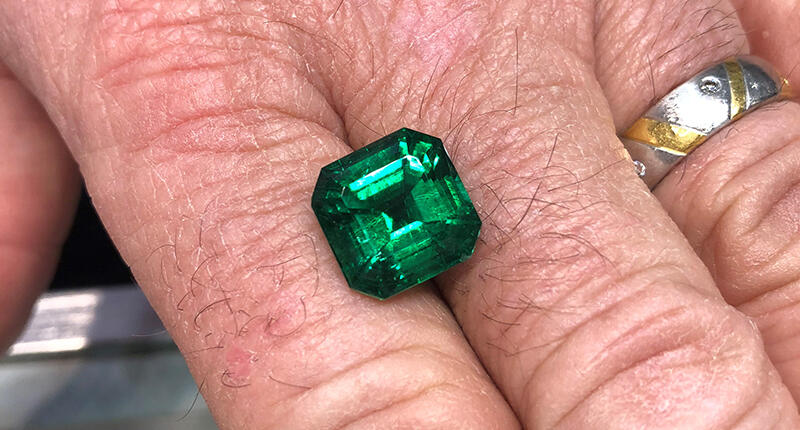
20190227_Shakiso-emerald.jpg
They include updates on the state of the North American natural pearl market, Ethiopian emeralds and tourmaline production.

Tucson is not only full of amazing gems but also more knowledge and education than the gem crowd could ever ask for.

Sitting in on these sessions is one of my favorite parts of the trip, since my job requires me to always keep learning, and this year I was thrilled to add the Accredited Gemologists Association’s conference to my schedule.

I learned so much more than could be incorporated into a single blog, but here are just a few of the things I thought you’d all enjoy knowing too, ranging from gemological knowledge to market updates.

1. Locals have full control of the Halo-Shakiso emerald mine in Ethiopia.

The mining site, located about 37 miles from the town of Shakiso, is currently owned by the Bu’a Obsa Cooperative, a group of locals who initially banded together for gold and tantalum mining. It now has hundreds of shareholders from the local community that benefit from the emerald mining.

According to Jeffery Bergman of Primagem in Thailand, only the local tribespeople are allowed access to the mining site at Halo; they dig, extract, sort and grade the material.

2. There’s a variety of material that comes from Halo-Shakiso, including some “really exceptional” gem-quality rough.

According to Bergman, the bases of the emerald crystals are typically heavily included, so the excitement about the material surrounds the top part, where you can find some “really exceptional” gem-quality material.

Bergman also noted during his presentation that about 20 percent of production from the Halo mine doesn’t need any clarity enhancements.

3. Ethiopian emeralds share similarities with other emeralds with schist-based origins so they look like the material from Brazil and Zambia.

This means, Bergman said, that trace element analysis must be done to ascertain a stone’s origin, rather than relying on just inclusions; the GIA said in a 2017 Gems & Gemology article that it was able to separate the material from other sources by comparing trace alkali metals and some transition metals.

RELATED CONTENT: 5 Things to Know About … Ethiopian Emeralds
4. The group in control of the Halo-Shakiso emeralds has been working to build it as a brand, mimicking the work of other areas that have done it successfully, such as Muzo.

As part of a project in which Bergman participated but is no longer associated, the Bu’a Obsa association created a logo, slogan, website, obtained photography, established a presence
on social media, created ads and has increased its presence at trade shows.

It remains to be seen how the group will be able to establish their emeralds on the world market, especially given the Ethiopian government’s increasing control over the material.

5. The natural pearl market in the United States is actually a by-product of the button industry, Gina Latendresse of the American Pearl Company said.

By the late 1800s, the freshwater pearl button industry in the U.S. was flourishing, thanks to the number of mussels available in the country’s waters as well as the availability of cheap labor.

Decades later, this would give way to a new market created around cultured pearls in Japan, and, specifically, their need for the nuclei from North American natural pearls.

“All cultured pearls around the world, if they’re using a mother-of-pearl bead, they have a little bit of Tennessee or Mississippi River tributary mollusk inside of them,” she said.

6. As is the case with all pearls, North American natural pearls are rare.

According to Latendresse, only one in 10,000 mussel shells in the U.S. turns up a pearl. Of those, only 5 percent are symmetrical and only 1 percent are more or less round.

7. Natural pearls in North America come in a variety of beautiful, baroque shapes.

The wing shape is arguably the most recognizable, Latendresse said, and lends itself well to jewelry design; they have been used in creations by big brands, such as the Chrysanthemum brooch from Tiffany & Co.

There also are rosebuds, turtlebacks (baroque ovals), drop shapes, bodices, button shapes, snail formations and many others.

North American natural pearls also come in several colors, including white, pink, purple and lavender, as well as the greens and blues from abalone shells on the West Coast, and the pinks and oranges with a flame pattern that’s seen in the conch pearl.
RELATED CONTENT: 5 Things to Know About … Conch Pearls
8. Tourmaline has a number of gemological characteristics that make it interesting to the trade.

For one, it can have a very pronounced pleochroism, said Claudio Milisenda, managing director of DSEF German Gem Lab in Idar-Oberstein. This is of great importance to cutters so it can be oriented a certain way.

It also has the capability to polarize light going through the stone, which is why slices of tourmaline cut parallel to the prism were used as a polariscope in ancient times, Milisenda said.

Additionally, tourmaline often shows distinct color zoning, which makes crosscuts of the crystals very popular with collectors.

9. The blue component in blue-green Namibian tourmaline can be removed through heating to make it greener.

Milisenda said darker stones also can be lightened through heat treatment.

This is important to note because both can be done by heating the stones at a temperature of about 650 degrees centigrade, so if it’s a relatively clean stone the inclusion pattern “hardly will change,” he said.

This means there’s no way to detect if this kind of tourmaline has been heat-treated or not, unless it is heated at a temperature above 700 degrees centigrade and checked using a refractometer.

Milisenda also said tourmaline’s color in general can be improved by irradiation. He noted that it’s common for pink tourmaline to be irradiated though it can’t be detected, presenting a dilemma to gemstone dealers.

“How can we disclose that when we are selling pink or red rubellite to a client?” he asked.

10. Here’s a quick production update on Paraiba tourmaline (meaning copper-bearing tourmaline in his case, as per the Laboratory Manual Harmonisation Committee).

Milisenda said supply in Brazil is very low—the Mulungu mine is working through the tailings, and there’s no production at Batalha currently.

He added that Nigeria never had continuous production, and Mozambique is producing an increasing amount of cabochon-quality material.
Brecken Branstratoris the senior editor, gemstones at National Jeweler, covering sourcing, pricing and other developments in the colored stone sector.

The Latest

trend retail.jpg
PodcastsJan 12, 2026
The latest poscast

test

Screenshot from 2026-01-12 06-22-03.png
PodcastsJan 12, 2026
New podcast without sponsor

test

20210205_Alexia_Connellan_Gatsby_earrings.jpg
TrendsJan 12, 2026
New test Article

test article

trend ss21@2x.jpg
Brought to you by
new sponsored article

test

2019_De_Beers_rough_NEW_1.jpg
PodcastsJan 12, 2026
New sponsored podcast

test

Weekly QuizOct 03, 2024
This Week’s Quiz
Test your jewelry news knowledge by answering these questions.
Take the Quiz
MNQ FINAL - NJ web - 1872 x 1052 px.png
PodcastsJan 12, 2026
Introducing My Next Question, the Podcast

A monthly podcast series for jewelry professionals

Screenshot from 2025-12-31 12-03-28.png
PodcastsDec 31, 2025
Test new podcast post

Test new podcast post

Jewelers Mutual Group Cybersecurity
Brought to you by
Navigating Cybersecurity: Essential Guidance for Jewelers

From protecting customer data to safeguarding inventory records, it's crucial to learn how to tackle cybersecurity challenges.

MNQ - studio - screen -1920 x 1080.png
PodcastsDec 29, 2025
Molly Test Podcast Episode

This is the abstract for Molly Test Podcast Episode

image 169 (4 col).png
PodcastsDec 10, 2025
Podcast With Video

Podcast Without Video or Audio or Image

image 169 (4 col).jpg
Recorded WebinarsDec 04, 2025
New Recorded Webinar for tests

New Recorded Webinar for tests

User-Avatar-PNG-Picture.png
PodcastsDec 03, 2025
Test Article Title

test Abstract

20210204_Couture_show_shot.jpg
PodcastsDec 02, 2025
New podcast

test desc

Screenshot from 2025-12-05 13-54-41.png
PodcastsNov 27, 2025
Test Podcast With Video

Test Podcast With Video. New interview with Ada Lovelace.

Image for tests
PodcastsNov 25, 2025
Test New Podcast Post

Abstract for tests. New Podcast interview with John Lennon, Jimi Hendrix and Jim Morison.

National Jeweler columnist Peter Smith
ColumnistsOct 09, 2024
Peter Smith: 7 Things to Know When Selling Luxury

Ahead of the holiday season, Smith delves into the often subconscious reasons people buy luxury products for themselves or their loved ones.

Edgar Mitchell wearing Rolex watch on Apollo 14
AuctionsOct 09, 2024
Rolex Worn on Apollo 14 Mission Up for Sale

The GMT-Master “Pepsi” belonging to astronaut Edgar Mitchell is a standout in RR Auction’s online “Space Auction,” going on now.

Simon meet me at the mall campaign
MajorsOct 09, 2024
New Simon Campaign Invites Gen Z to ‘Meet Me At The Mall’

The ads celebrate the mall culture of the ‘80s and ‘90s.

Platinum Guild International training
MajorsOct 09, 2024
PGI Launches New Virtual Sales Training

Retail sales associates can access the video series on mobile to refresh their selling skills.

Gathering at Bharat Diamond Bourse for COVID vaccinations
Policies & IssuesOct 09, 2024
GJNRF: Reaching Out, Rebuilding Futures

For 25 years, India’s Gem & Jewellery National Relief Foundation has provided aid in the wake of war, natural disasters, and global crises.

Sotheby’s A Tsar’s Treasure: Ferdinand of Bulgaria
AuctionsOct 08, 2024
Sotheby’s Selling Jewelry That Belonged to a Bulgarian Tsar

The November auction will feature a collection of jewels owned by Ferdinand I, the first king of modern Bulgaria, and his family.

Rough diamonds mined at the Diavik Diamond Mine
SourcingOct 08, 2024
Rio Tinto Begins New Phase of Production That Will Extend Diavik’s Life

Commercial production has begun underground at the Canadian diamond mine’s A21 pipe.

Stock image of hand holding phone by keyboard
SurveysOct 08, 2024
What to Know About Online Shopping This Holiday Season

Deloitte and Adobe Analytics shared their insights on the season, from the retail sales forecast to the role of generative AI.

Sylvie and Uncommon Man Campaign
CollectionsOct 08, 2024
Sylvie Adds New Men’s Bands

The Texas-based jeweler collaborated with luxury clothing brand Uncommon Man on men’s bands designed with European influences.

Diamond on polishing wheel Venus Jewel India
SourcingOct 08, 2024
Is Current Diamond Industry Turbulence Shaping a ‘New Normal’?

Industry players have found ways to cope with market conditions while working to reshape themselves in the face of emerging realities.

Rio Tinto 2024 Beyond RareTM Tender Art Series
SourcingOct 07, 2024
Rio Tinto to Offer 76 Diamonds in 2024 Beyond Rare Tender

The sales event, in its second year, features a selection of rare diamonds from the miner’s Argyle and Diavik diamond mines.

Kristi Yamaguchi and Scott Heller
CollectionsOct 07, 2024
Olympian Kristi Yamaguchi Partners With Heller Jewelers on New Collection

A portion of the proceeds from the “Always Dream” collection will go to Yamaguchi's foundation, supporting early childhood literacy.


×

This site uses cookies to give you the best online experience. By continuing to use & browse this site, we assume you agree to our Privacy Policy