Editors

5 Takeaways on the Lab-Grown Diamond Market

EditorsNov 15, 2016

5 Takeaways on the Lab-Grown Diamond Market

Editor-in-Chief Michelle Graff shares what she learned at the recent forum on lab-grown diamonds held in New York.

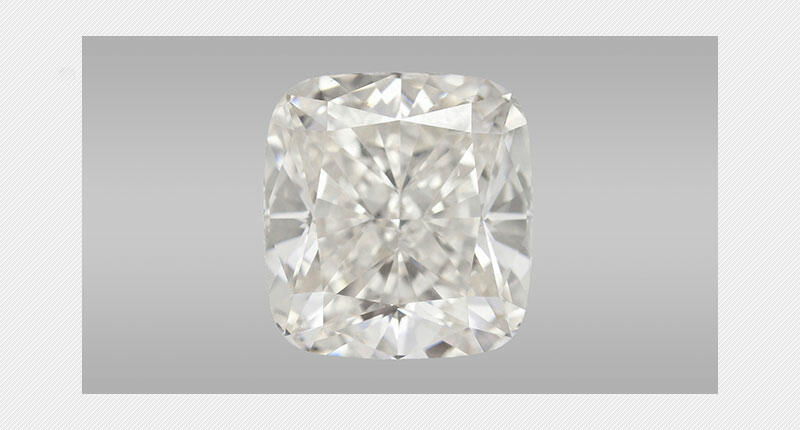
20161019_5-carat-white-lab-grown.jpg
This file photo shows a 5.19-carat CVD-grown diamond recently graded by the Gemological Institute of America. While this diamond was submitted without proper disclosure, attendees at a recent forum on synthetics say that it’s detection of lab-grown melee that’s a more pressing problem for the industry. (Photo credit: Johnny Leung and Tony Leung, courtesy of GIA)

A few weeks ago in New York, I had the opportunity to attend a day-long forum on lab-grown, or synthetic, diamonds organized by the U.S. Jewelry Council.

The purpose of the forum was not for the mined diamond industry to align itself against the diamond growers; in fact, it’s worth pointing out here that there are well-known diamond companies/dealers that have their hands in both.

As just one example, Royal Asscher--a 162-year-old family business that invented the cut that still bears its name and cleaved what remains the largest diamond ever mined, the Cullinan--had a line of colored lab-grown diamond jewelry called Rebel Chique and now is part-owner of a company selling lab-grown diamonds on Amazon.

Instead, the forum was put together to discuss the issue of undisclosed lab-grown diamonds, those stones that slip into the supply pipeline undetected.
Here’s (some of) what I learned.

Takeaway No. 1: You are accountable if you sell a lab-grown diamond as natural. This is a point that came up even before lunch and, for me at least, was pretty clear cut and simple.

Yet people in the audience kept asking questions about it, laying out myriad scenarios in which a sale involving an undisclosed synthetic diamond might go down. Would I be liable if this happened? What about that?

But, alas, the answer was always the same: You--whether you are a jeweler, an appraiser, a diamond manufacturer or a diamond dealer--are liable if a diamond that is lab grown is sold as natural.

Takeaway No. 2: Because of the above, jewelers need to exercise quality control over their inventory. But, sadly, many of them don’t. So, what constitutes quality control, exactly?

JVC President and CEO Cecilia Gardner said it does not mean jewelers need to check every single item in their inventory, but have to have some “demonstrable activity” that shows that they are selling products that have been checked and that they believe are as represented.

When I later asked her if there’s a specific percentage of inventory she would recommend checking-- say, 20 or 25 percent--Gardner didn’t give me one, but recommended that jewelers test a “steady sampling” from all suppliers that is continuous and broad-based, with the overarching idea being that they’ll be able to demonstrate due diligence if needed.

By “checked,” she meant sent to a reputable grading lab unless, of course, the jeweler has their own testing equipment.

Relying on the word of your suppliers

alone is not enough. In other words: Work with vendors whom you trust, but also verify.

Will this prevent you from being sued if you sell a product that’s not what it was purported to be? No.

Will it help you in court more than standing up and saying “nothing” when asked what you did to ensure the diamonds in your stock labeled as mined were not lab grown? Yes.

The Jewelers Vigilance Committee actually has an entire publication on quality assurance and control. It’s called “Getting It Right.” It’s $20 for JVC members and $25 for non-members, and you can order it on the JVC website.

Takeaway No. 3: When one company gets hurt, everybody feels it. Diamonds are largely unbranded, so when a report on one jeweler who sold a lab-grown diamond as natural pops up on the 6 o’clock news, it gives consumers an unfavorable, if undeserved, view of the entire industry.

This is even truer today with the rapid-fire news cycle and the proliferation of, ahem, journalists looking for “content” to fill the endless number of websites and blogs that are out there. In other words, once a story is reported, it’s likely going to be shared thousands of times, morphing and growing in the re-telling. The internet, in case you haven’t noticed, is not a stickler for accuracy, nor is it a platform where nuance travels well.

Despite the fact that players along all points of the pipeline feel the effects when it comes out that one individual has been dishonest, there is no industry-wide standard for the machines used to separate lab-grown diamonds from mined ones, or industry-wide policy on dealing with those who submit stones without proper disclosure, one presenter pointed out.

As she put it, “When there is an issue--be it conflict diamonds or be it the FATF report or be it any issue that comes out--then we all suffer. It’s very different than the textile industry … when there’s an issue with Nike or Puma, it’s condensed to that brand. But with us, we all suffer.

“And so it’s very important that we as an industry are aligned and agree on a system to protect our product and protect consumer confidence in our product.”

Takeaway No. 4: There are machines available for detecting lab-grown melee, but the technology isn’t where people seem to want it to be. A speaker from a major grading laboratory said that he gets this question a lot: Why doesn’t his lab have one machine that’s inexpensive, compact and can quickly screen for absolutely everything?

The answer is simply that the technology isn’t there yet, but the industry’s biggest grading labs do recognize that undisclosed melee is a problem, and they say they’re working on it.

Just as two examples, De Beers’ International Institute of Diamond Grading and Research (IIDGR) introduced an automated melee screener back in 2014, and followed this year with a much less expensive machine called the PhosView. That machine, however, only detects high-pressure, high-temperature (HPHT) grown diamonds and was created specifically for one market--India.

The Gemological Institute of America, meanwhile, rolled out a melee analysis service just this year.

According to what we heard at the forum, more machines and services are in the works, so stay tuned.

Takeaway No. 5: There is a standard for saying something is “green.” This has been covered before but came up during the forum, so I thought it was worth a brief mention here.

Many lab-grown diamond companies describe their diamonds in advertising as being “green” or “eco-friendly” and use words such as “greenhouse” or “foundry” to try to shape consumers’ perception of the product.

In reality, however, these gemstones are made in what is most accurately described as a factory--a factory that burns fossil fuel to function.

Because of this, the Federal Trade Commission, which has an entire guide dedicated solely to environmental marketing claims, might view claims of lab-grown diamonds being “green” or “eco-friendly” as a bit of a stretch.

As such, the JVC’s Gardner recommended that such claims be avoided.
Michelle Graffis the editor-in-chief at National Jeweler, directing the publication’s coverage both online and in print.

The Latest

trend retail.jpg
PodcastsJan 12, 2026
The latest poscast

test

Screenshot from 2026-01-12 06-22-03.png
PodcastsJan 12, 2026
New podcast without sponsor

test

20210205_Alexia_Connellan_Gatsby_earrings.jpg
TrendsJan 12, 2026
New test Article

test article

trend ss21@2x.jpg
Brought to you by
new sponsored article

test

2019_De_Beers_rough_NEW_1.jpg
PodcastsJan 12, 2026
New sponsored podcast

test

Weekly QuizOct 03, 2024
This Week’s Quiz
Test your jewelry news knowledge by answering these questions.
Take the Quiz
MNQ FINAL - NJ web - 1872 x 1052 px.png
PodcastsJan 12, 2026
Introducing My Next Question, the Podcast

A monthly podcast series for jewelry professionals

Screenshot from 2025-12-31 12-03-28.png
PodcastsDec 31, 2025
Test new podcast post

Test new podcast post

Jewelers Mutual Group Cybersecurity
Brought to you by
Navigating Cybersecurity: Essential Guidance for Jewelers

From protecting customer data to safeguarding inventory records, it's crucial to learn how to tackle cybersecurity challenges.

MNQ - studio - screen -1920 x 1080.png
PodcastsDec 29, 2025
Molly Test Podcast Episode

This is the abstract for Molly Test Podcast Episode

image 169 (4 col).png
PodcastsDec 10, 2025
Podcast With Video

Podcast Without Video or Audio or Image

image 169 (4 col).jpg
Recorded WebinarsDec 04, 2025
New Recorded Webinar for tests

New Recorded Webinar for tests

User-Avatar-PNG-Picture.png
PodcastsDec 03, 2025
Test Article Title

test Abstract

20210204_Couture_show_shot.jpg
PodcastsDec 02, 2025
New podcast

test desc

Screenshot from 2025-12-05 13-54-41.png
PodcastsNov 27, 2025
Test Podcast With Video

Test Podcast With Video. New interview with Ada Lovelace.

Image for tests
PodcastsNov 25, 2025
Test New Podcast Post

Abstract for tests. New Podcast interview with John Lennon, Jimi Hendrix and Jim Morison.

National Jeweler columnist Peter Smith
ColumnistsOct 09, 2024
Peter Smith: 7 Things to Know When Selling Luxury

Ahead of the holiday season, Smith delves into the often subconscious reasons people buy luxury products for themselves or their loved ones.

Edgar Mitchell wearing Rolex watch on Apollo 14
AuctionsOct 09, 2024
Rolex Worn on Apollo 14 Mission Up for Sale

The GMT-Master “Pepsi” belonging to astronaut Edgar Mitchell is a standout in RR Auction’s online “Space Auction,” going on now.

Simon meet me at the mall campaign
MajorsOct 09, 2024
New Simon Campaign Invites Gen Z to ‘Meet Me At The Mall’

The ads celebrate the mall culture of the ‘80s and ‘90s.

Platinum Guild International training
MajorsOct 09, 2024
PGI Launches New Virtual Sales Training

Retail sales associates can access the video series on mobile to refresh their selling skills.

Gathering at Bharat Diamond Bourse for COVID vaccinations
Policies & IssuesOct 09, 2024
GJNRF: Reaching Out, Rebuilding Futures

For 25 years, India’s Gem & Jewellery National Relief Foundation has provided aid in the wake of war, natural disasters, and global crises.

Sotheby’s A Tsar’s Treasure: Ferdinand of Bulgaria
AuctionsOct 08, 2024
Sotheby’s Selling Jewelry That Belonged to a Bulgarian Tsar

The November auction will feature a collection of jewels owned by Ferdinand I, the first king of modern Bulgaria, and his family.

Rough diamonds mined at the Diavik Diamond Mine
SourcingOct 08, 2024
Rio Tinto Begins New Phase of Production That Will Extend Diavik’s Life

Commercial production has begun underground at the Canadian diamond mine’s A21 pipe.

Stock image of hand holding phone by keyboard
SurveysOct 08, 2024
What to Know About Online Shopping This Holiday Season

Deloitte and Adobe Analytics shared their insights on the season, from the retail sales forecast to the role of generative AI.

Sylvie and Uncommon Man Campaign
CollectionsOct 08, 2024
Sylvie Adds New Men’s Bands

The Texas-based jeweler collaborated with luxury clothing brand Uncommon Man on men’s bands designed with European influences.

Diamond on polishing wheel Venus Jewel India
SourcingOct 08, 2024
Is Current Diamond Industry Turbulence Shaping a ‘New Normal’?

Industry players have found ways to cope with market conditions while working to reshape themselves in the face of emerging realities.

Rio Tinto 2024 Beyond RareTM Tender Art Series
SourcingOct 07, 2024
Rio Tinto to Offer 76 Diamonds in 2024 Beyond Rare Tender

The sales event, in its second year, features a selection of rare diamonds from the miner’s Argyle and Diavik diamond mines.

Kristi Yamaguchi and Scott Heller
CollectionsOct 07, 2024
Olympian Kristi Yamaguchi Partners With Heller Jewelers on New Collection

A portion of the proceeds from the “Always Dream” collection will go to Yamaguchi's foundation, supporting early childhood literacy.


×

This site uses cookies to give you the best online experience. By continuing to use & browse this site, we assume you agree to our Privacy Policy